

Matsumoto Castle is remarkable for at least two reasons. Its dominant colour is black, which is extremely rare, and it is also one of the very few castles in Japan that are original structures. Barely a dozen castles throughout the country have never been destroyed and rebuilt. The train journey from Gifu requires one change: first the Tōkaidō Line, then the Shinano Limited Express. It is a peaceful trip of just under three hours.
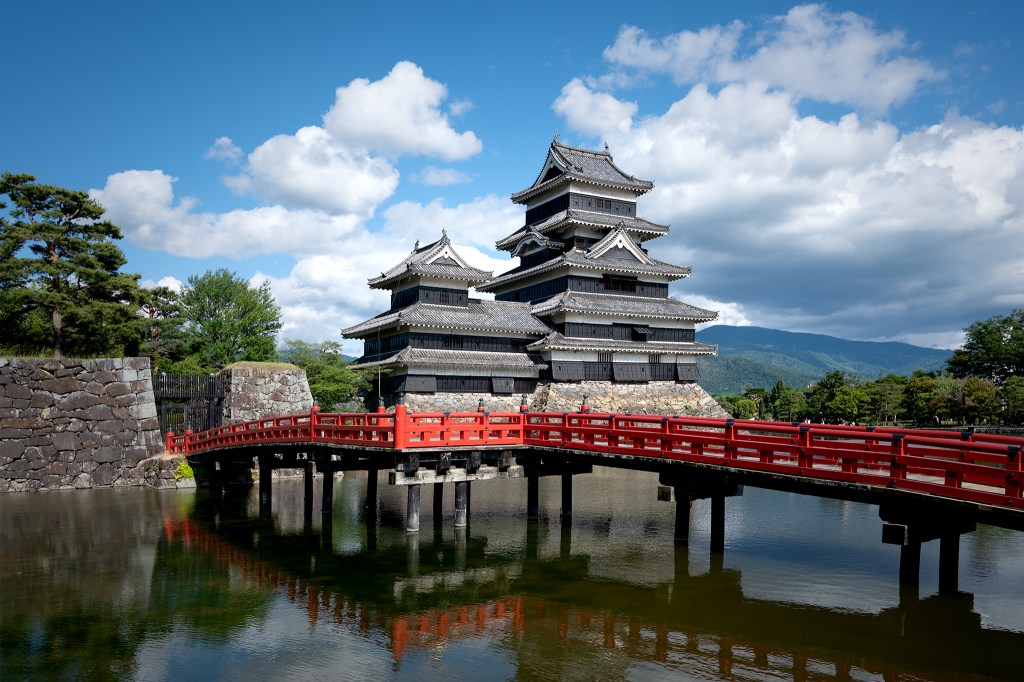
The castle stands before me, imposing and magnificent beneath the afternoon sun. A kind Japanese man approaches me and asks, in English, whether I would be willing to answer a few questions. He is an English teacher; this is how he prepares lessons for his students. I do not know it yet, but school will become the central theme of my discovery of Matsumoto. This courteous, shy and reserved teacher, delighted that I agree so willingly, is the first sign of what is to come.
The inside of the castle is less impressive and requires particular caution. Barefoot, visitors must climb staircases whose angle is closer to a ladder than to ordinary stairs. Photography is forbidden near these stairways, and each one is watched over by a diligent guide repeating the safety instructions in a rather colourful English. I am not especially fond of the firearms exhibition at the beginning of the visit. Even so, it is a reminder that from the sixteenth century onward, after the arrival of the Portuguese, Japan quickly understood the superiority of gunpowder over blades. So much for the heroic image of the samurai.
At the top of the castle, the panoramic view in every direction is well worth the climb. The massive interlocking beams supporting the structure are impressive, something one appreciates even more on the descent, when concentrating hard not to stumble ignominiously under the watchful gaze of the guides. The walls contain two different kinds of openings: those designed for shooting arrows, the traditional weapon of the bushi, and those intended for firing matchlock muskets, slower to reload but far more effective against the armour of Japanese warriors.
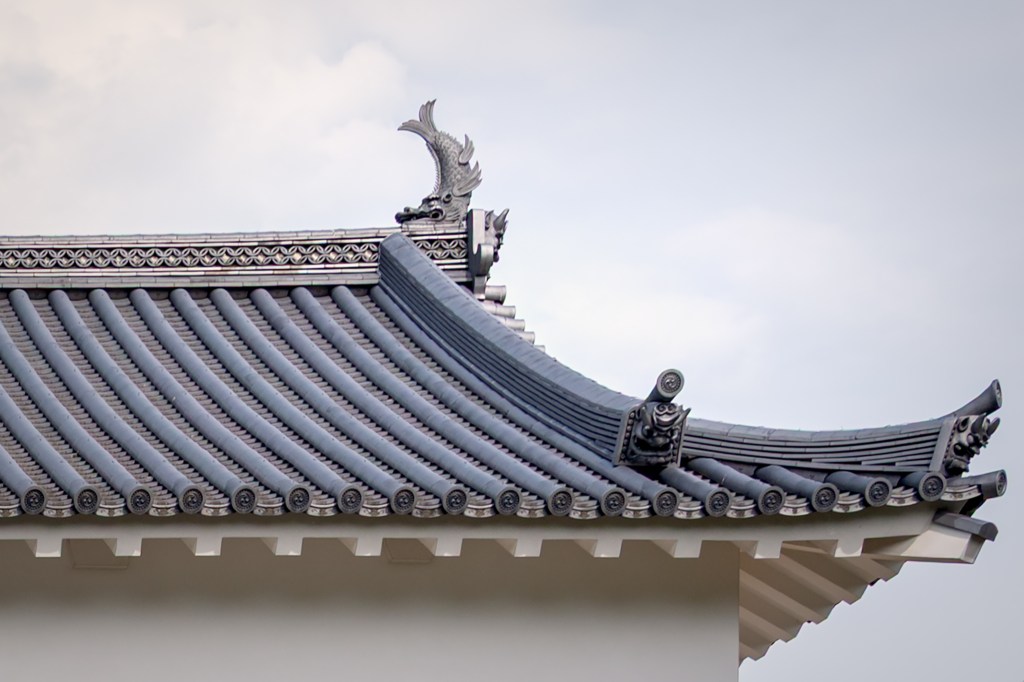
As I leave the castle grounds, I notice strange fish lying along the ridge of the old entrance gates, their tails proudly raised towards the sky. They are 鯱, mythical creatures with the body of a carp and the head of a tiger or a dragon. They are believed to summon rain and protect buildings against fire. There is little doubt that those of Matsumoto have done their job well.
鯱
Shachihoko – a mythical carp with the head of a tiger or a dragon.
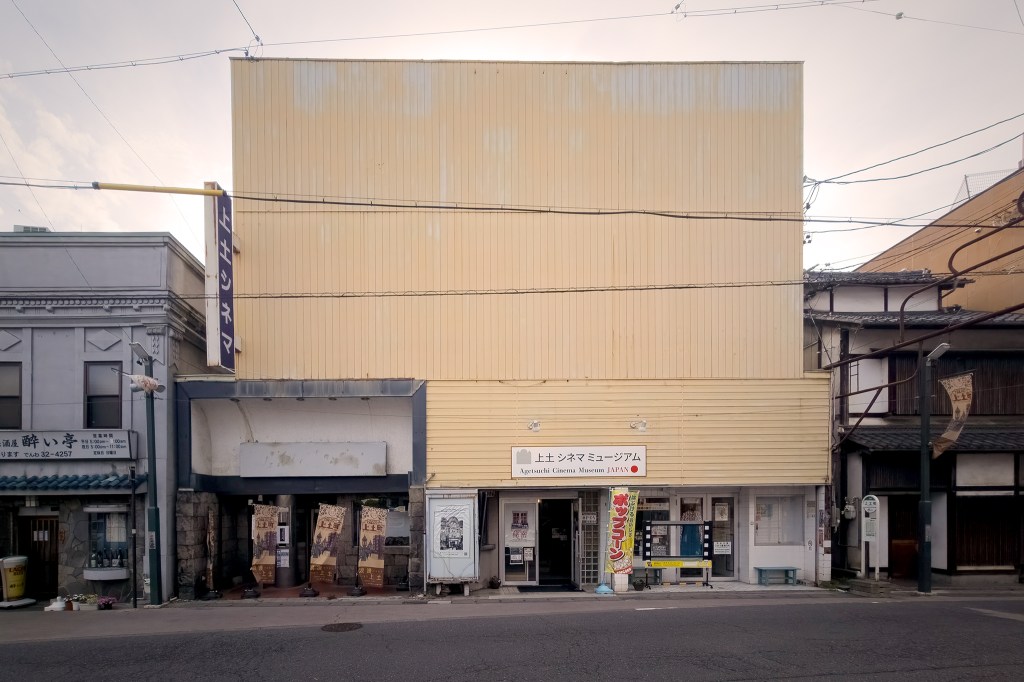
Walking through a city for the first time without any particular destination is more than simply discovering it; it is learning to observe it. There are no landmarks yet, no planned itinerary. Instinct alone determines which street to take next. Inevitably, the narrowest lanes, the ones that seem the oldest, draw my attention. I stop in front of a large building that intrigues me. It looks unlike anything around it, with what appear to be long wooden walls without windows. It is an old cinema, now the Agetsuchi Cinema Museum, as worn and weathered as a film reel aged by time.
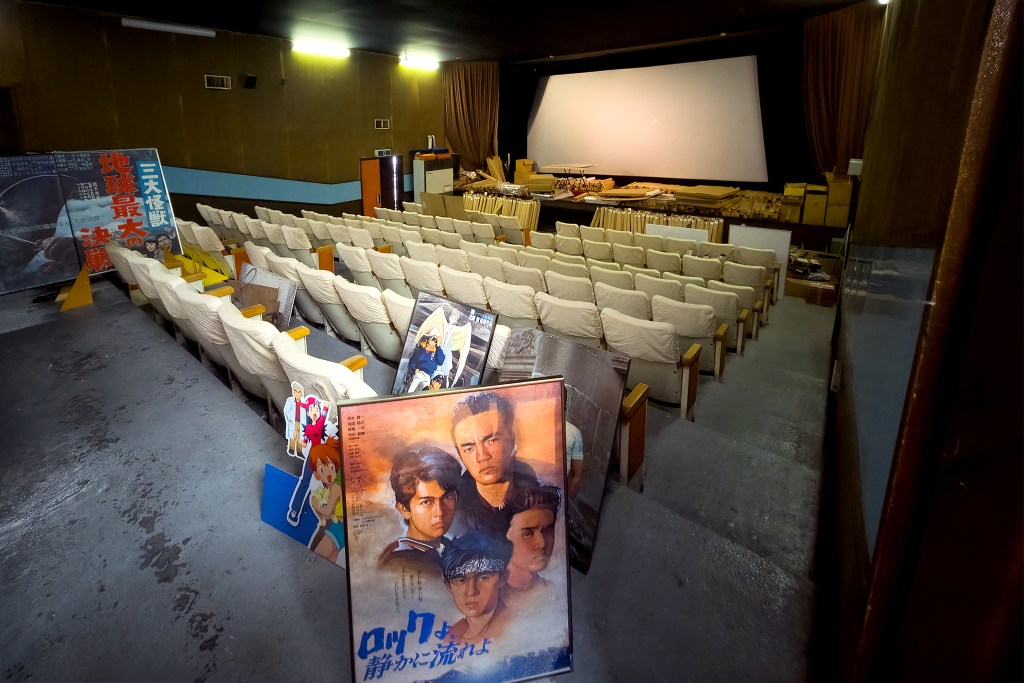
Inside, corridors are lined with posters celebrating both Japanese and Western action films. A basement room is devoted to anime. There, an old film projector stands proudly in its projection booth, a magnificent machine that seems ready to spring back to life at any moment. It is a Fuji Central projector, one of the leading Japanese projection systems of the 1950s and 1960s. Built for large-format 35 mm film reels, it is an exceptional piece of equipment: reliable, remarkably quiet, and fitted with three rotating lenses that allowed projectionists to adjust the focal length according to the size of the theatre.
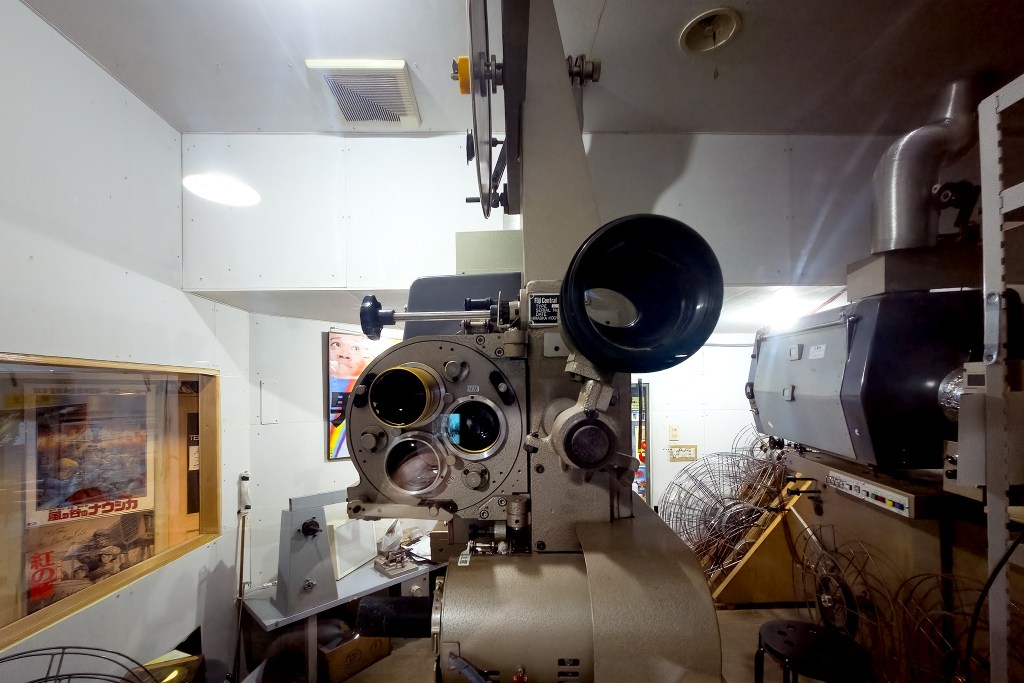
The museum is raising funds to restore the cinema, which closed its doors in 2008 after having opened in 1917. Admission, however, remains free, and visitors are invited to contribute whatever they wish. There is also a small shop where I buy a few black-and-white photographs preserving the memory of the old Agetsuchi Cinema. As I leave, I find myself thinking that perhaps, in some way, simply looking at a city is a way of preventing it from disappearing. Matsumoto will remain in my memory for many reasons, and this old cinema is one of them. The city continues to exist through the measure of my footsteps and the attention of my gaze.
That evening, in the hotel’s onsen, enjoying the welcome comfort that follows a long day of walking, I experience a strange sensation. As I bend down to splash some cold water over myself before entering the sauna, I suddenly feel dizzy. The floor seems to soften beneath my feet, and I steady myself to avoid falling. A Japanese man looks at me and quietly says, 地震. I reply, “Yes.” It is indeed an earthquake. For a brief moment everyone freezes. We are all as naked as the day we were born. The building sways gently beneath us—we are on the ninth floor—but the movement soon subsides. The epicentre was far away, near Tōkyō, as friends will tell me about an hour later. Earthquakes are an integral part of life in Japan. One has to learn to live with them and, above all, to know the safety procedures that every traveller should master. It is anything but a trivial matter; one’s life may depend on it.
地震
Jishin – earthquake.
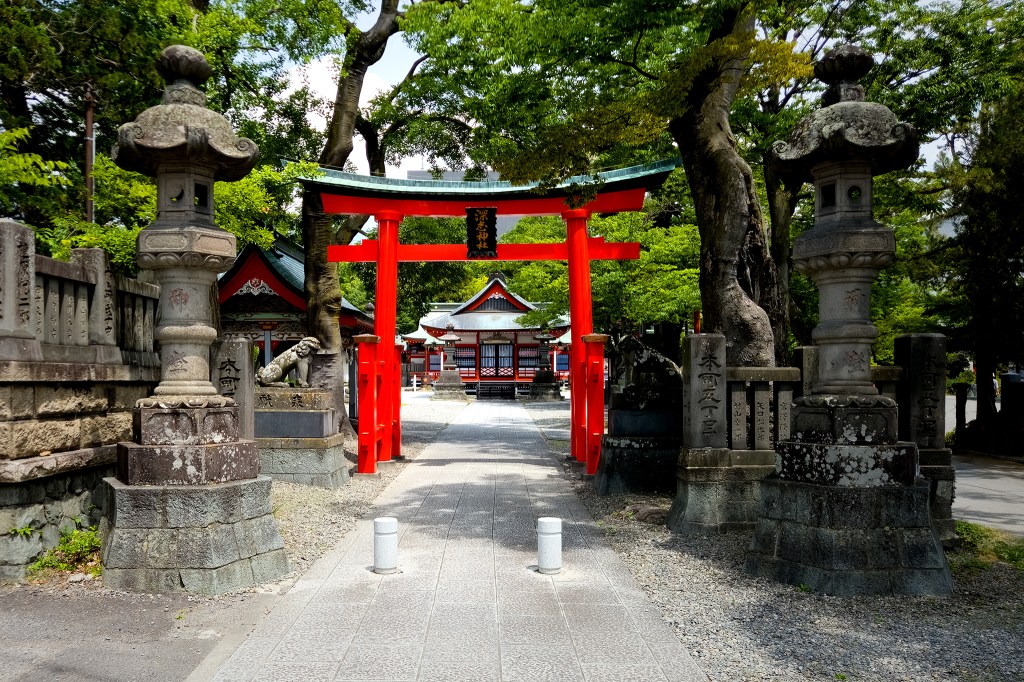
The following morning is bright and pleasant. The temperature is mild, and a cool breeze accompanies my walk towards the Matsumoto City Museum of Art. Along the way, a shrine catches my attention. Fukashi Jinja, founded in 1339, is dedicated to Tenjin, formerly known as Sugawara no Michizane, the very same figure who became the kami of my adopted shrine in Kanazawa. It is a curious coincidence, especially since Tenjin is the deity of education, literature, the arts, and academic success. Today I shall visit the museum’s exhibition devoted to the local artist Yayoi Kusama, before continuing on to the former Kaichi School, now designated a National Treasure. Japan seems to be speaking to me, placing my favourite kami directly in my path. As always, I must remember to bow respectfully beneath the 鳥居 when entering and leaving the shrine.
鳥居
Torii – the traditional gate marking the entrance to a Shintō shrine.
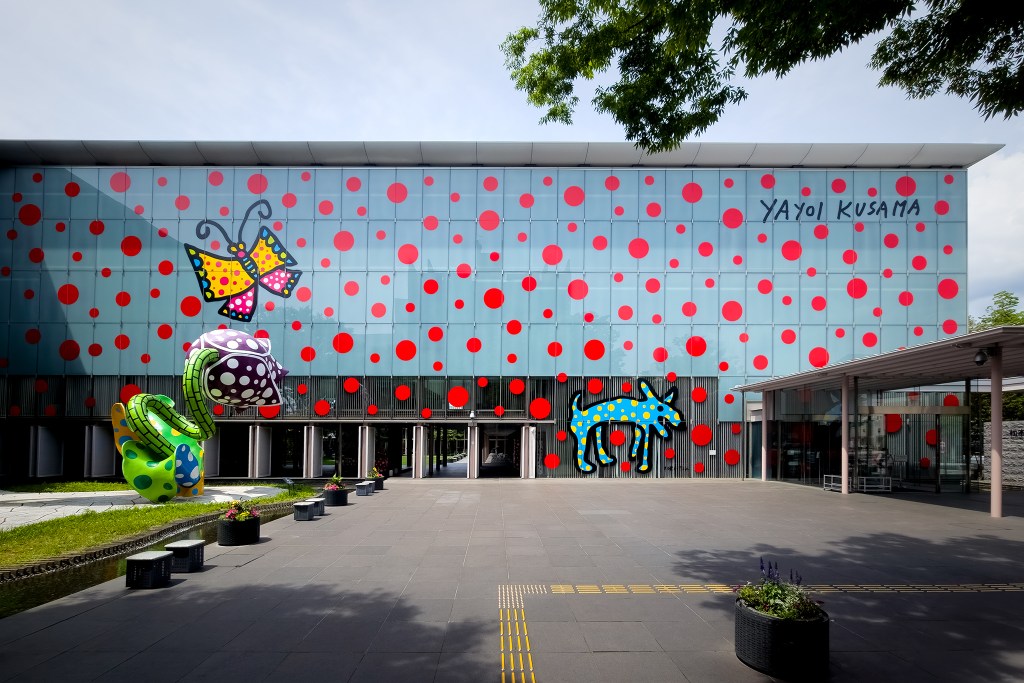
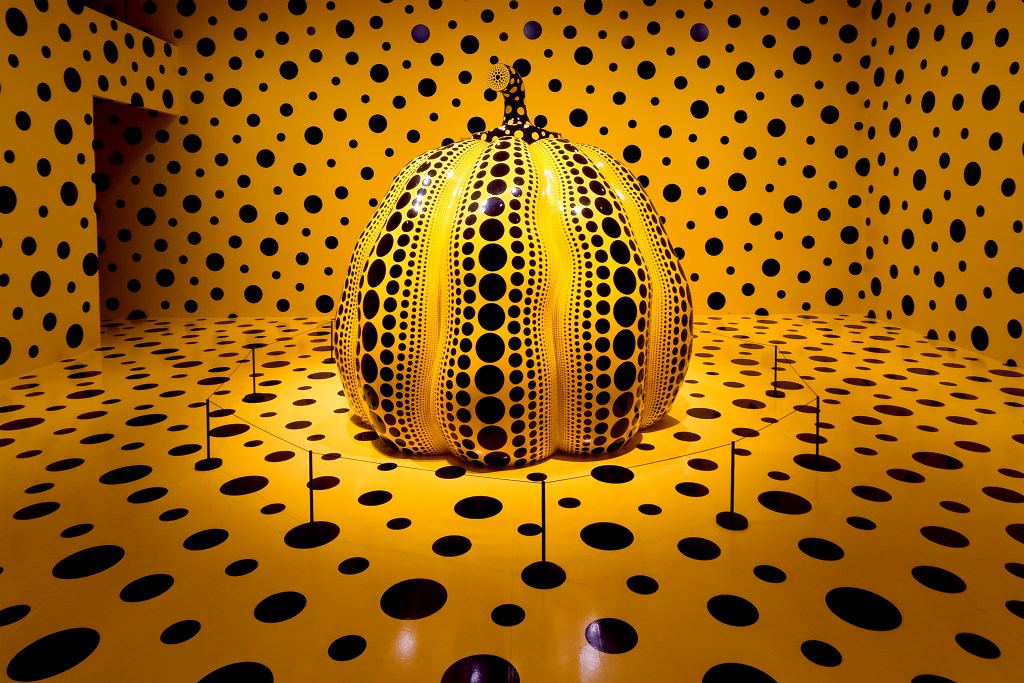
Yayoi Kusama is a contemporary artist of international renown. Her universe of dots, lights and colours comes vividly to life at the Matsumoto City Museum of Art. Mirrors create an infinite mise en abyme, reflecting us endlessly among ever-changing lights that stretch in every direction. For twenty seconds I find myself alone inside the Infinity Mirror Room. Solitude becomes exhilarating in the immensity of this luminous universe. Becoming part of the installation makes the experience unique; each visitor lives it differently. Once again, it is the act of looking that gives the work its existence.
Kusama gradually developed this singular artistic universe because of the hallucinations she has experienced since childhood. The reality that only she can perceive is one she seeks to share with those who encounter her work. At the same time, she reminds us that our own gaze is creative. Through her art, Yayoi Kusama grants us the power to imagine worlds of our own. The exhibition concludes with one of her famous yellow pumpkins covered in black dots, the only work visitors are permitted to photograph. I had first encountered it on the island of Naoshima in 2018.
The former Kaichi School is a remarkable building. Construction began in the early 1870s, at the dawn of the Meiji era. Japanese architects faced the challenge of using traditional building techniques to create a structure that reflected Western architectural standards, which had become the new reference for a Japan opening itself to the world. This style is known as 擬洋風建築. As I stand looking at the entrance porch, decorated with a dragon, an elderly man stops beside me and says something in Japanese. I think I understand: the dragon ornament was inspired by a Buddhist temple. Satisfied that I have grasped his explanation, he quietly continues on his way. In fact, the original school, founded in 1872, had first occupied a Buddhist temple before being rebuilt as a perfectly symmetrical Western-style imitation. For the people of Matsumoto, it symbolised openness to the world and the promise of modernity. They even financed nearly seventy percent of its construction themselves.
擬洋風建築
Giyōfūkenchiku – Western architecture imitation.
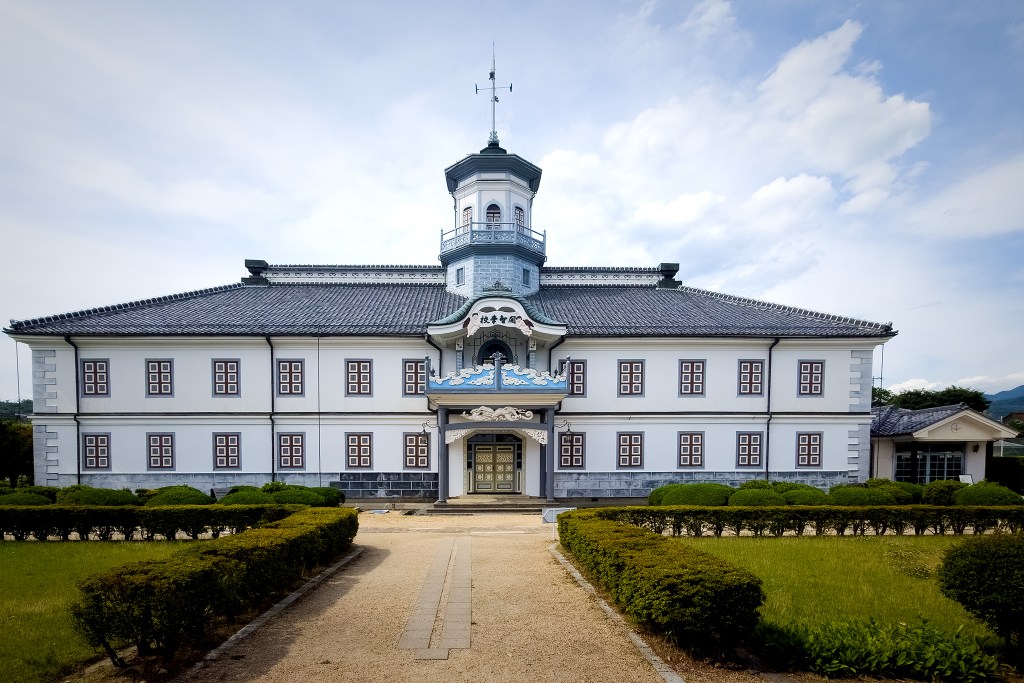
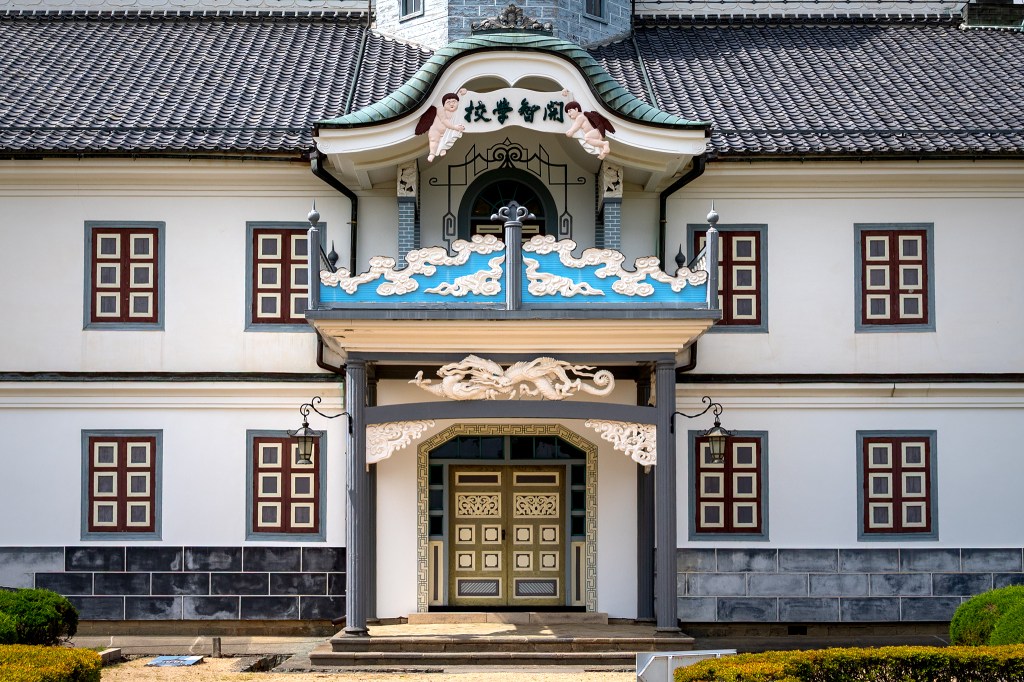
Tateishi Seijū, a master carpenter from Matsumoto, was entrusted with designing the new school. To prepare for the project, he travelled to Tōkyō and Yokohama, where he carefully studied buildings already inspired by Western architecture. Sketches from the notebooks he kept during these journeys are now displayed inside the school, which has become a museum. The fascination with the West, regarded by the Japanese as the embodiment of modernity, influenced every aspect of cultural life, and education was naturally no exception. This explains the unusual combination found on the façade, where Japanese dragons coexist with Christian angels above the entrance.
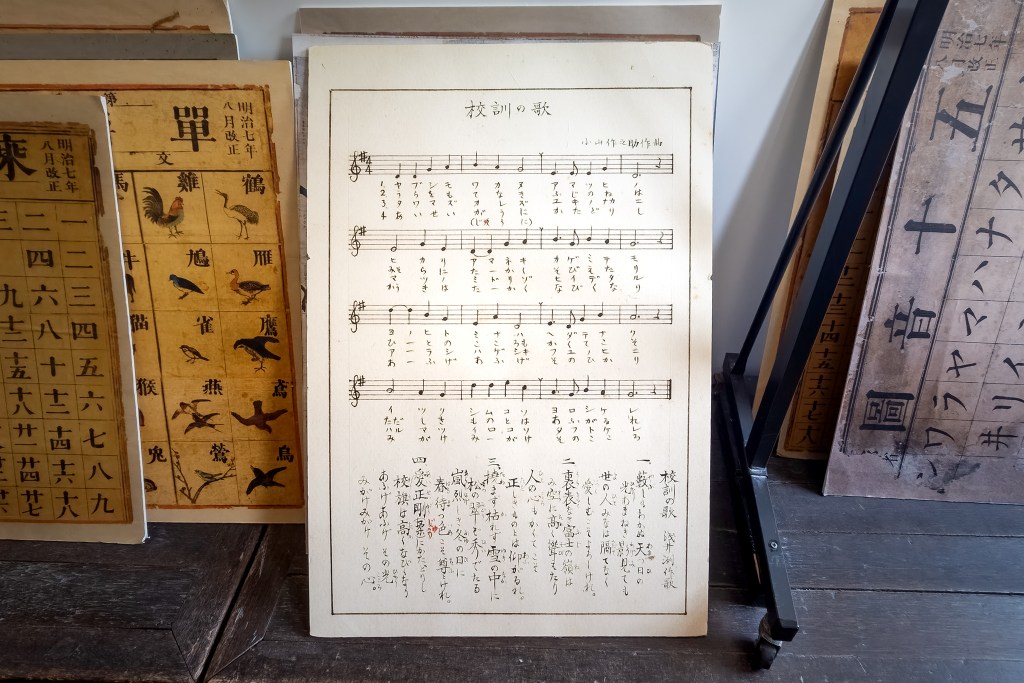
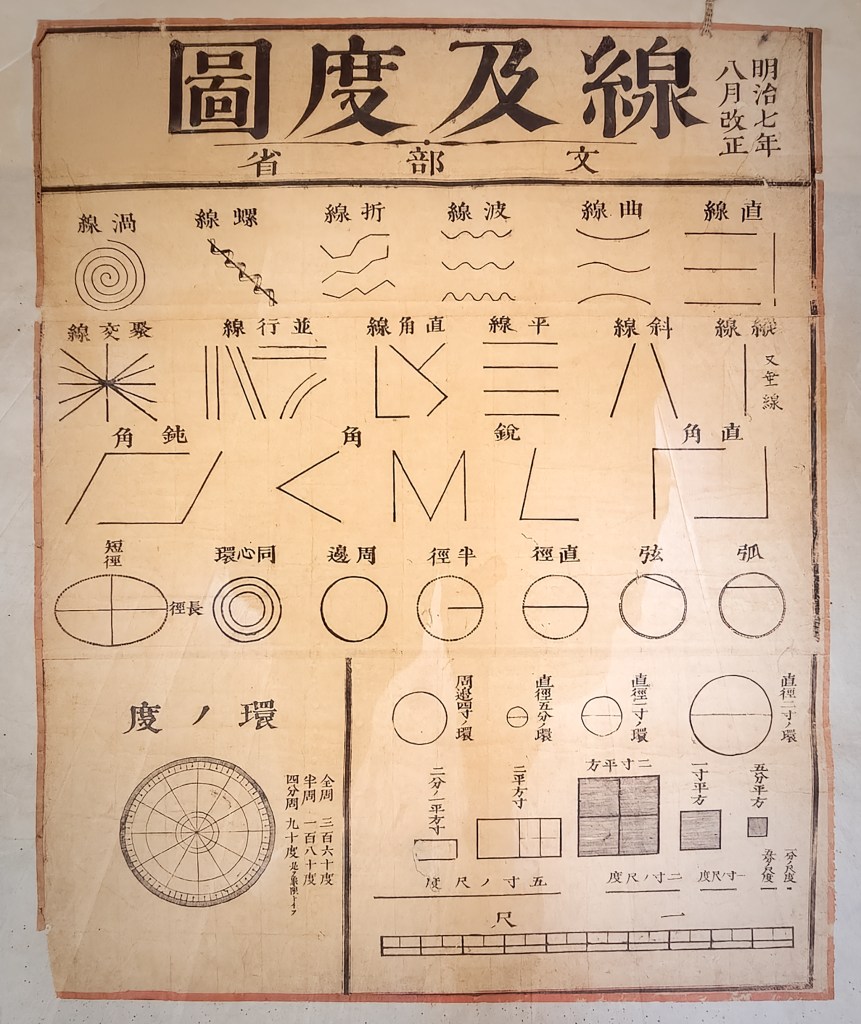
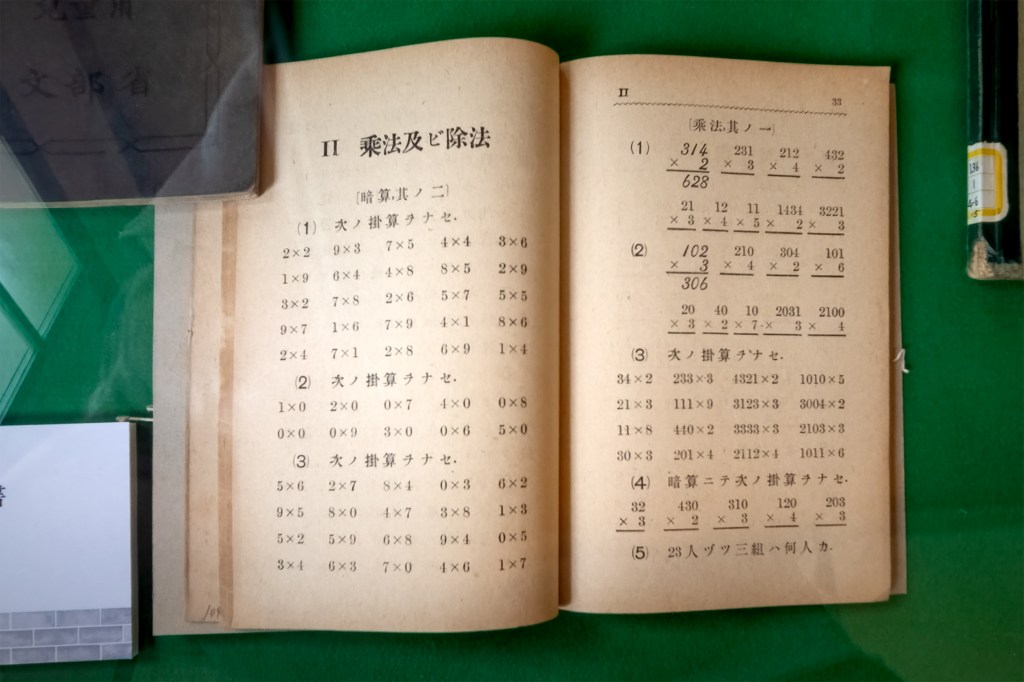
Inside the display cases of the museum—rebuilt and relocated after being severely damaged by a typhoon in 1959—are textbooks on Japanese language, music, biology and mathematics, along with pupils’ exercise books dating from the late nineteenth and early twentieth centuries. The collection is both moving and surprising. Even in the West, public education was still developing at that time, yet these books reveal just how seriously learning was already being taken.
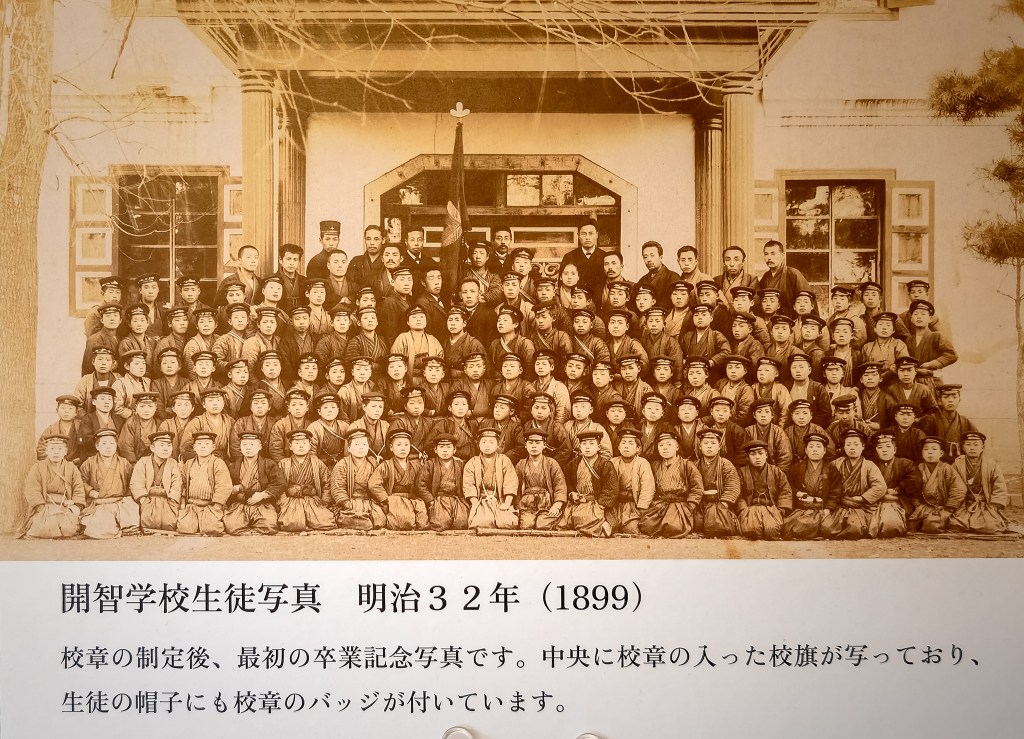
One photograph from 1899 immediately catches my attention. Around a hundred children pose proudly in uniform. Some of the oldest are already teenagers. They all look directly into the camera, serious and dignified, already born into a modern world where photography no longer seems to astonish them. Behind them stand their teachers, stern-looking figures dressed either in Western suits or traditional kimono. According to the accompanying caption, this is the school’s first graduation photograph, taken shortly after the adoption of its official emblem. The emblem can be seen on the flag and also appears on the students’ caps. Near the centre of the image, slightly to the right and noticeably smaller than the surrounding adults, there seems to be the face of a woman.
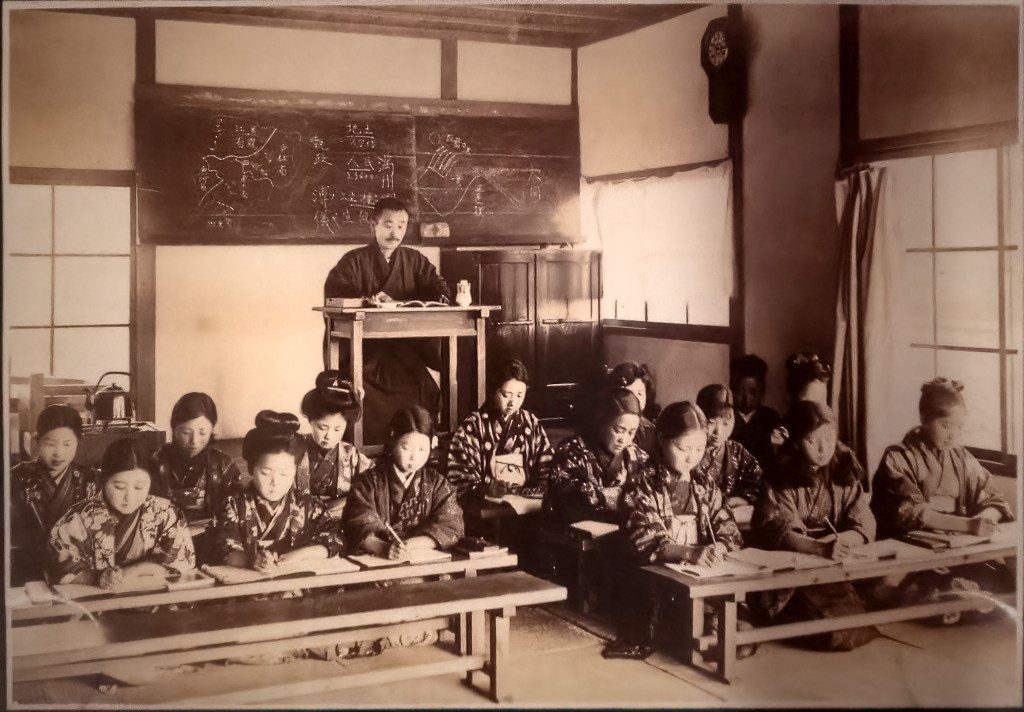
Although classes were not coeducational, the school did provide education for young girls. One photograph shows what appears to be a science lesson taught by a man. Another strikingly modern feature for the period was the existence of classes for blind students. During its early years, the school even assigned its best teachers to pupils experiencing the greatest learning difficulties. Kaichi School made it a point of honour to help every child reach the highest possible level of achievement, regardless of ability, physical development or social background. I may be drawing too broad a conclusion, but it seems to me that part of the internationally recognised quality of Japanese education today can be traced back to pioneering model schools such as this one.
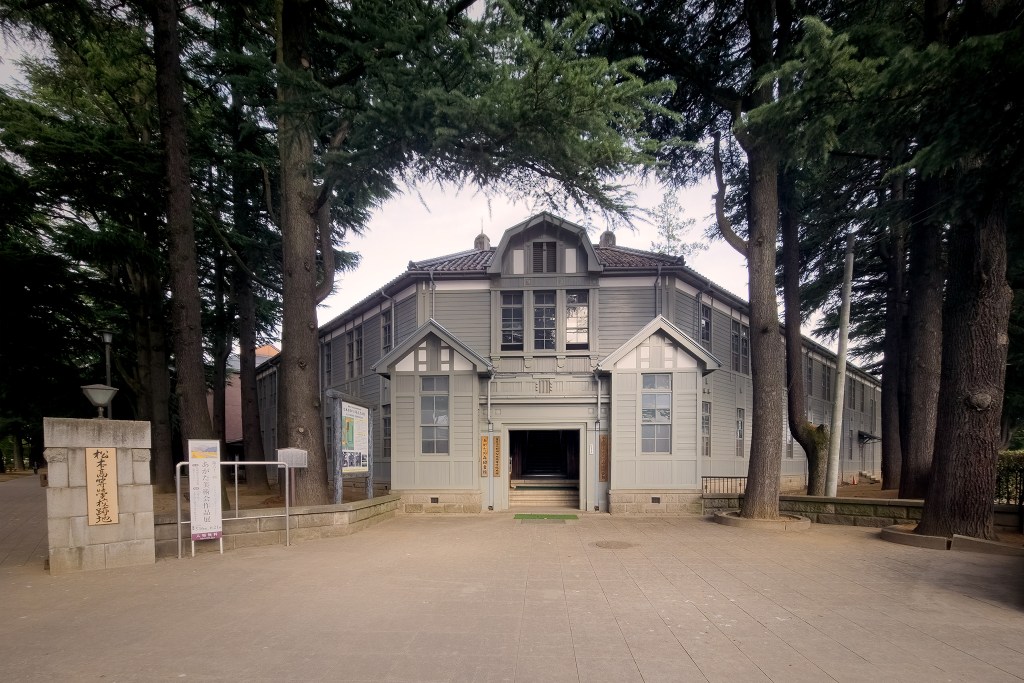
My day devoted to schools is not over. There is another educational institution in Matsumoto that intrigues me. Unlike Kaichi School, it is still in use today, yet visitors are welcome to explore it. It is now known as the Agatanomori Cultural Hall, but when it was built in 1919 its original name was Matsumoto Higher School. At that time, Japan’s Higher Schools were institutions created to prepare the country’s intellectual elite for admission to the prestigious Imperial Universities of Tōkyō and Kyōto. Their educational mission was entirely different from that of Kaichi School. In just forty years, Japan had changed profoundly.
Emperor Meiji (Mutsuhito) had been succeeded by his son, Emperor Taishō (Yoshihito). Following their accession to the throne, Japanese emperors are traditionally referred to by the name of the era they inaugurated. Meiji (1868–1912) means “Enlightened Rule“, while Taishō (1912–1926) means “Great Righteousness.” Historians, however, generally remember this period as the era of Taishō Democracy. Having fought alongside the victorious Allied powers during the First World War, Japan emerged as a major actor on the international stage. Its permanent seat in the League of Nations symbolised this new political stature.
Having become both an economic and a military power during the Meiji era, Japan now required an intellectual elite capable of sustaining its growing international influence. The approximately forty Higher Schools established throughout the country—including the one in Matsumoto—were created to fulfil precisely that purpose. The preserved building of Matsumoto Higher School, now converted into a cultural centre, perfectly illustrates the evolution of Japanese architecture during this period. The objective was no longer merely to imitate Western architecture, but to demonstrate complete mastery of it. “Where there is a will, there is a way“ was a popular saying at the time, wrongly attributed over the years to Lenin, Churchill and even Einstein. It nevertheless captures remarkably well the spirit of Japan after its opening to the world.
The Taishō Democracy period marked the maturity of Japan’s political parties. Newspapers flourished as never before. Intellectuals, artists, writers and filmmakers occupied a central place in society. Fashion evolved with the appearance of the moga (modern girls) and the mobo (modern boys). In the cities, kissaten—my beloved old cafés—multiplied alongside theatres, concert halls and cinemas. The Agetsuchi Cinema, which I had discovered by chance in Matsumoto, dates from 1917 and belongs to this same remarkable period. Public debate became the new norm. University students actively participated in it, and in some cases women even drove automobiles. Japan viewed progress as a path to be embraced, an achievement to pursue and a future to build. The optimism of the era was unmistakable.
The entrance to the school is lined with Himalayan cedars, and the avenue stretching away to the right is well known for them. More modern buildings have since been added to the original structure, yet the ensemble remains harmonious, blending gracefully into the park that surrounds it. I step rather hesitantly into the corridors. Students and teachers emerge from the library and greet me as they pass. My presence seems perfectly natural. From some of the classrooms I hear voices chanting, something that sounds almost like a Buddhist recitation—or perhaps Shintō; I cannot be certain. A group of teenagers sit cross-legged on the floor, chatting quietly, apparently indifferent to the chanting coming from the same room. I do not linger to watch.
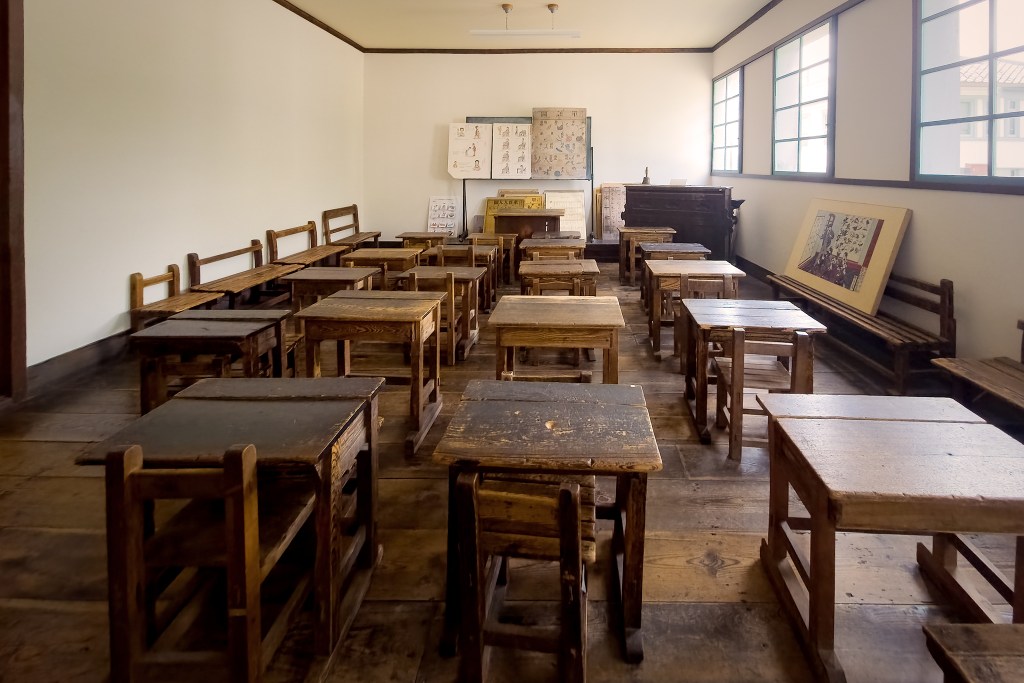
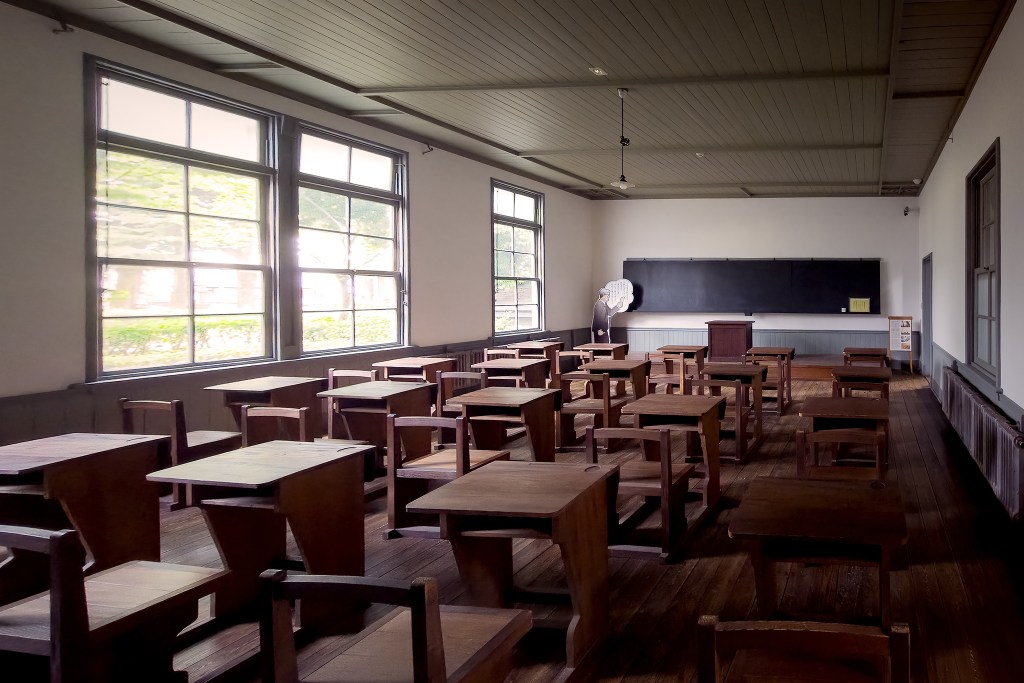
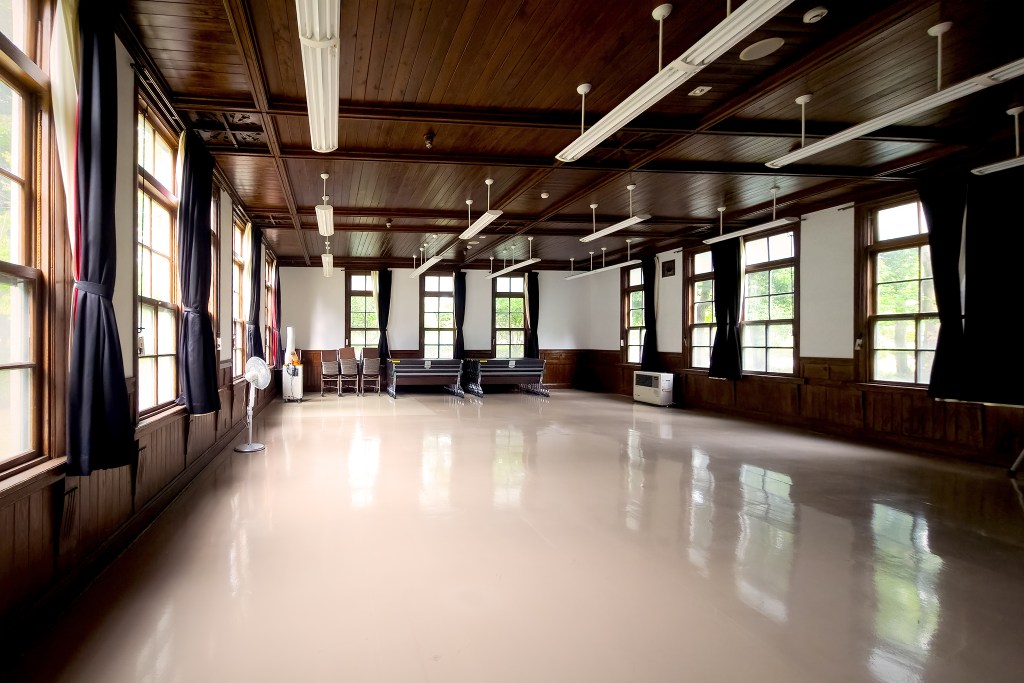
Some classrooms have been preserved exactly as they once were. Individual wooden desks are neatly aligned, facing the raised platform where an empty teacher’s desk patiently awaits its occupant. Other classrooms are still in daily use. They are immaculate, carefully cleaned and ready for the following morning. Everywhere there is a sense of discipline—perhaps even a certain rigidity—that inevitably recalls the image of an English boarding school from another age. The omnipresent wood softens the atmosphere, bringing warmth to the corridors, staircases and classrooms alike.
That evening, the travelling student carries with him a mind filled with images of the past. He wanders through the quiet streets of Matsumoto in search of an izakaya willing to welcome him. Osamu Dazai comes to mind. Born in 1909, he belonged to the generation that grew up during the Taishō era. He witnessed the extraordinary intellectual and democratic awakening of Japan in his youth. Was he, perhaps, one of the victims of everything that followed during the turbulent 1930s, leading ultimately to the catastrophe of war? A single lantern glows in the darkness of the street as though it had been waiting for me. I slide open the 格子戸. Conversations pause for a brief moment before resuming naturally. An ageless lady smiles and invites me to sit at the counter.
格子戸
Kōshido – traditional wooden lattice sliding door.
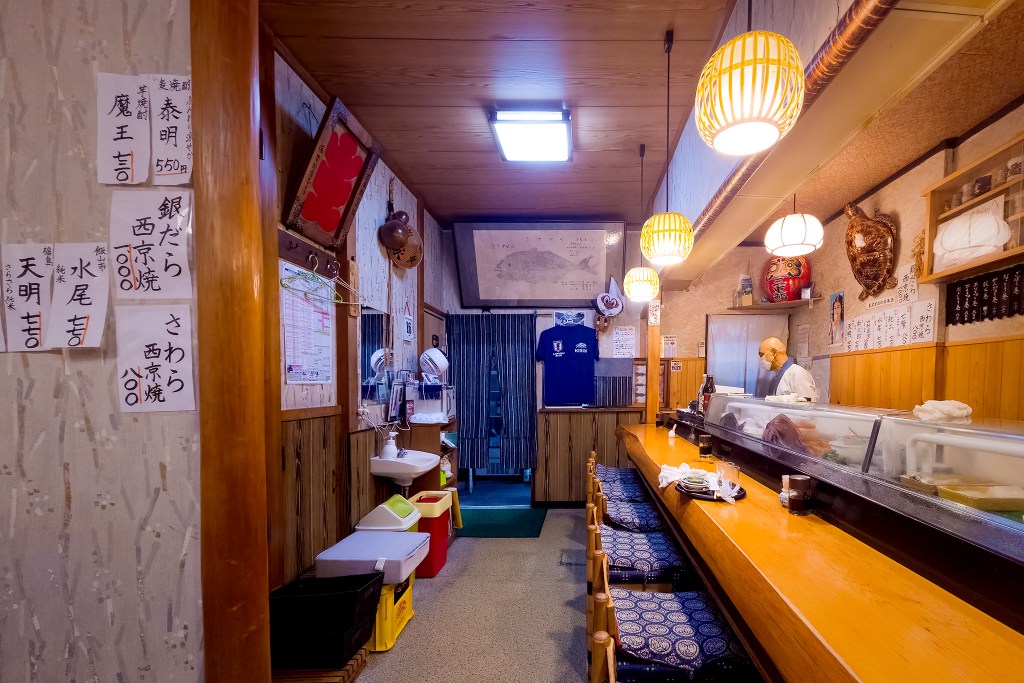
Edomae Miezushi is, quite literally, an izakaya serving sushi in the traditional style of Edo, the former name of Tōkyō. The chef slices generous portions of fish that almost entirely cover the slightly warm rice, delicately shaped in the palm of his experienced, dampened hand. Dip the fish into the soy sauce—not the rice—which must remain firm. Then savour the first bite. Gradually, the wasabi discreetly placed by the chef begins to reveal itself. It gently awakens the palate, enhances the flavour of the fish and highlights the delicate yet resilient texture of the rice. A sip of sake completes the mouthful and accompanies it while awaiting the next piece. Japanese cuisine is one of the harmonious paths to pleasure.
Mata ne.

 Wanihondou