

Water is everywhere in Japan, around, underneath, above. Since the emergence of the volcanic archipelago, the sea has drawn its coasts, shaped its islands, and rain has built its landscape. Coming down from the mountains, falling from the sky, water finds refuge in the ground, feeding thousands of springs that never stop flowing. This water is exceptionally soft in many places. Filtered through volcanic rock, it is almost pure, a gift from the kami of nature. The Japanese know how to appreciate it.
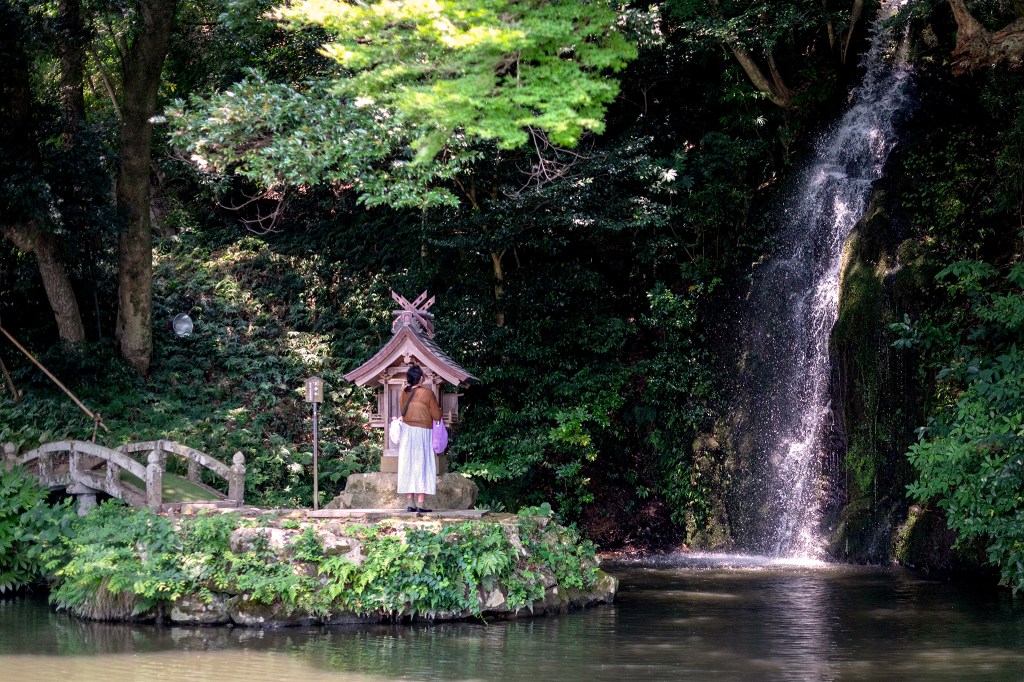
There is, however, a tribute to be paid. Shintō kami have two faces; in that respect, they are very human. They can be beneficial, generous, but they are also prone to anger, and their anger can be terrible. Those connected to water, the 水神, and there are dozens of them, are also connected to typhoons, floods, landslides, river surges and tsunamis. It is customary to respect the kami, to invoke them, to pray to them; those of water are no exception. But above all, water is a daily gift, a present from nature that must be used with moderation, but which is there, always available in Japan.
水神
Suijin – kami of water
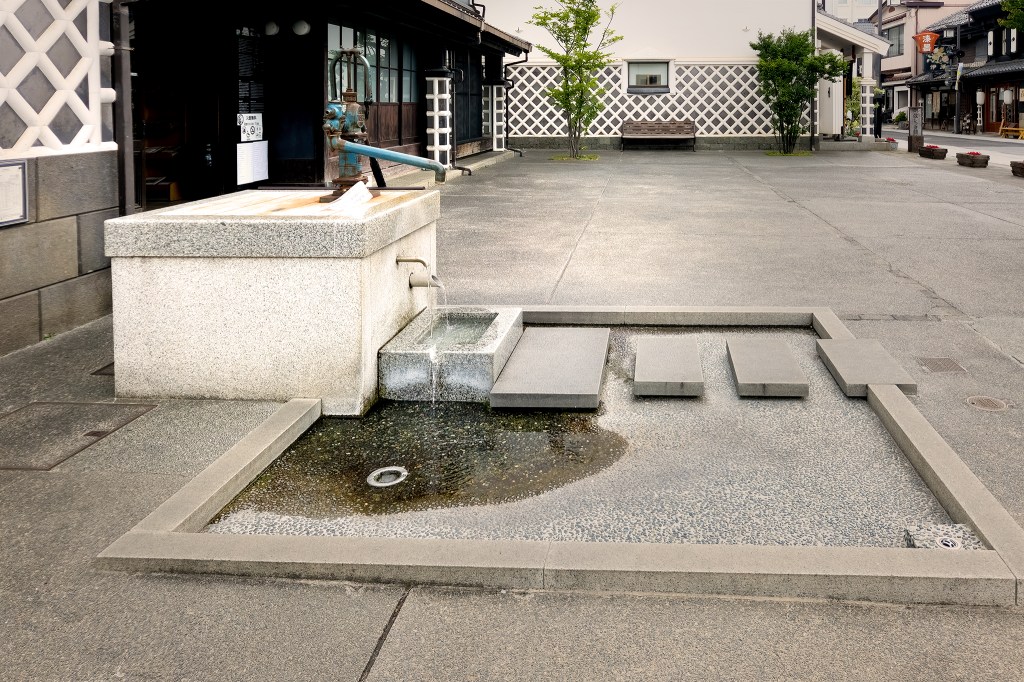
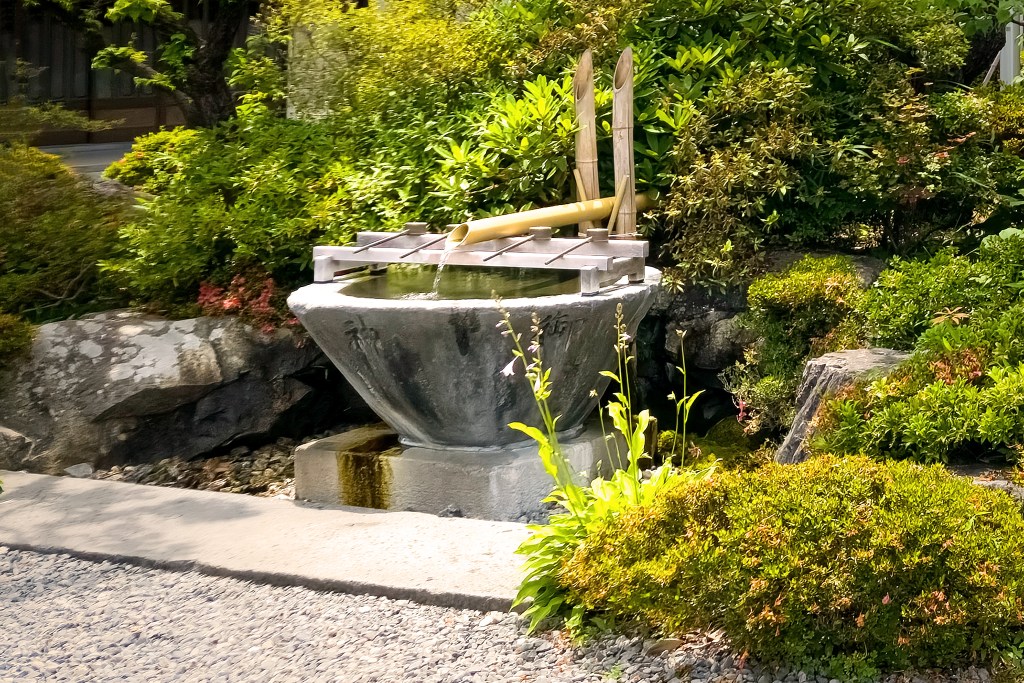
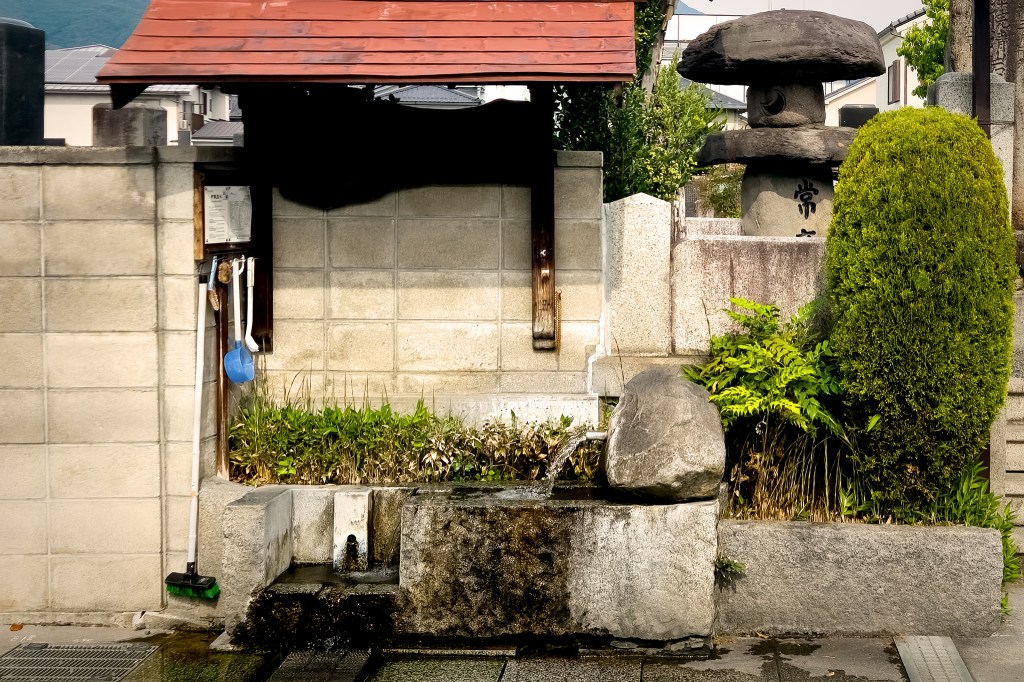
I understood this in Matsumoto, where water is emblematic and famous throughout Japan. In a Shintō shrine, I was slightly annoyed by the routine of a Japanese walker filling at least a dozen bottles at what I had mistakenly taken to be the place where one washes one’s hands and mouth before making a wish at the shrine. I quickly understood my mistake: throughout the city, there are wells and springs where everyone can come and draw water of incomparable purity.
The quality of the water determines the quality of the products: tea, of course, but also coffee, rice, and 日本酒, what we wrongly call sake. The kanji 酒 is read “sake” when it stands alone; it means “alcohol”, hence the confusion. The other reading, the Chinese-derived reading of the kanji, is shu, so Japanese rice alcohol is pronounced “nihonshu”. The other mistake is to think that it is a strong alcohol. It never is: nihonshu ranges between 11 and 20 degrees of alcohol, most often 15, a little more than wine. Two things make up its main qualities: water and rice.
日本酒
Nihonshu – Japanese rice alcohol.
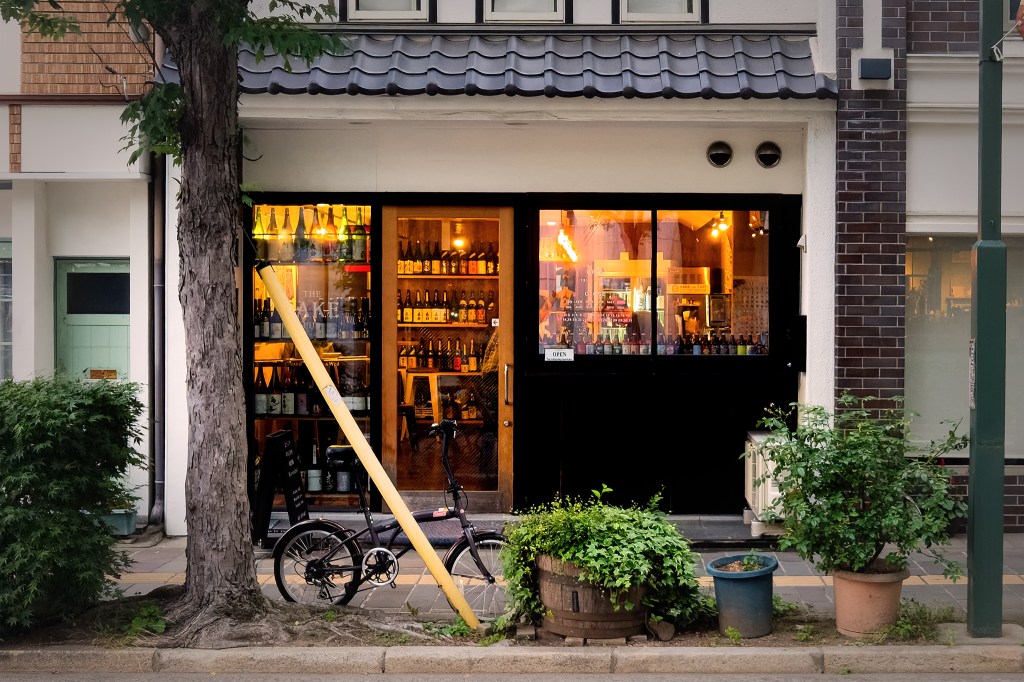
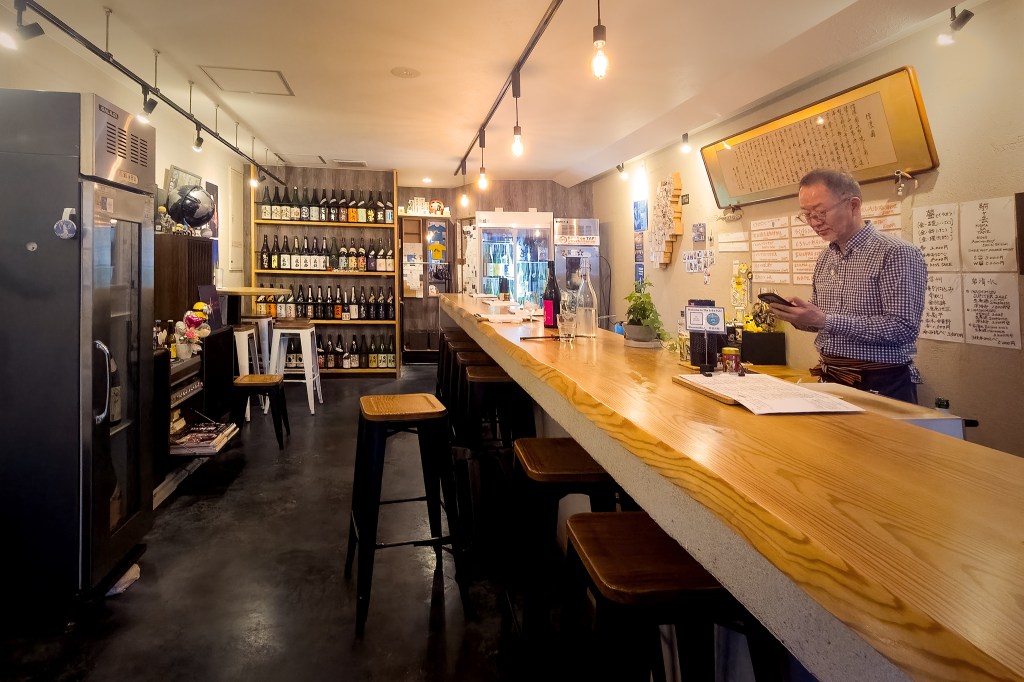
In Matsumoto, I discover a magnificent place to taste quality nihonshu. The Sake Pub is located in a small street; at first glance, it does not look like much, and its English name even invites suspicion. That would be a mistake. The owner of the place is a true enthusiast whose knowledge is matched only by his kindness. He offers only products from Nagano Prefecture, where Matsumoto is located. That is more than enough. The choice is vast, and the help of the host is necessary unless one is a regular.
The counter quickly fills with local customers. A group was already there when I arrived, and the two remaining seats to my right and left were soon taken. My new neighbours begin the usual conversation with a newcomer: “Where are you from?”, “Why did you come to Matsumoto?” Every country in the world probably has the same ritual, and I have long been used to knowing how to answer these questions in Japanese. The ice is easily broken. The problem is giving the impression that I speak the language well, which is not the case, even if I have improved.
The group at the end of the counter is lively, joyful; nihonshu warms the souls, the smiles, it releases kindness. It is an amiable alcohol, to be enjoyed slowly, in small sips from small glasses or little cups. It does intoxicate, of course, but gently, lightly. It is a mischievous little elf, encouraging people to communicate more easily, to say things that are slightly more daring. A young woman in the group begins greeting her friends with repeated “I love you”s, in a slightly childish voice, as Japanese women know how to do. I am stunned: it is exactly the sound, the tone, the accent of the little boy’s voice in Ohayō, Yasujirō Ozu’s film. He uses this single sentence remembered from his English lesson as an excuse, a gentle provocation, a slightly cheeky tenderness.
The nihonshu are of very high quality; some are served on tap, slightly sparkling, resembling ciders in their texture in the mouth but very different in taste. The owner describes them; it is his pleasure, his eyes sparkling like joyful beverages. I do not understand much; he speaks too quickly to his Japanese customers. Sometimes he stops, starts again slowly, tries to share with me the quality of the rice, the precision of the fermentation, the purity of the water. I understand: he is describing a process whose success depends above all on the quality of the water. There is real passion in his words; when the flow is too fast, the poetry of the words remains. Even without understanding them, they are savoury.
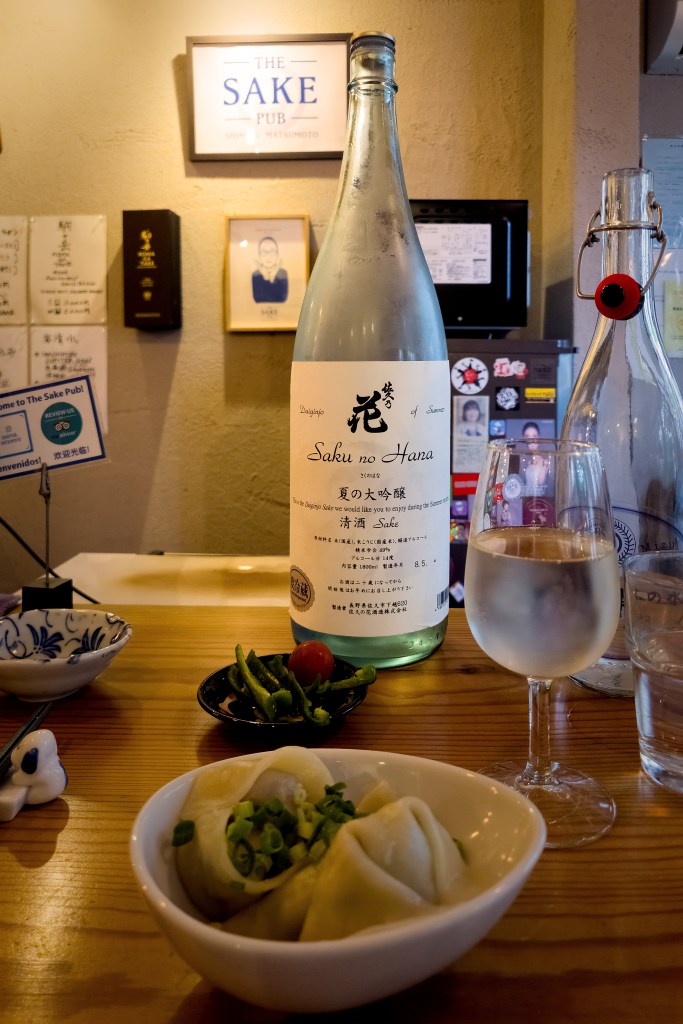
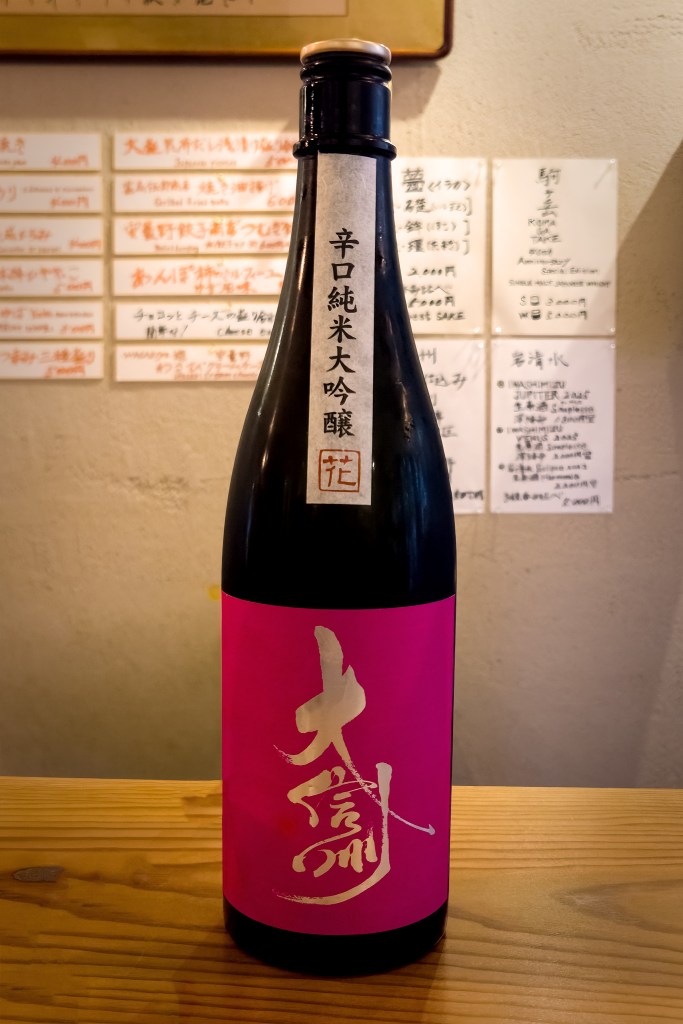
I returned to the sake bar two days later after a long walk in the countryside around Matsumoto. I wanted to see the ruins of an old castle; I saw only a small, isolated Shintō shrine, a little lost. I was supposed to find the ruins at the top of a hill, but I gave up. The slope was too steep, too winding, the path narrow, unstable, interrupted by large roots. I stopped after a few hairpin bends: too dangerous, and I had no desire to dislocate my foot in Japan once again. I thought about bears too. It is not exactly the region, but the Japanese talk about them a lot. At the bottom of the path, I passed an ageless lady beginning the climb. I felt a little ashamed.
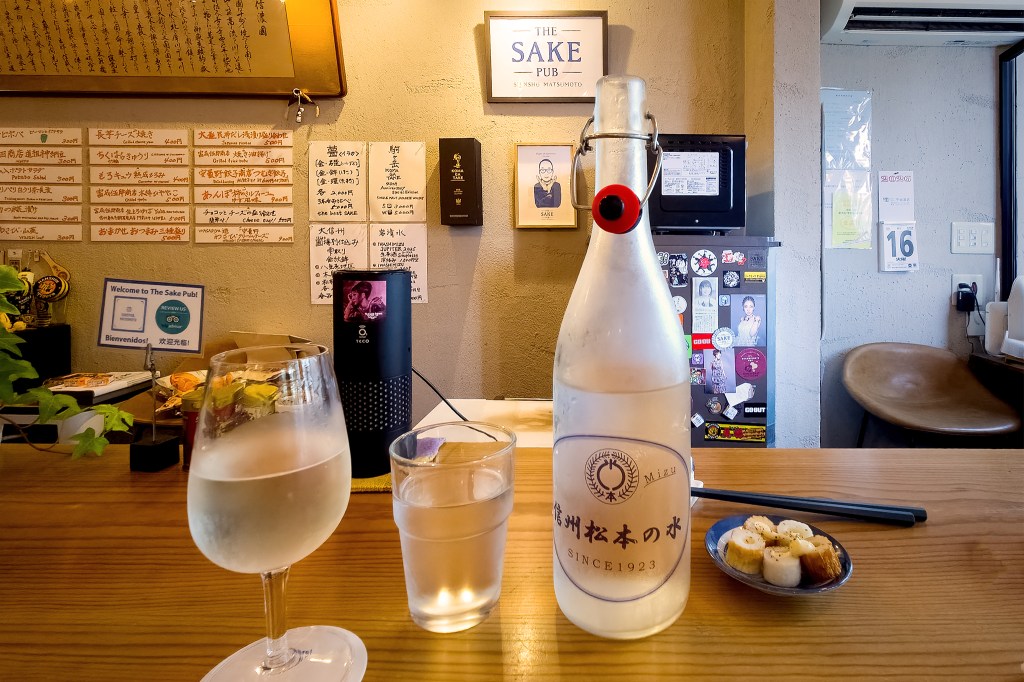
The Sake Pub welcomes me with a bottle of water, served ice cold. In Japan, water is not an option, a possibility; it is a rule. It is free, offered, systematically brought with coffee in kissaten, with nihonshu or another alcohol in an izakaya. It is always possible to get some if it is not served straight away. A glass of water does not remain empty; it is systematically refilled. It is a service received before one has even ordered anything. Offering fresh water is a gesture of welcome, a way of thanking the customer for coming. Most of the time, water accompanies the お絞り, used to clean one’s hands before eating. It is cold, lukewarm or hot depending on the place.
お絞り
Oshibori – wrung towel.
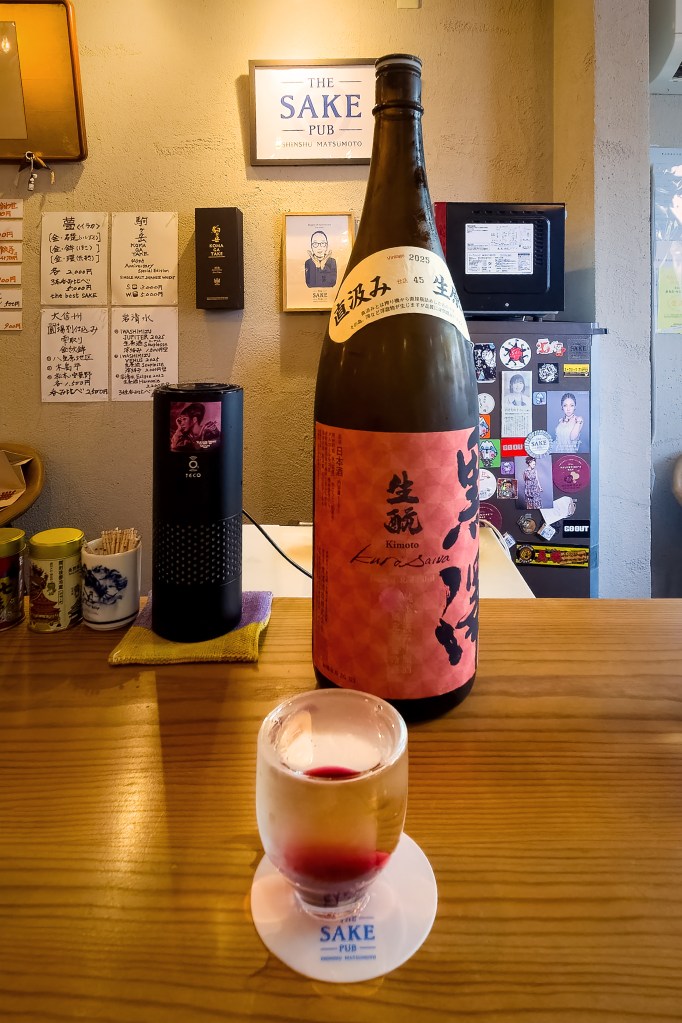
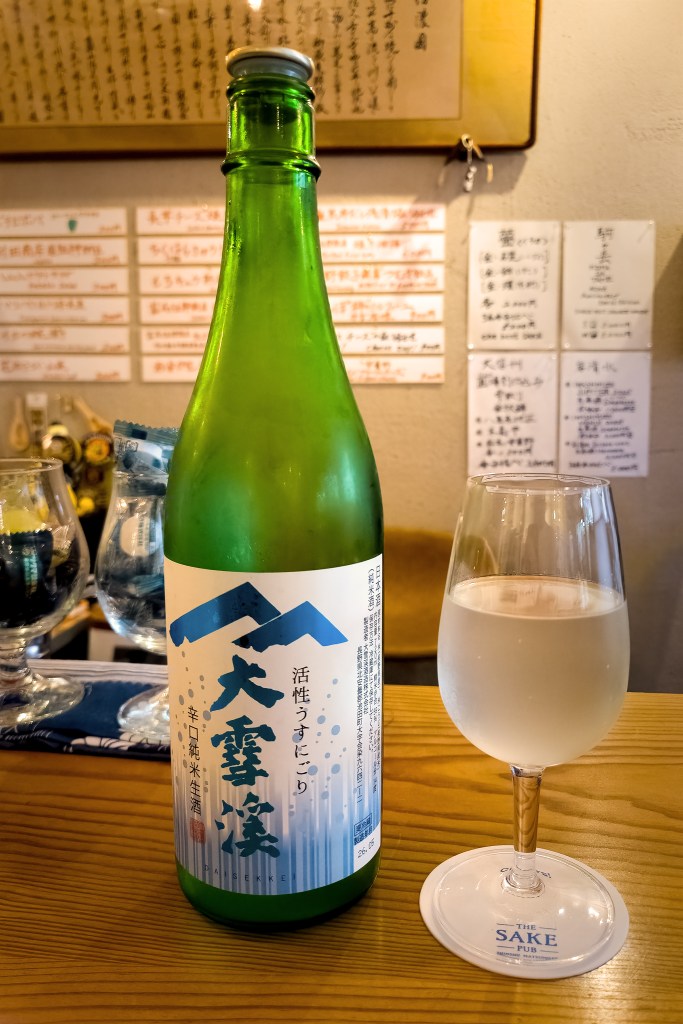
I let the owner choose the nihonshu for me. Tomorrow I leave for Niigata, and I want to taste those he considers to be gems. This time, all the customers are Westerners. The Sake Pub attracts people, the comments are always glowing, and deservedly so. The owner serves me a 生酒 from Nagano, a nihonshu that has not been heated, keeping a particular freshness and spontaneity. The kanji 生 literally means “raw, fresh”; it is found in many Japanese words connected to life, to what is unaltered. It can also be pronounced “sei”, as in 人生 or 生物. The nihonshu is delicious, lively, well balanced, a little dry. The ideal drink after a long day of walking, after fresh water of course.
生酒
Namazake – unheated alcohol.人生
Jinsei – life.生物
Seibutsu – living being.
The conversation gently drifts from nihonshu to my day in Matsumoto, a very Japanese habit. The owner is interested in what I have done, then he asks what I plan to do the next day. I tell him about my excursion towards the castle ruins. His expression becomes a little serious. He tells me there was a bear attack today near there. One must be careful, not walk alone in the countryside or in the woods. There have already been dozens of attacks in eastern Japan this year since the end of hibernation, including several fatal ones. I think of that ageless lady climbing alone towards the ruins.
As I am about to leave, the owner gives me a small nihonshu glass, the symbol of an encounter, of a sharing, of water, no doubt a little strong, which brought us together for a few moments. This water flows in Japan, everywhere, relentlessly. It is one of Japan’s faces, a face with many smiles, and sometimes also terrifying grimaces. Water builds and defines Japan. It is written with a magnificent kanji, 水. It evokes water springing forth and water flowing, the current of a river, the living force of the liquid of which we ourselves are made.
水
Mizu – water.
Water purifies, nourishes, devastates, drowns, washes, refreshes; it is the essential element of drinking and eating. In Japan, water shimmers in rivers, lakes and the sea. It ripples or roars beneath the downpour, it makes the steam and heat of onsen. It is gently poured over graves in temples, it purifies hands and mouths in shrines. It leaves, at the edge of the eyes, pearls of tender emotion; I no longer hide them.
Mata ne


