

Thick above Niigata as I leave, the clouds disperse as Sakata approaches. Little by little, the sky opens over the Sea of Japan, patches of blue allowing an intense light to pass through. It illuminates the jagged coastline, its black rocks struck by churning white foam. Sakata is my first stop this year in Tōhoku, the north-eastern region of the great island of Honshū. A stop before reaching Tsugaru, the region of Osamu Dazai.
There was no particular reason for this stop, perhaps simply the idea of spending a few days in a small, unknown city. Chance sometimes meets intention, and my surprises are far from over. A large bookcase decorates the hotel entrance; at eye level, the Japanese edition of No Longer Human stands proudly on a display. Dazai is there, waiting for me with his chin resting on his hand, wearing a gaze so sad that it makes the heart ache.
Sakata is strange. At times it gives the impression of being abandoned, the streets are deserted most of the time, only the cars seem alive. Perhaps this is what inspired Yōjirō Takita, the director of Okuribito, a magnificent film in which a cellist returns to live in his hometown, Sakata. There, he discovers a new world, that of funeral rituals. Walking through the streets, I find that same feeling of abandonment, running through the film like a place between life and death. Perhaps the sanctuary towards which I am heading is a gateway to the world beyond.
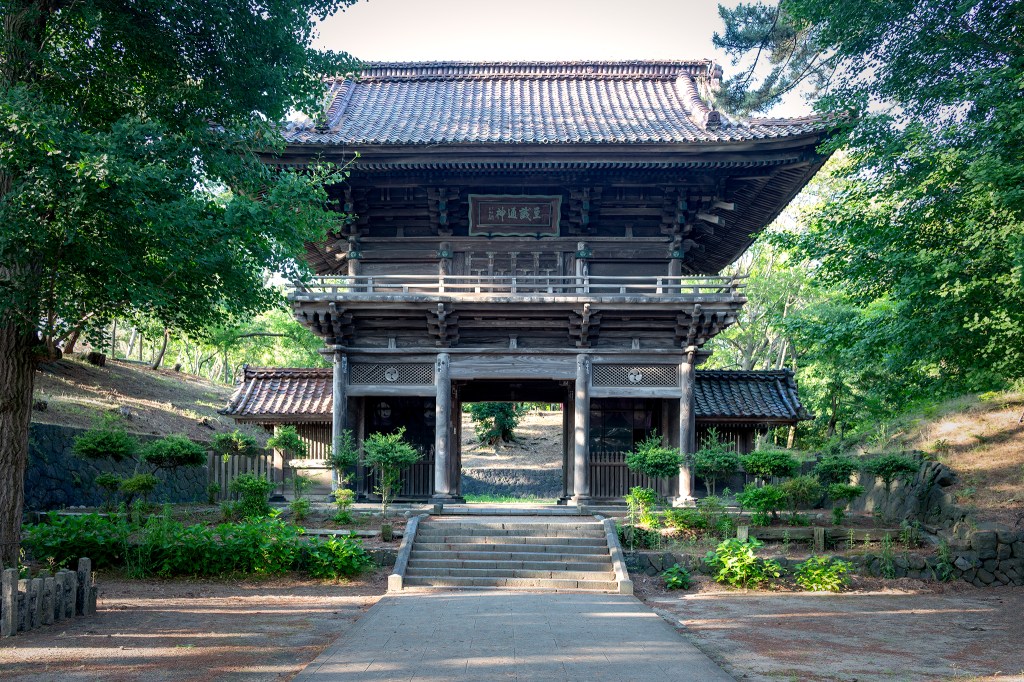
Here is a Buddhist cemetery; the theme is definitely present. A poster with an arrow invites me to discover a great Buddha, which surprises me a little. These small posters form a kind of trail, leading me through the cemetery to the temple itself, which is closed. I notice another poster with an arrow, inviting me to enter a sort of courtyard surrounded by a metal fence. It asks visitors to make sure they close the gate behind them, as children may be playing.
It is a primary school. There are no children left at this late hour of the afternoon, but I understand the safety instruction. The gate in the fence opens onto a street where cars may pass. I cross the courtyard where, here and there, children’s games wait to entertain them. On my left, behind a cluster of trees, an immense statue of the Buddha appears. He stands upright, rising to a height of 17 metres, his raised right hand offering reassurance, his open left hand welcoming. At his feet, the children of Wakakusa nursery school play each day under his protection.
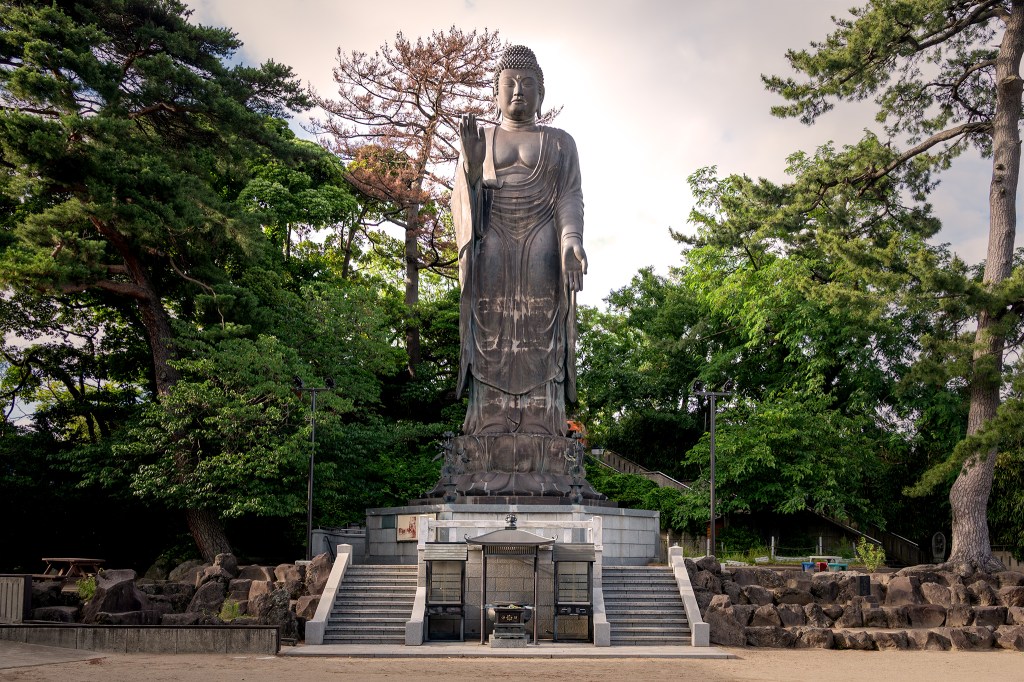
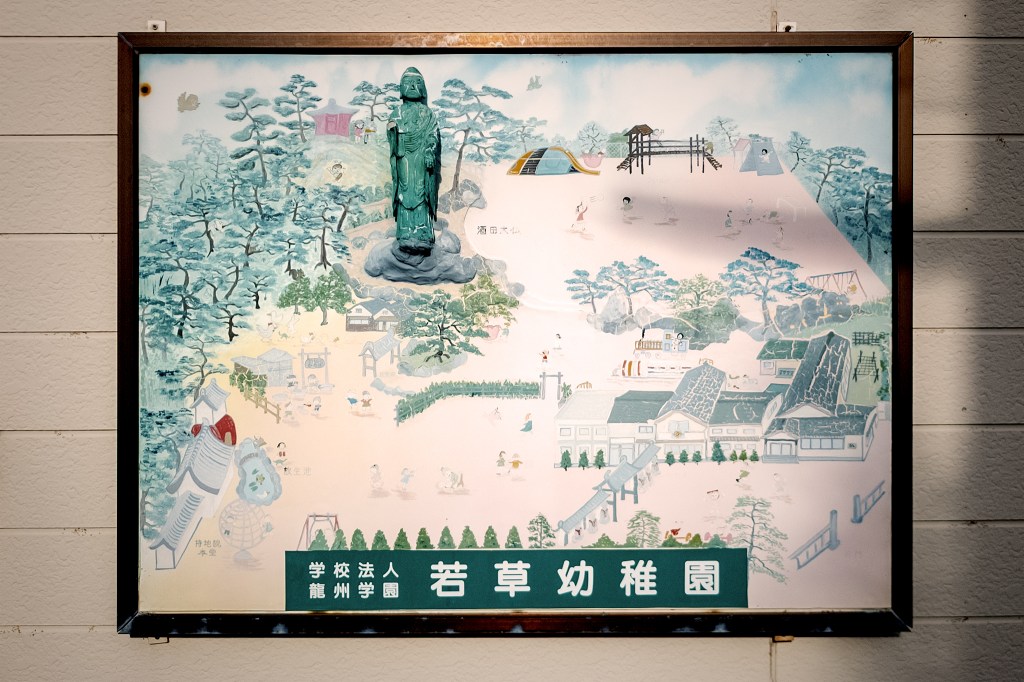
This is not the original version of the statue erected in 1914; it was melted down in 1943 for the Japanese war effort. The one I am looking at dates from 1992, adding to the strange impression Sakata makes upon me. A solitary statue in a school courtyard where no children are playing. The setting sun casts a beautiful light upon it. On the walls of the school, a naïve drawing shows a plan of the entire site. The temple on the left, the school on the right, the playground with a small relief model of the great Buddha, perhaps made by the children.
It is seven in the morning when the earth begins to tremble, or rather, when the hotel begins to move. It is clearly swaying, and the lamp hanging from the bedroom ceiling is undeniable proof. It is much stronger than last time and continues without losing intensity. I decide to follow the safety rule for a modern building: get under a table or a desk. I realise that it is impossible to move the chair beneath the desk, as it is trapped by the bed. The thought of the “big one” crosses my mind. The street is deserted apart from a few cars, everything looks normal, and yet everything is moving.
After 30 or 40 seconds, the movement of the ground weakens, then stops. The ceiling lamp has stopped swaying, and I understand that it is time to resume normal activity. Ten minutes later, the information appears on my phone: InfolocaleJapon reports an earthquake measuring 6+ on the Japanese scale, which goes up to 7. I am more than 250 kilometres from the epicentre, located off the coast of Hachinoe. There will be only material damage and minor injuries. Japan is one of the best-prepared countries in the world for natural disasters.
The weather is fine, the tremors have gone, and the warmth is pleasant. There are a few more people in the streets this morning, mostly students in uniform. Sometimes one of them says hello to me, bringing back those first moments in Japan eight years ago, those moments that made me wonder. A smiling kindness: young and old say hello, thank you for coming to see my country. These smiles, these greetings, are the two hands of the great Buddha: one welcomes, the other protects. Sakata is more alive this morning; it is not yet the morning of the great departure.
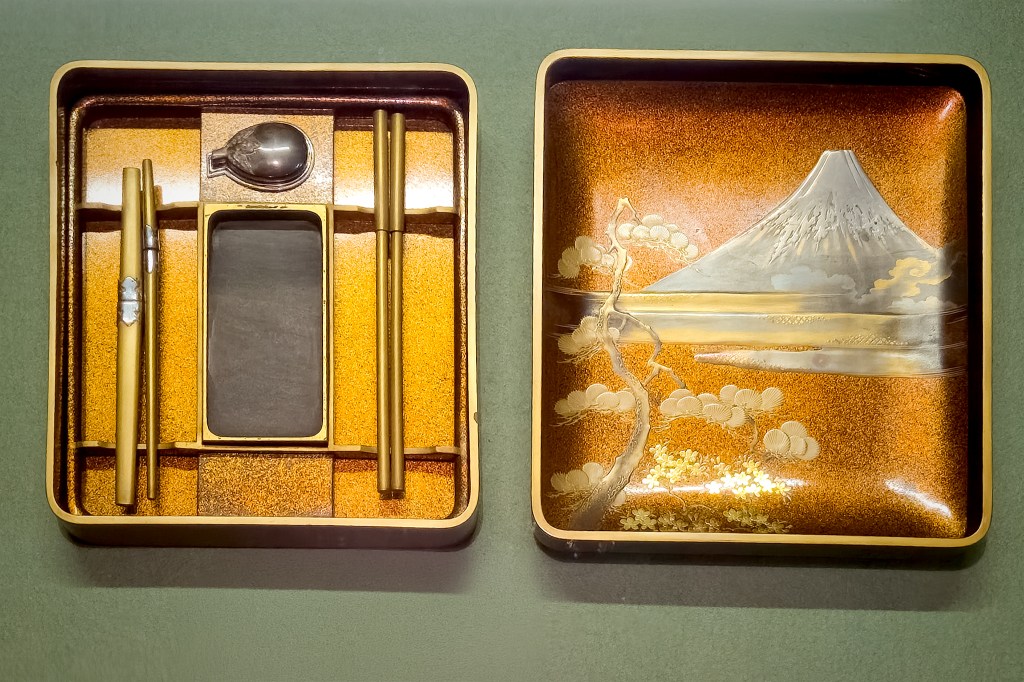
I have come to see the house of the Honma family in Sakata, a famous family that became extraordinarily wealthy during the Edo era through trade, finance and investment in land. Two magnificent residences remain today, along with a garden where nostalgia for the glorious years prevails over the noise of modern times. There is also a museum displaying works of art and precious objects collected or received by this great merchant family.
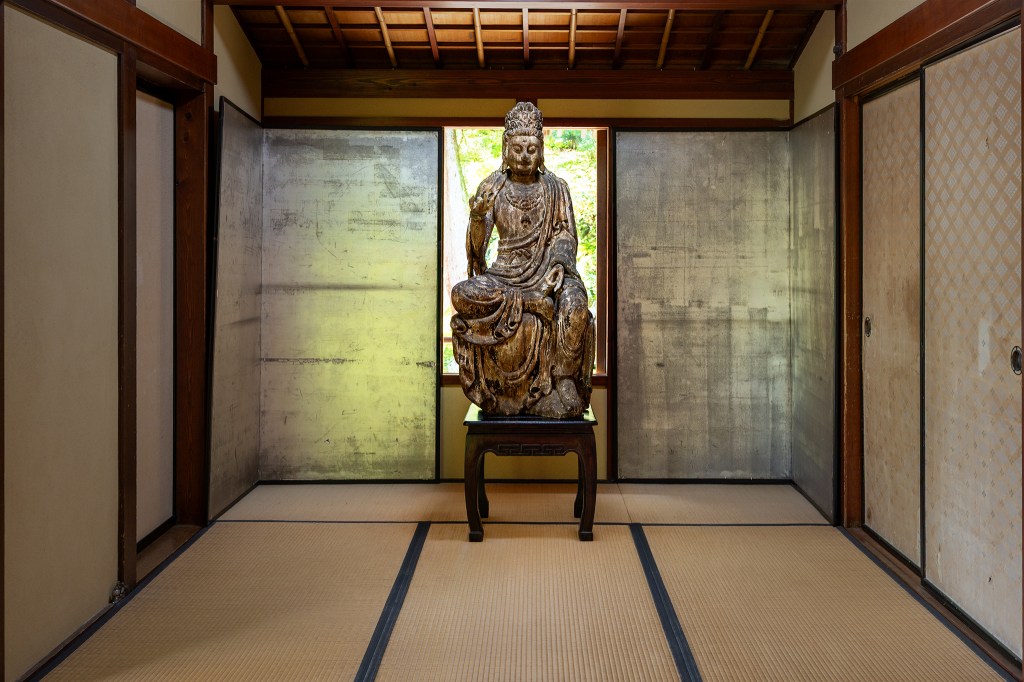
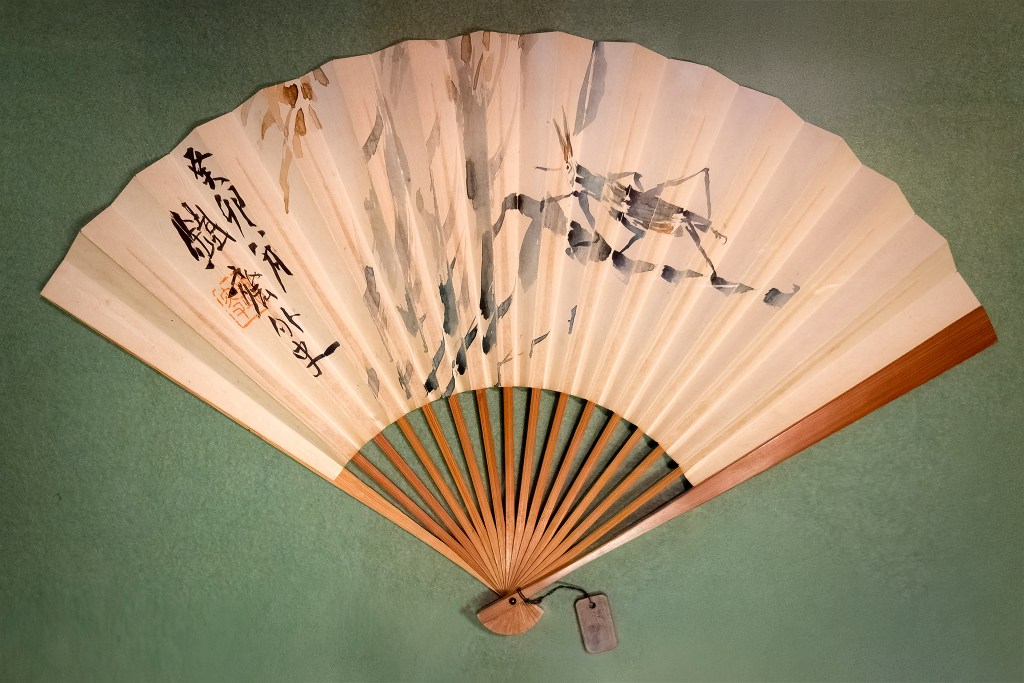
The rise of the Honma family is linked to water. It began at the end of the 17th century, when Honma Haramitsu opened a business in Sakata. The timing was ideal: the port of Sakata was developing rapidly, goods arrived along the Mogami River before leaving on the new maritime trade route. Rice, safflower, wax, indigo and other products from Tōhoku, carried along the river, travelled towards Ōsaka and the Kansai region. The boats then returned laden with manufactured goods and luxury objects.
The Honma would become legends of Japanese commerce. They invested, lent money to landowners and struggling farmers, financed daimyō and feudal administrations, acquired land and reinvested in warehouses. During the crises of the 19th century, they remained attentive to the social situation, distributing rice and creating soup kitchens during famines. During the Meiji Restoration, they invested in banks and schools and adopted new industrial techniques. They nevertheless remained major landowners, living largely from the rents paid by tenant farmers.
After the Second World War, land reform forced the great landowners to surrender the land farmed by agricultural workers. Part of the family inheritance was transformed into cultural heritage. The Honma Museum opened in 1947, becoming one of the first private museums established after the war. For more than three centuries, the history of the Honma family formed part of the history of Japan. Today, it represents a form of national memory, stretching from the Edo era to contemporary Japan.
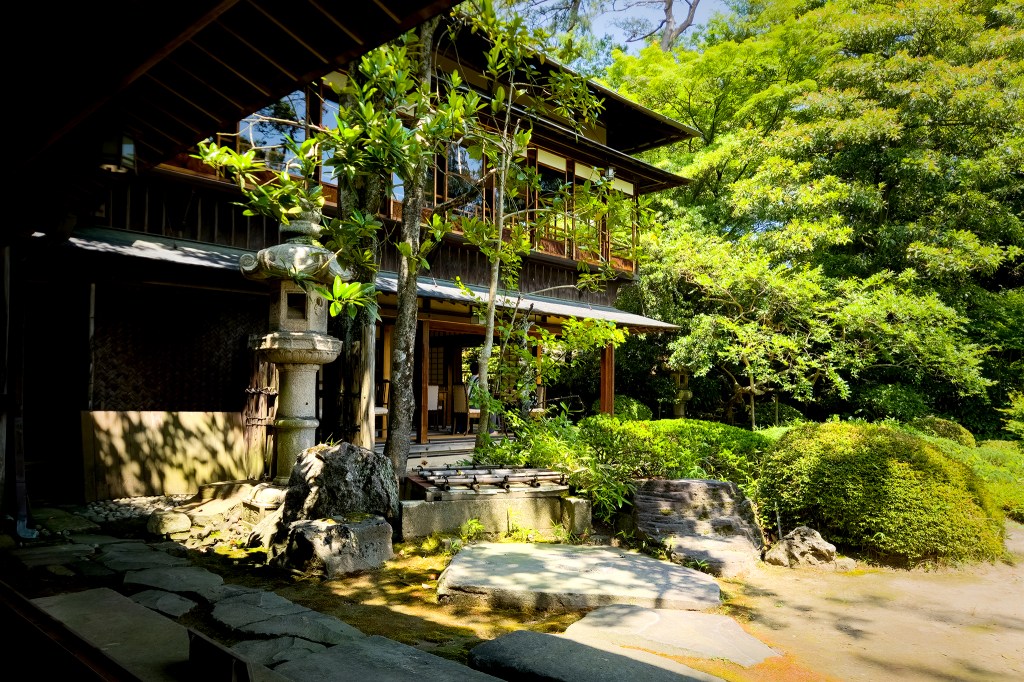
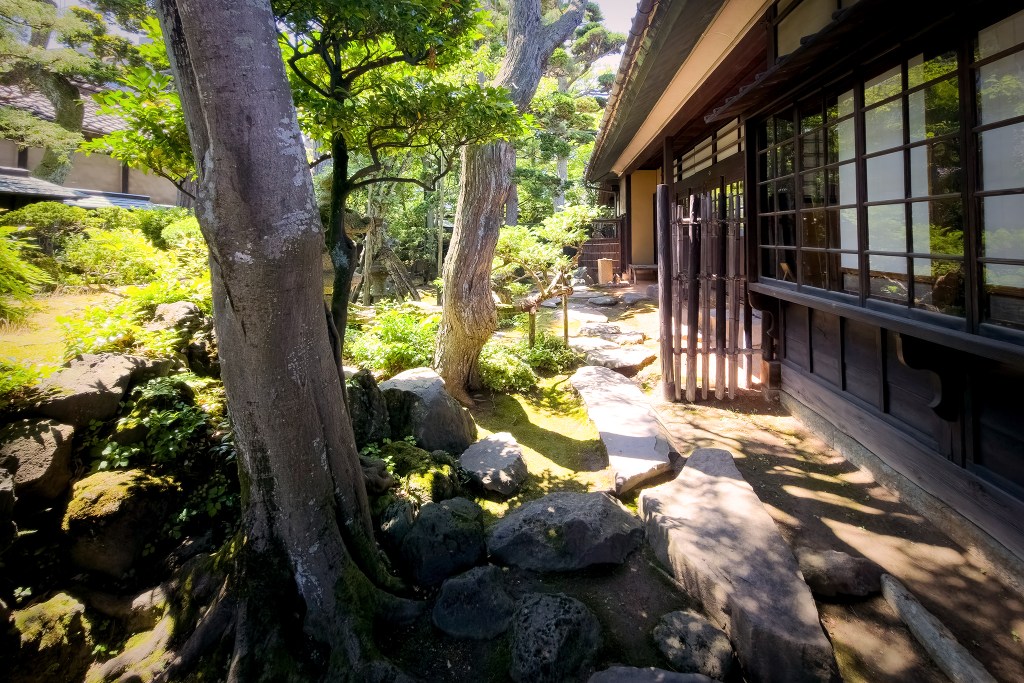
The house adjoining the museum was used to receive prestigious guests, prominent traders and merchants, as well as Japanese nobles and political leaders. It is surrounded by a magnificent garden. Such places are precious in Japan for a foreign visitor, particularly somewhere like Sakata, which tourism has largely ignored. For a few moments, they allow you to imagine being someone else, sitting on a tatami and contemplating a garden, watching the shadows and light sculpted by the end of the day. Or, as I did this morning, sitting and slowly drinking matcha tea, taking care to turn the bowl through two quarter turns in the palm of the left hand so as not to drink from its most beautiful side.
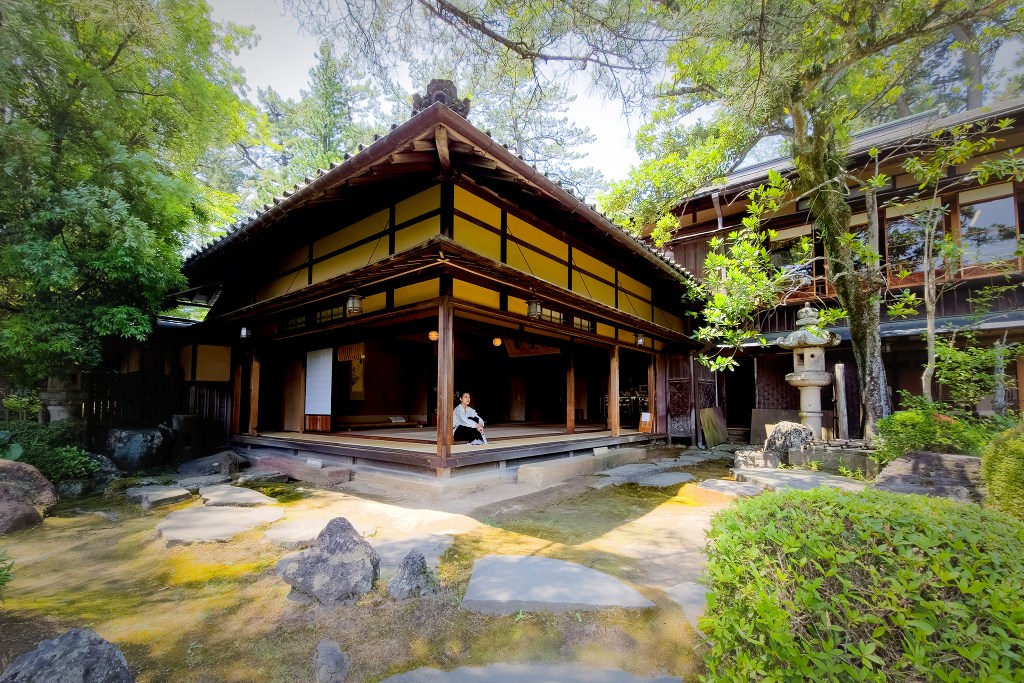
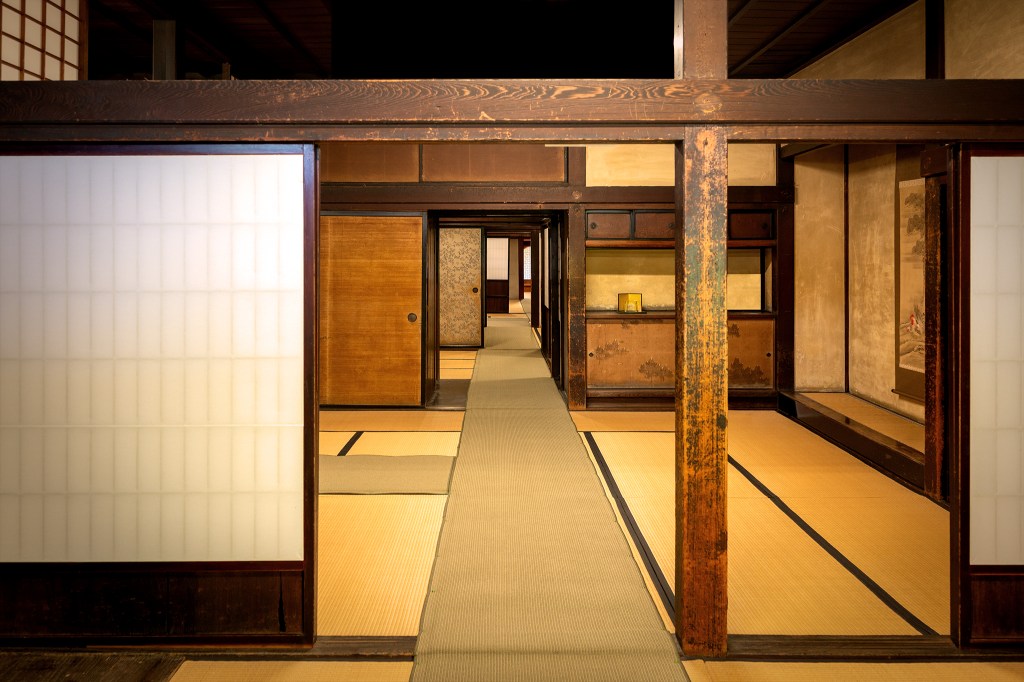
The Honma family’s other house is very different; it was the family residence, a home whose architectural inspiration clearly came from the samurai families of the Edo era. It is immense: 23 rooms, more than 600 square metres, several hundred tatamis covering the floors. A monumental gate, extended by walls surrounding the house, demonstrates the family’s wealth. The family is still respected today for its contribution to Sakata’s development, both economically and socially.
In the evening, Sakata empties once again. After nightfall, the city becomes ghostly. Poorly lit, the streets leave great expanses of black shadow, and every sound, every movement can become disturbing. A few cars pass, very few, their headlights occasionally revealing unnoticed corners. I think about the bears; posters warning about them are everywhere, and everyone is talking about them. I hear the word bear in conversations without understanding what is being said. A cat emerges from the shadows and runs across the deserted street, making me jump.
熊
Kuma – bear.
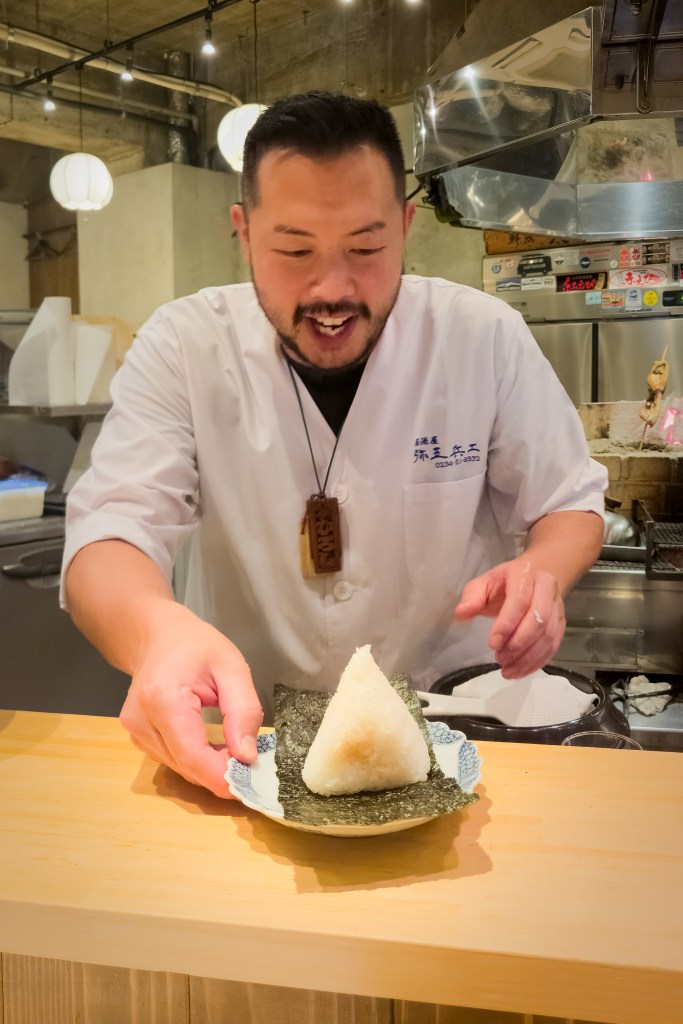
I reach the izakaya I have been looking for. Inside, the contrast is striking: the calm of the street gives way to excitement. It is large, and the counter can seat twelve people. One place remains, and it is mine. The chef assesses me with a glance, then points to the seat with a smile. Yagobee has a good reputation, as the reviews indicate, and a reservation is normally required to get in. My good fortune is that I am alone and that the chef has taken a liking to me. Everything is genuinely of a very high quality. His signature is an おにぎり served as dessert. The rice is cooked in a 土鍋, a traditional earthenware pot, and wrapped in nori from Shichigahama, a seaweed of exceptionally high quality that was traditionally presented to the Imperial Household.
おにぎり
Onigiri – a rice ball wrapped in a sheet of nori.
土鍋
Donabe – an earthenware cooking pot.
To reach the Ken Domon Museum of Photography from the station, you must cross to the southern bank of the Mogami River. It is famous for having inspired a haiku by Bashō as he travelled downstream by boat. 五月雨を集めて早し最上川 (Samidare o atsumete hayashi Mogami-gawa / Gathering the seasonal rains — swift, the Mogami River). It was also an essential element in the development of Sakata and the wealth of the Honma family.
As I cross the river, the urban landscape changes completely. I leave the old town, the former warehouses and the port behind to enter the modern city. Residential districts mingle with schools and Tōhoku Kōeki Bunka University. Museums and cultural centres stand beside sports grounds. On the way, I pass students in baseball uniforms returning from a match. Excited by their achievements, disappointed by their failures, they pass on foot or by bicycle beneath a burning sun.
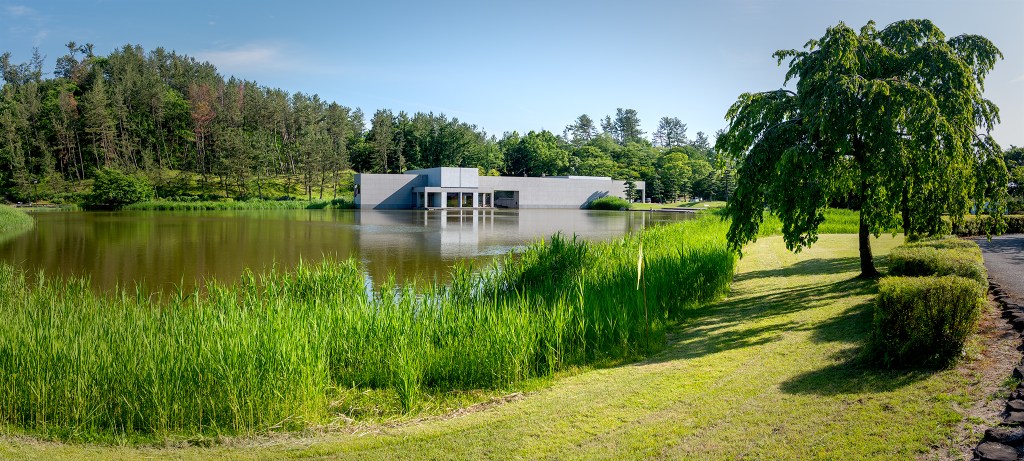
It takes a little over an hour on foot to reach the Ken Domon Museum of Photography, crossing the immense Dewa Bridge. The building, constructed in 1983 by the architect Yoshio Taniguchi, famous for renovating and expanding the Museum of Modern Art in New York, stands beside a pond surrounded by greenery. Concrete and water are characteristic elements of Taniguchi’s work, and the museum dedicated to the Zen thinker D.T. Suzuki in Kanazawa is a magnificent example. Taniguchi’s buildings are discreetly placed within nature. They do not disturb it but blend into it without ostentation, almost shyly. They are held in balance within a setting where the sound of water, birds and insects forms part of the charm and beauty of the place.
Ken Domon marked the history of photography in Japan, and the museum created by Taniguchi was the first in the country to be devoted entirely to photography. The project began when the photographer donated his entire body of work to Sakata, his hometown, in 1974. Ken Domon never saw the completed museum. After suffering a third stroke in 1979, he fell into a coma from which he never emerged.
His work offers an essential perspective on Japan in the 20th century. Born in 1909, he witnessed during his youth the modernisation of Japan and the authoritarian drift of the 1920s and 1930s that would bring the military to power. After entering university, Ken Domon became involved during the 1930s in a movement defending farmers that was close to the Communist Party. He was arrested and detained in 1932 by the political police, the Tokkō. The extremely harsh repression of the period led him to abandon both university and political activism. He decided to join a photographic studio, where he began his apprenticeship in photography.
The violent political context explains, at least in part, why artists and activists chose to abandon protest and blend into Japanese society. The violence of the repression is symbolised by the death of the proletarian writer Kobayashi Takiji on the day of his arrest, 20 February 1933, under torture by the Tokkō. Communists and left-wing activists were systematically hunted down and arrested by the political police.
Ken Domon’s life then appears to shift towards the side of military power. In contradiction with his years of political activism, after completing his training as a photographer, he joined the Nippon Kōbō agency in 1935, whose work consisted of promoting Japan culturally and industrially. It was necessary to present a country that had become the equal of the most developed Western nations. The magazine NIPPON, published by the agency, offered through images a modern, cultural and nationalist vision of Japan. It was published in English, French, German and Spanish.
Ken Domon’s first major photographic report, entitled A Weekend in Izu, was published in issue No. 8 of NIPPON in August 1936. The movements, the bodies, the gestures, the action, the beginnings of his work are already there. He does not photograph landscapes; he places his subjects within them. Places are shown and revealed by those who live and work there. The images describe the nature of a job, the pleasure of a game, the very existence of those living in the captured moment. These are everyday lives, magnified by his gaze. Ken Domon tells the story of Japan as it is.
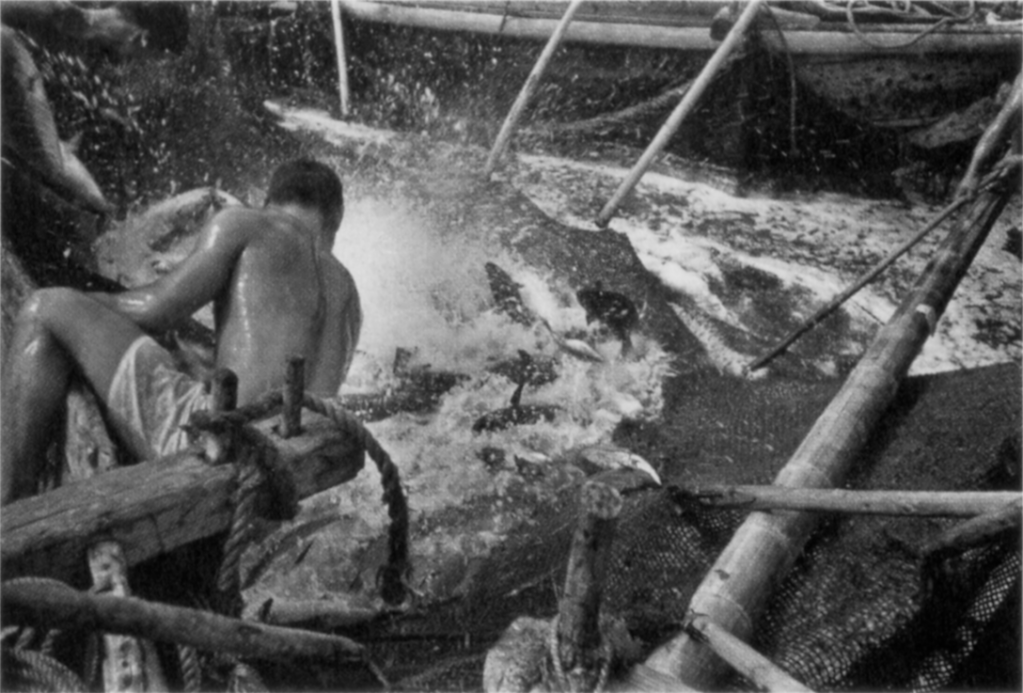
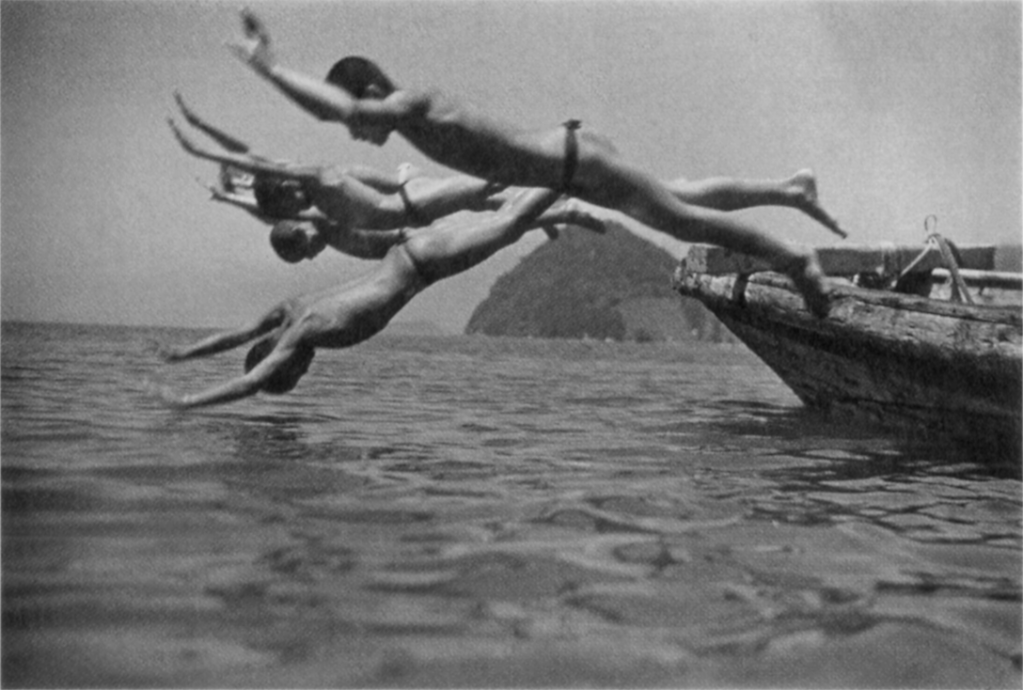
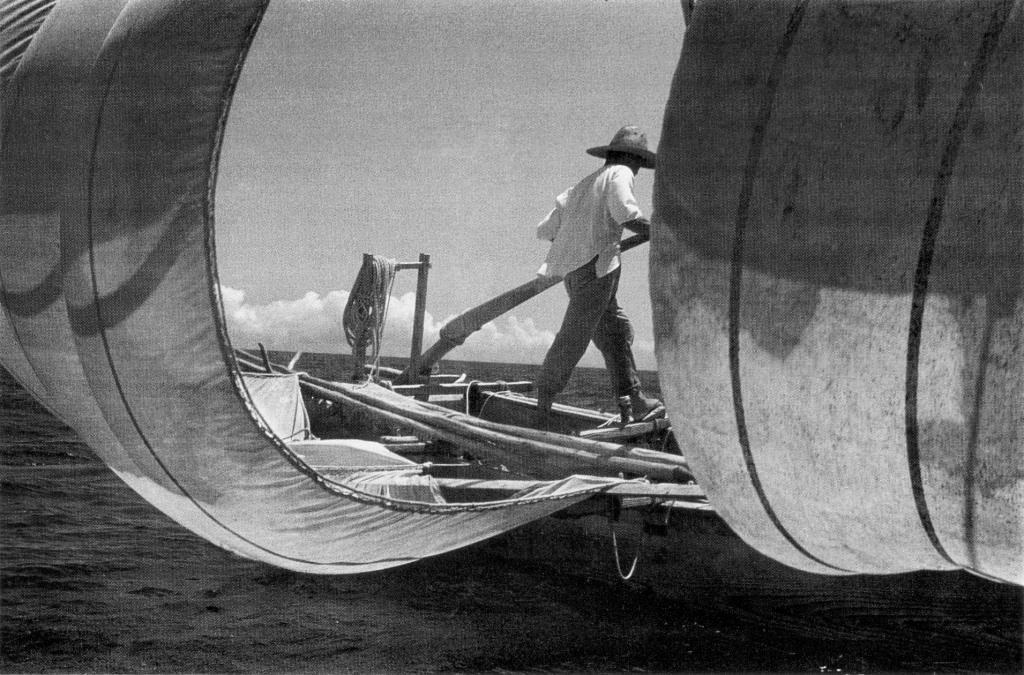
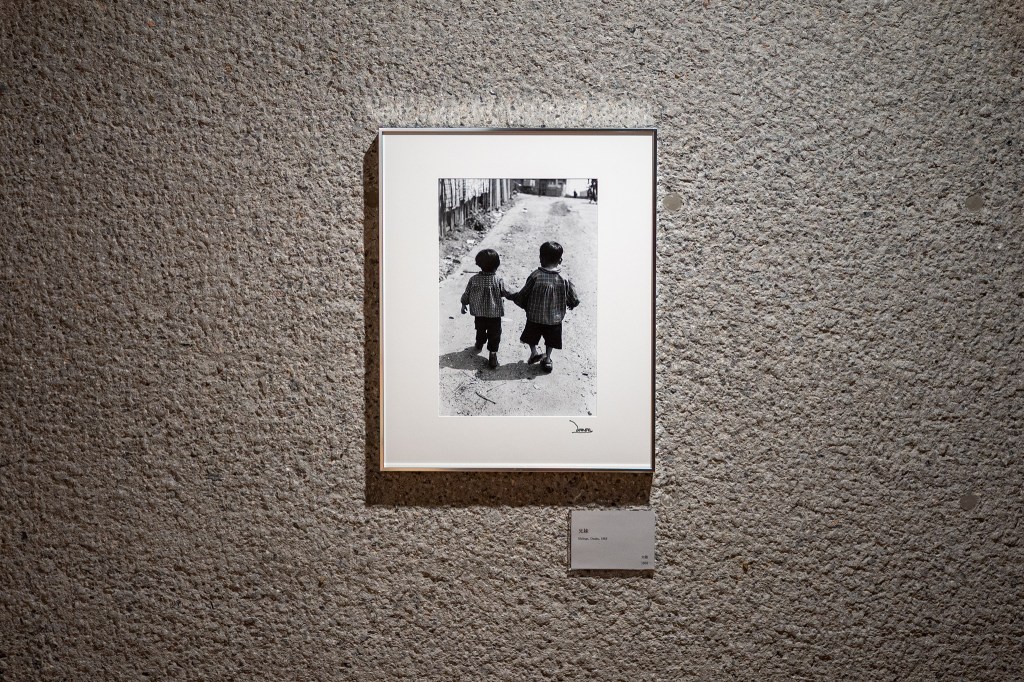
As I enter the museum, I know none of this. I have never seen a photograph by Ken Domon. The shock is immense. A single image on a vast grey wall, small and lost. 兄妹, Osaka, 1955. A brother and sister walk hand in hand along a dirt road. They climb towards a narrow space where a light seems to shine, passing beside a ruin, a shack. How long have they been walking? It does not matter; they are moving together towards something else. The younger sister seems to pull her brother, who walks with his head lowered. She has confidence, she is hope, she is Japan being reborn.
兄妹
Kyōdai – siblings, brother and sister.
After the war, Ken Domon became the tireless witness of his country. He was present in the great cities annihilated by bombing, Tōkyō and Ōsaka; he was in the hospitals of Hiroshima. He looks at reality and captures it through gazes, gestures, anger, laughter and smiles. His realism is striking and possesses immense historical value; it is there to remind us of what the madness of war causes. We need it so much today.
A young girl in rags breathes in the scent of a flower; behind her, an angry woman stares at the photographer. Children are given food. A wounded woman begs, collapsed over her sick child. A dirty, sad child sits on the ground. A little girl looks on mischievously. Thousands of other images tell the story of post-war Japan through these children. They are the future of Japan at the time Ken Domon looks at them. The photographer knew how to capture suffering and hope, and he still manages to touch us today.
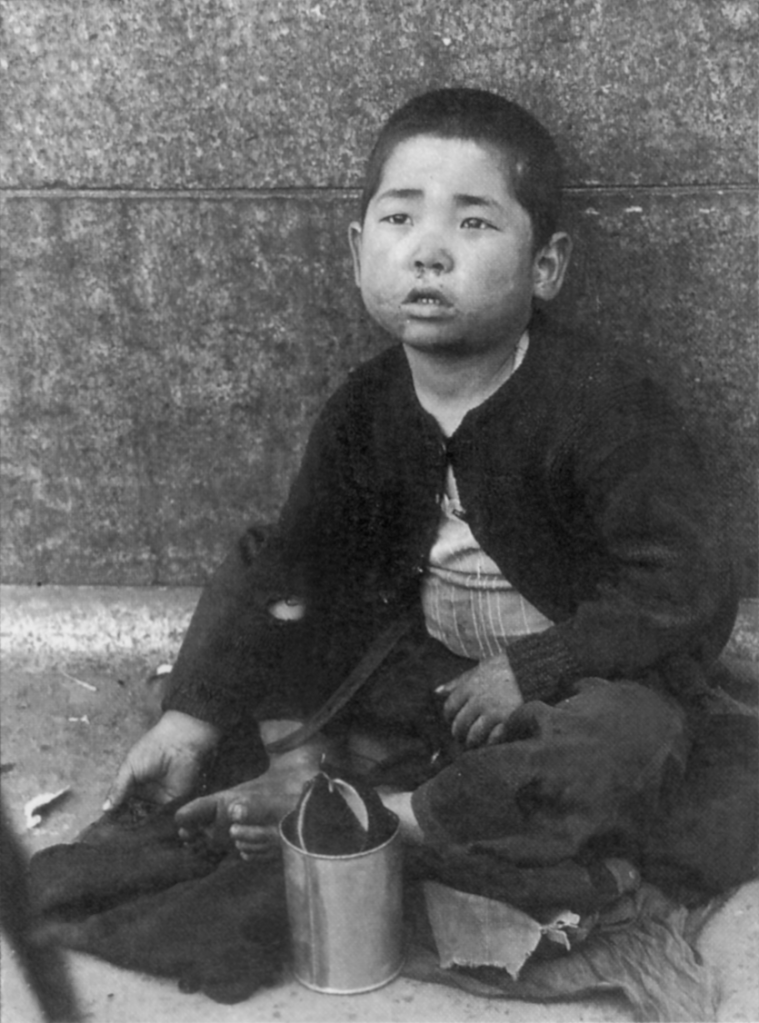
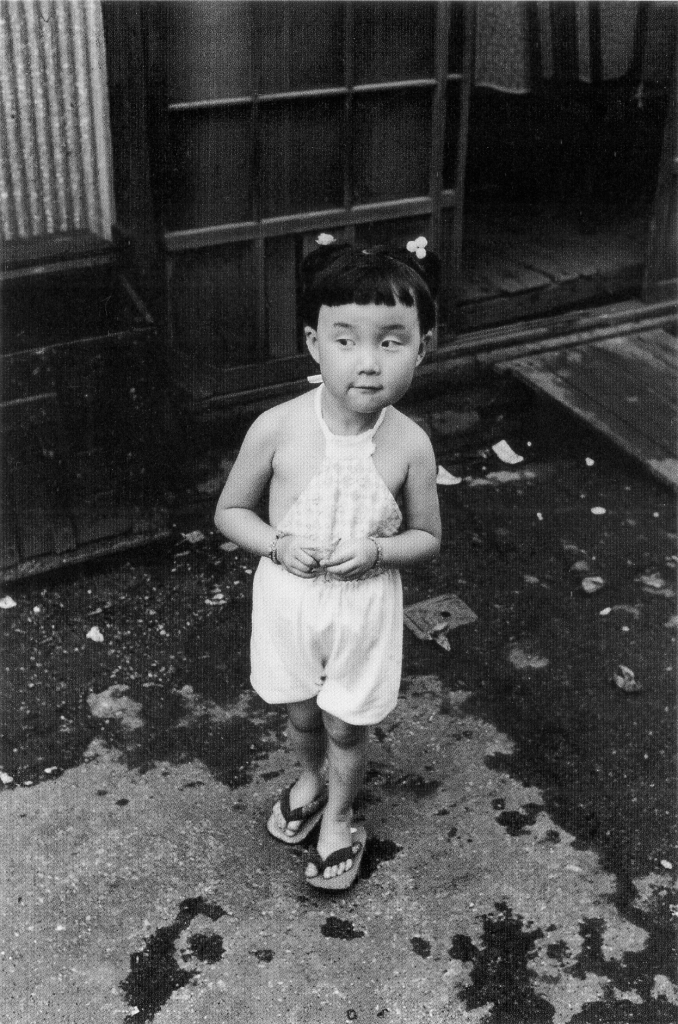
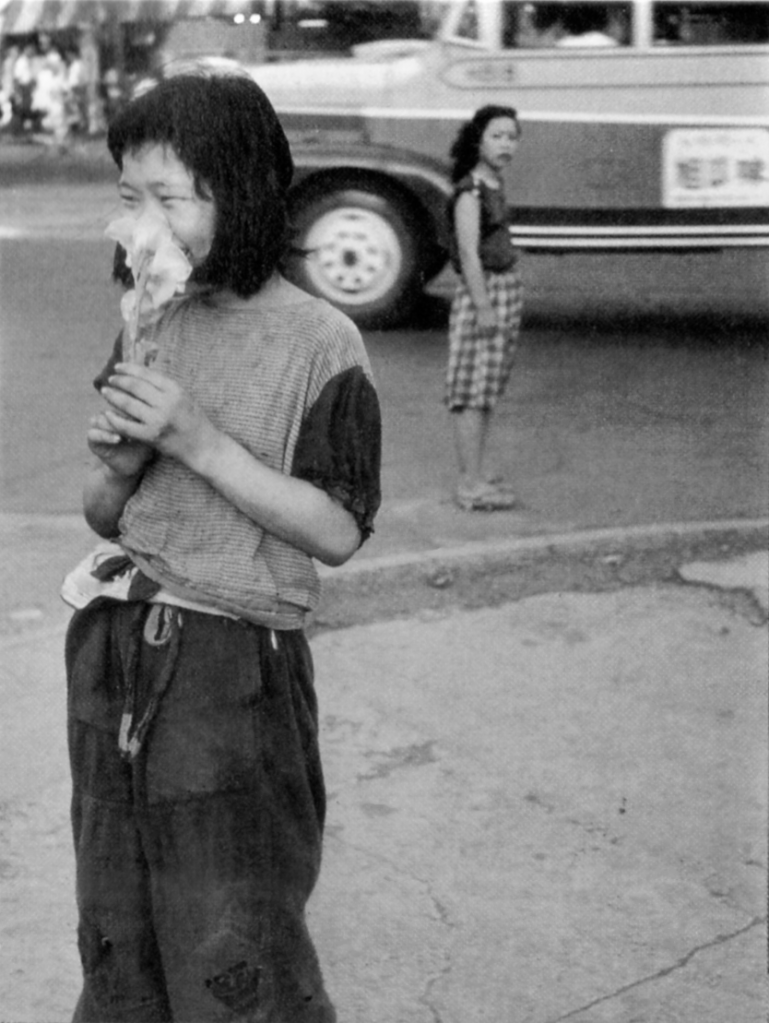
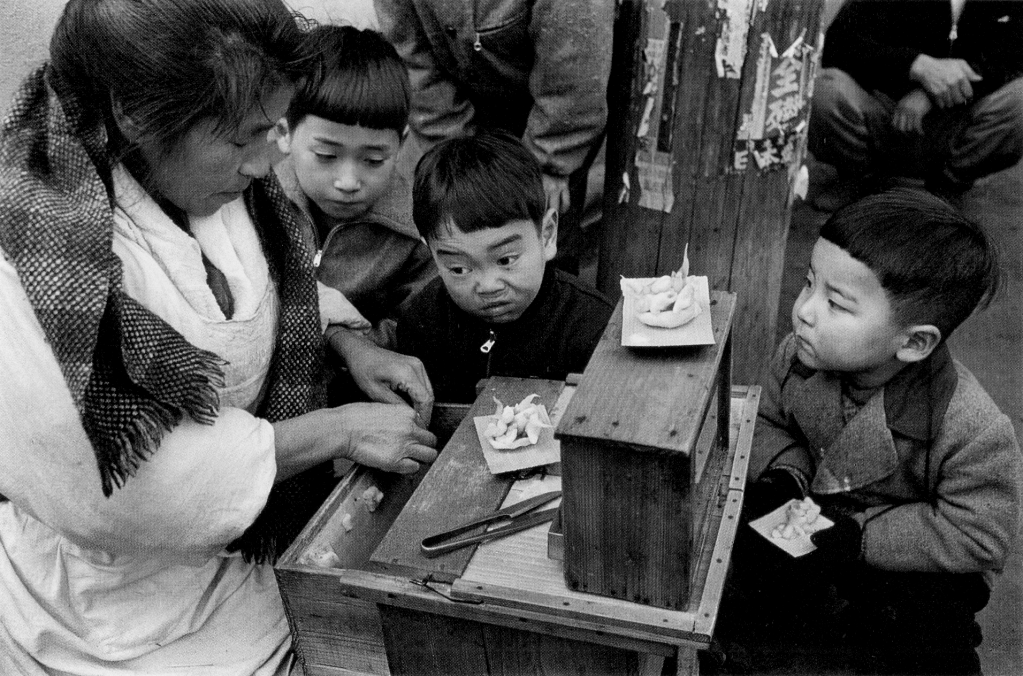
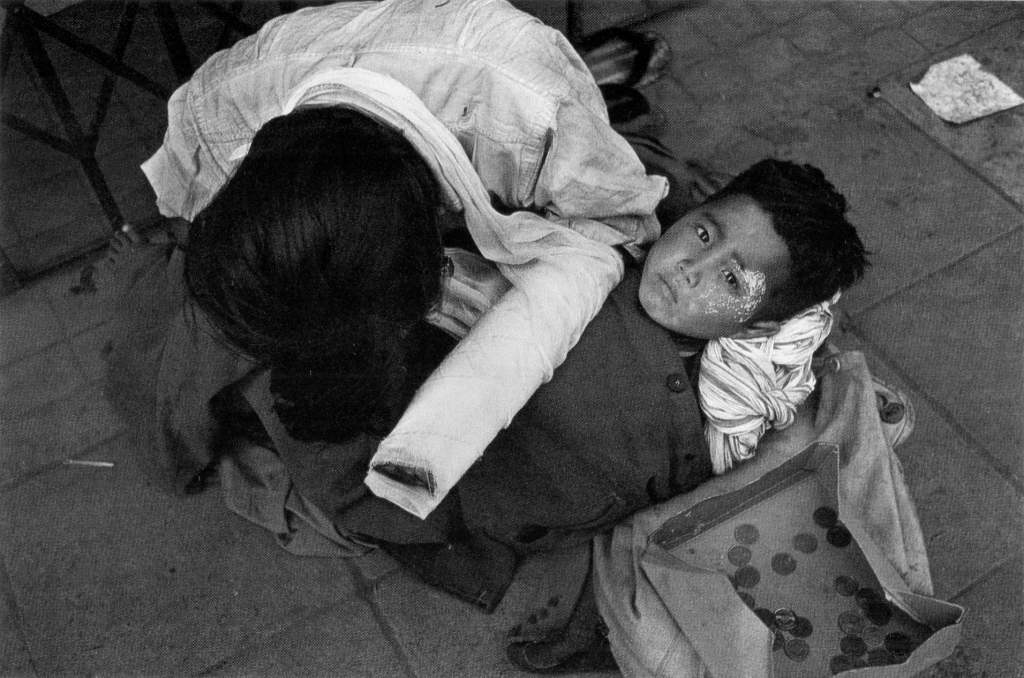
The faces, bodies and movements photographed by Ken Domon tell the story of Japan. I think of the great Buddha of Sakata: with one hand he protects the children, with the other he welcomes them, but unfortunately he is only a symbol. A photographer is not a protector; he shows reality, and it is up to us to see it. The realism of Ken Domon’s images is striking. It overwhelms me and transforms my own gaze, even my very emotions. There is a true harmony in the photographer’s work, a consistency: that of showing without artifice. His portraits of the great figures of his time, Mishima, Kawabata, Tanizaki and dozens of others, also bear witness to it.
I am a travelling student; today, I have learned. The harmony of an image, the coherence of a body of work, the unique gaze of a complex man upon his country. The dark streets of Sakata envelop me. They are deserted, sometimes accepting the shadow of a cat. Someone comes out of a house, making me jump, and I smile. The street rises slightly and runs alongside wooden houses. I can make out a few planks on the ground; they appear worn by time. Over there, at the end of the street, there is a faint light. It seems far away. The warm wind quivers in my hand, leading me onwards like the hand of a child filled with hope.
Mata ne


