

Ohayou
June 24, 2025
Hokkaidō is a completely different Japan from the rest of the country. The great northern island, 北海道 in Japanese, only began to interest Japan from the mid-19th century onwards. The first fishermen settled there around 1600; the island, which they called Eso or Yeso at the time, was then exclusively inhabited by Ainu tribes who had been pushed out of Japan over the centuries. Eso was officially integrated into the country on September 20, 1869, and was renamed with the name it bears today.
北海道
Hokkaidō – Route of the Northern Sea.
Today, the island is home to over 5 million people, yet remains wild in many areas. Its surface area, twice the size of Switzerland, makes it a sparsely populated territory. Its population density is five times lower than that of Japan and a thousand times lower than Tōkyō’s! It’s a natural paradise of mountains, rivers, forests, and lakes – bear country. In winter, it snows heavily for months, and temperatures can drop to Siberian extremes. In the north, on the Sea of Okhotsk, one can watch and listen to drifting sea ice during winter.


Otaru, west of Sapporo, welcomes me warmly. The small town nestled between sea and mountains has just over 100,000 inhabitants. I know enough of them that as soon as I step out of the station, rolling my luggage, I’m greeted with cheerful 久しぶり! I’m lucky to be a friend received a few days a year with the kindness, attentiveness, and humor that characterize the people of Hokkaidō.
久しぶり
Hisashiburi – long time no see.
It’s still cool in this town that, in many ways, is the polar opposite of Kanazawa. There’s no need to compare the two cities. I need them both equally. The people I’ve met there taught me how to love Japan and the Japanese. In the alleys of Otaru, cracked open by winter, as in those of Kanazawa lined with old wooden houses, I feel, fleetingly, that I’m home – if only for a moment.
Otaru, through its architecture and urban layout, reflects its development in a Japan opening to the West and to modernity during the Meiji era, in the latter half of the 19th century. Its famous canal is lined with buildings evoking the industrial revolution, and its streets are dotted with houses that are clearly from another era, but more importantly from another style – Western. Hokkaidō is this paradox: a land of untouched nature and urban areas Westernized from the very beginning of its existence in modern Japan.
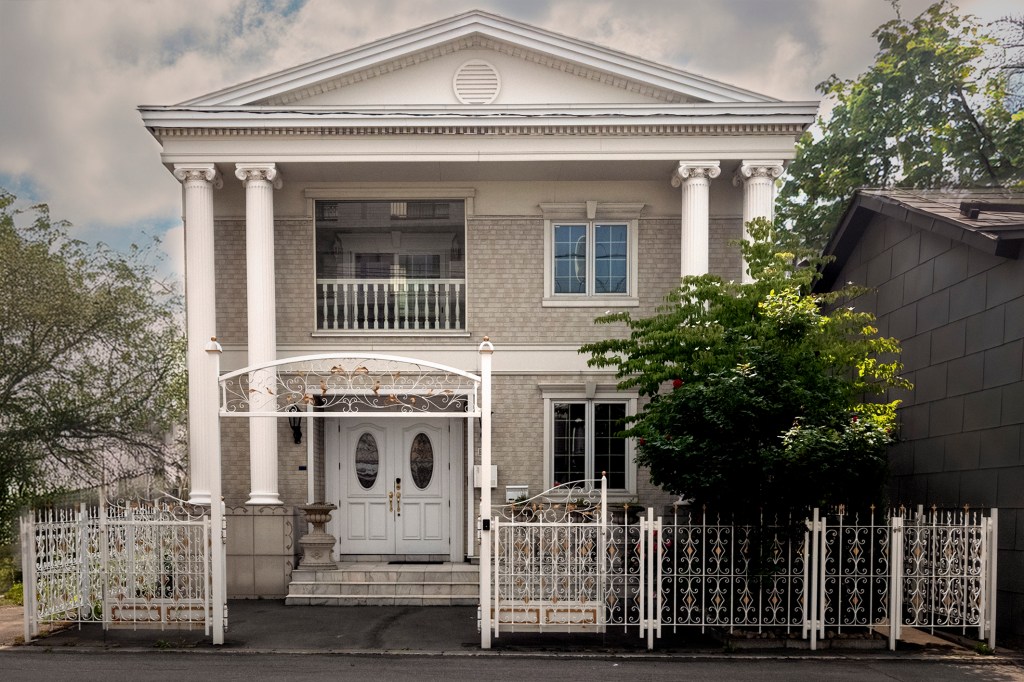


Otaru embodies this particularly well. The city’s development is owed to two things: the sea and coal – two essential elements in the age of motion ushered in by the industrial revolution. Its modern port, built in 1870, quickly became a major hub for trade with the rest of Japan. Coal, the lifeblood of steam engines, was exported, brought wealth, and allowed for the construction in 1880 of the first railway line connecting Sapporo to Otaru, only eight years after Japan’s first line between Shimbashi and Yokohama.
But the true charm of Otaru doesn’t lie in its late-19th-century architecture, photographed en masse by Chinese tourists who see it as the very image of “old Japan.” Nor does it lie in the remnants of its old railway, turned into a tourist attraction and even a museum for train lovers. It certainly doesn’t lie in its ski slopes swarmed by Westerners every winter. The real charm of Otaru is what most visitors, too rushed or too scheduled, never see: the people who live here.
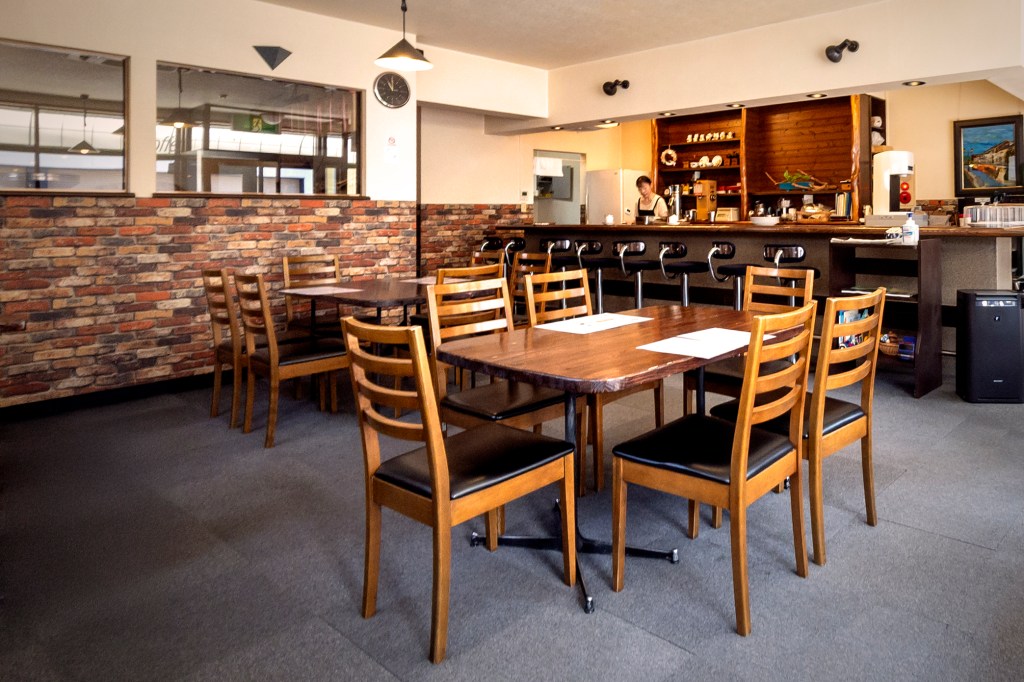

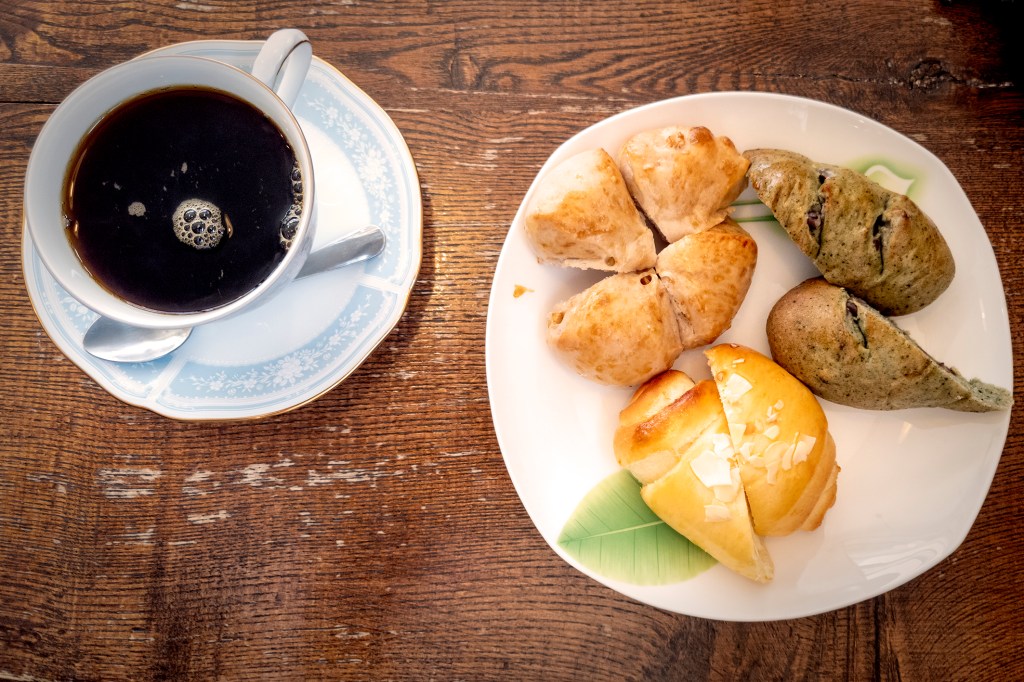
Each day begins at Café Artisan, the kissaten where I write in the morning. The coffee is roasted by the couple who run the place and comes in three blends: ストロングブレンド, ソフトブレンド, アメリカン; and there are 13 other coffees from around the world, from Brazil to Kilimanjaro. They also make delicious little buns filled with cinnamon, apple, walnut, almond, cheese, or mugwort – the plant used in absinthe – which makes for bright green buns. I love the smell of coffee; it dominates the air, though sometimes it’s overtaken by the aroma of buns fresh out of the oven. I love seeing the old-timers from town come in to read the paper or chat about everything and nothing. I love the constant stream of classical music – Mozart, Chopin, Brahms, Schubert, Vivaldi.
ストロングブレンド
Sutoronguburendo – Strong blend.ソフトブレンド
Sofutoburendo – Soft blend.アメリカン
Amerikan.
Then it’s time to head out for a walk without any plan, although in this small town I’ve wandered through so much, in summer and winter, there’s little left to chance – unless I leave the center, which isn’t the goal today. The stroll starts along the old railway track, now one of the town’s attractions. Chinese, Korean, and Japanese tourists all engage in the same ritual: one balances along a worn-out rail, the other takes the photo. It’s a mandatory performance, done as a couple, as a family, with friends – sometimes even solo. It’s charming and silly, amusing – trains have this curious power to turn adults into children.


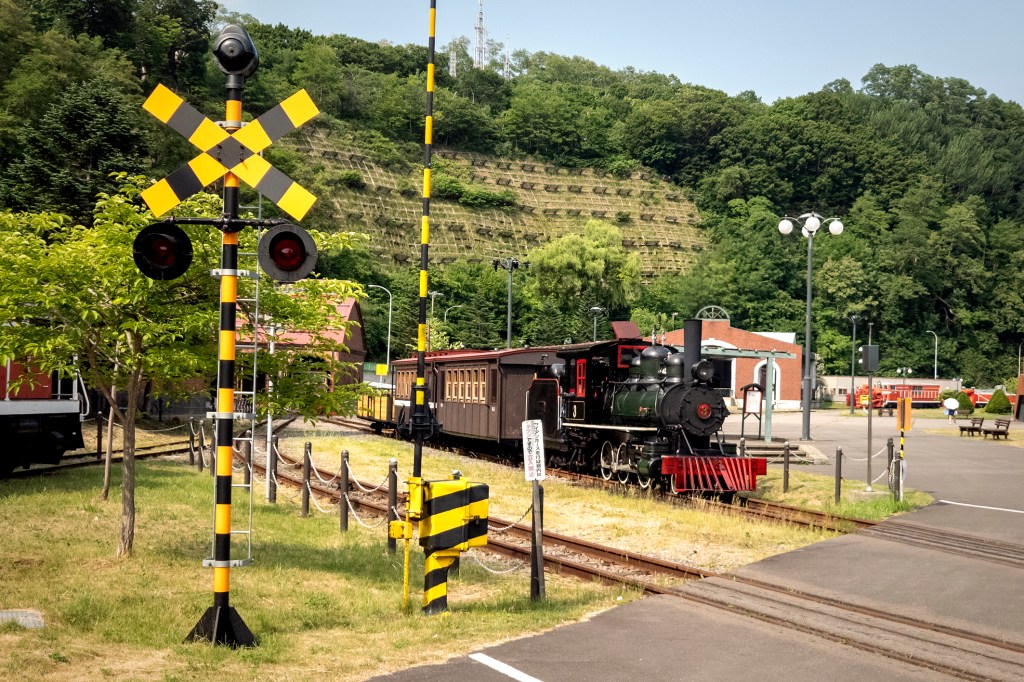
At the end of the track is a full-scale museum where a variety of locomotives and carriages from different eras lie in peace, showcasing their bygone power. They’ve had their day, not all are in good shape, but one still huffs and puffs smoke while nearby two workers in period costume bustle about, polishing it to a gleaming shine. Visitors can ride in vintage carriages pulled by this old engine. The ride ends on a 転車台 that allows the locomotive to turn around.
転車台
Tenshadai – turntable.
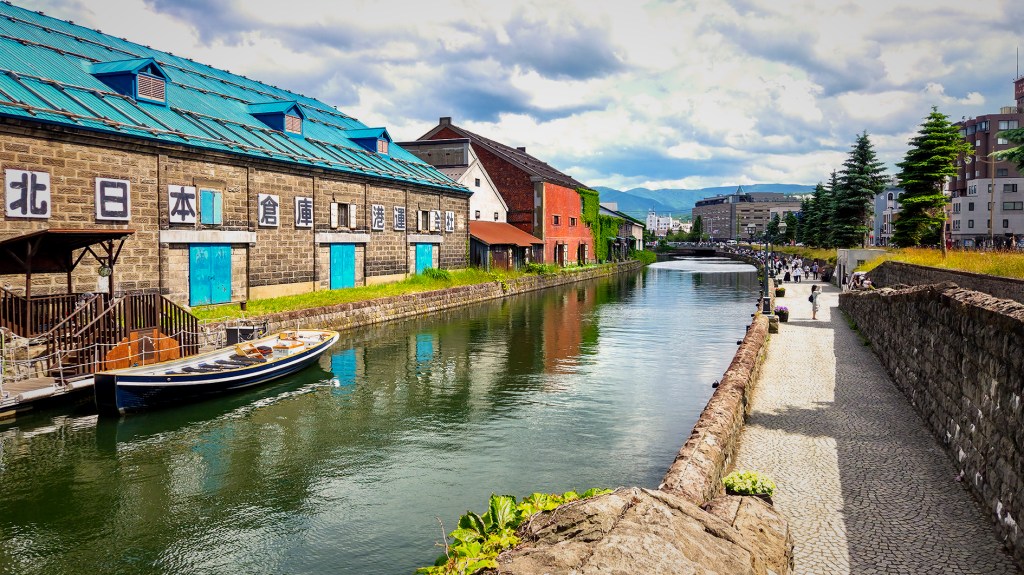
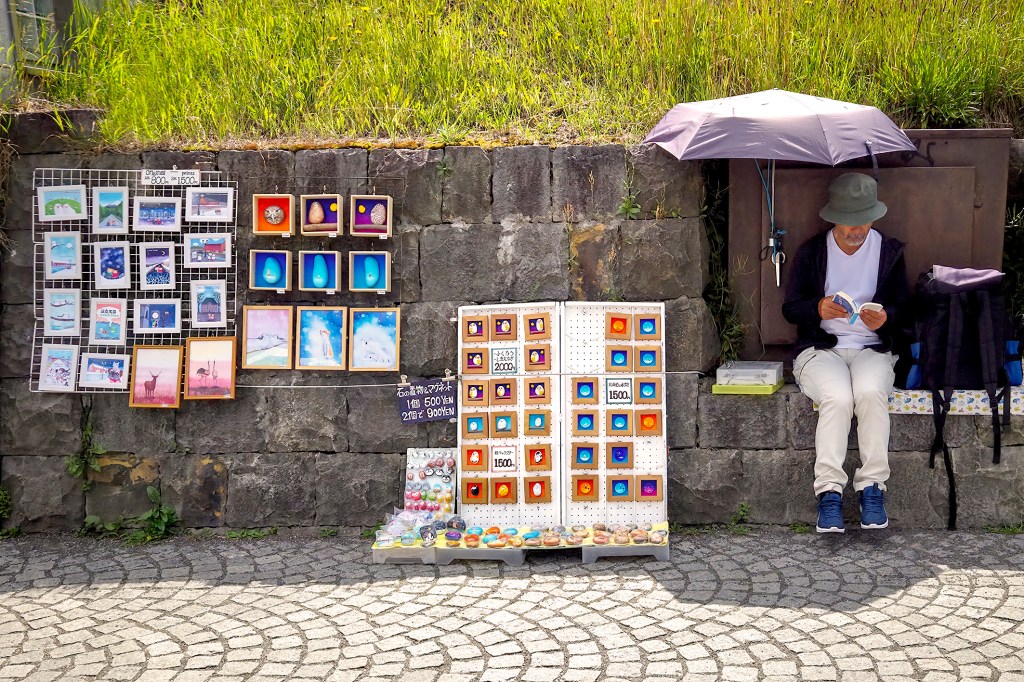
The museum doesn’t draw crowds like the canal does, where everyone strolls along the banks, takes rickshaw rides, or picks up trinkets from makeshift stalls – a bit like the banks of the Seine. Everywhere, signs are in Chinese, Korean, or Russian in addition to Japanese. These are Japan’s three closest neighbors, and they make up most of the tourism. Couples, families, and friends meander, but also groups driven hard by yelling guides waving little flags. No one has time. Most visitors stay only a day, maybe a night. The priority is to rush off and buy unnecessary things in the long row of shops lining the canal.
人力車
Jinrikisha – rickshaw.
Sakaimachihondori, the tourist shopping street, is where the crowd thickens – the essential objective of every visit, no matter how brief, is to buy! Everything is planned, organized, and structured for this. Guides pitch the virtues of some local product, some craft, some unique flavor that must be taken home to spark envy in others. The spectacle is fascinating – almost comical at times, like that line of at least 20 Chinese tourists waiting their turn to relieve themselves in a コンビニ.
コンビニ
Konbini – 24/7 convenience store.
The most surprising thing about this district is the buildings themselves – clearly of early 20th-century Western architecture. These are old banks that flourished in Otaru during its golden age of trade and industry. The wooden buildings, very unlike traditional Japanese architecture, look straight out of the Wild West or a German village. They’re the very image of Japan’s opening to the West from the end of the 19th century.
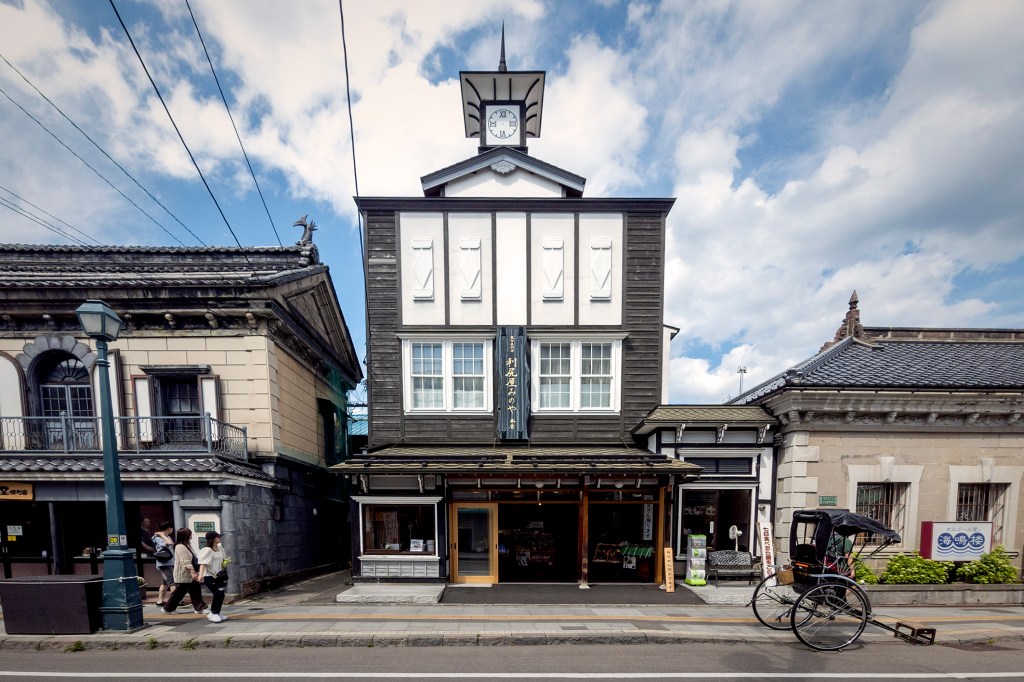
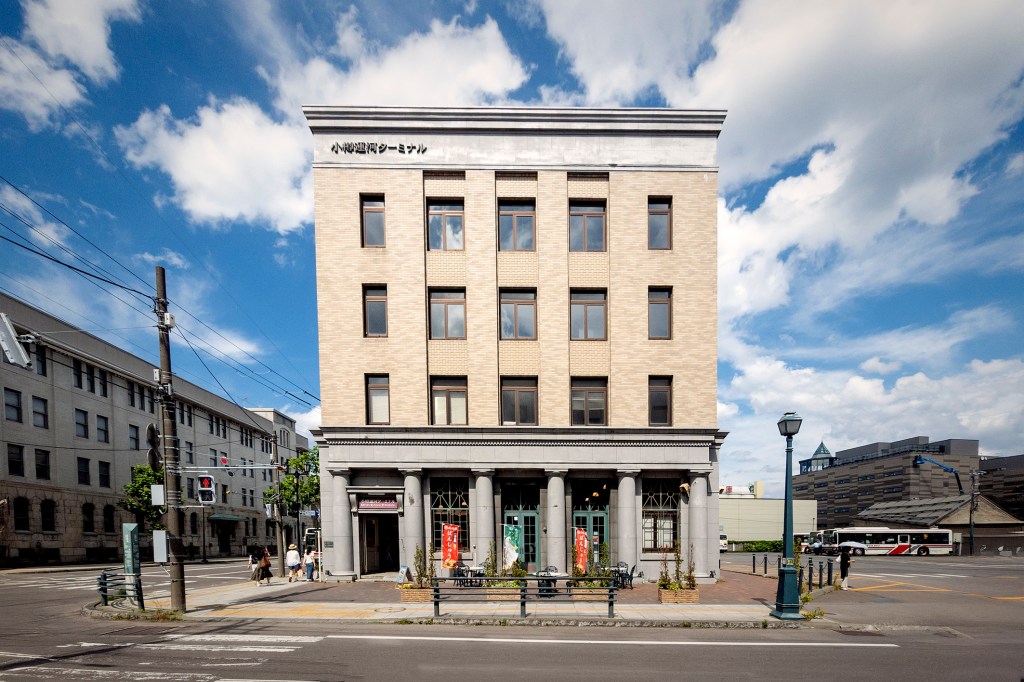
This image is also found in an open-air museum in Sapporo: 北海道開拓の村 (Hokkaidō Kaitaku no Mura – Historical Village of Hokkaidō). A fake village has been recreated with a train station, town hall, police station, school, photographer’s studio – 31 buildings in all. The houses were brought in from all over Japan, dismantled and reconstructed on the heights of Hokkaidō’s capital, proudly evoking this Western-inspired past. Inside these buildings open to visitors, wax statues of people from the era send a bit of a chill down your spine.
But the true charm, the real beauty of Otaru, lies in the people. My friend Makki gives me yet another example of this when I go to eat at her izakaya on the Little Brick Alley. She gives me a gift – not just any gift. She had the name of this blog and my Japanese name written in calligraphy, in two different styles.


I’m deeply touched by this gesture of friendship, by this beautiful choice, by such a delicate understanding of what matters to a friend. Since that summer evening in 2019 when we met by chance, when I was invited to the table of Lucky Management – her izakaya – we’ve come a long way. The impermanence of friendship has this beautiful side: it can evolve into more complicity, more understanding, more sharing, more mutual respect.
In the Japanese night, a few drops fall on a happy walker, an emotional sky follows his return, and his sleep will be dreamy and harmonious.
I love this country
Mata ne

