

Ohayou
December 2022
The name of the city of Kanazawa is written in Japanese with the kanji of gold 金 and that of the marsh 金. Legend has it that the name comes from a peasant who made gold by digging in a marsh. Beyond the legend, there is really gold in Kanazawa where they always produce the gold leaves that are used to cover the temples and which must be regularly renewed. This has been the case for several centuries. One of the attractions is also the pastries and ice creams sold with real gold flakes that can be eaten. The centre of this trade is in the Higashi district, home to the Geishas.
金
Kin – gold.沢
Sawa – swamp, marsh.
There is a castle in Kanazawa, it was completely rebuilt in the 20th century after being destroyed several times, it is a beautiful and very impressive building. There is one of the three most beautiful Japanese gardens in the country, the Kenrokuen which is splendid in all seasons. I go there several times on each trip, I would like to see it under the snow and in the spring when the cherry trees bloom. On Sundays and holidays, Japanese women and men take their kimonos out for a walk.
There is the old samurai quarter where you can wander with the impression of going back in time, visit one or the other house that has been preserved, which is rare in Japan. On the one hand because the Japanese do not attach great importance to old buildings, always this impermanence of things, on the other hand because 40% of the buildings in Japan were destroyed by the American bombardments during the war. Kyoto and Kanazawa with other places were spared to prepare for the post-war.
And then there are the two districts of Geishas, district of pleasure once, which are separated by the river Asano.
One, the Higashi chaya, is very commercial, with shops of golden cakes and quality sakes, but it is definitely worth a visit. You can visit old pleasure houses, tea houses and attend a show of Maikos, apprentices Geishas.
The other, the Kazuemachi chaya, is more discreet, more difficult to know and discover. You must dare to enter these traditional houses without windows where the delicate and bright sign in the evening, written in Japanese, does not teach us the function of the place. Sometimes a simple coffee where the unaging owner makes of a kettle and a coffee maker an unforgettable moment of beauty and slow controlled that passes the time of a rainy morning with the sweetness of a flavor, a cake, a coffee.
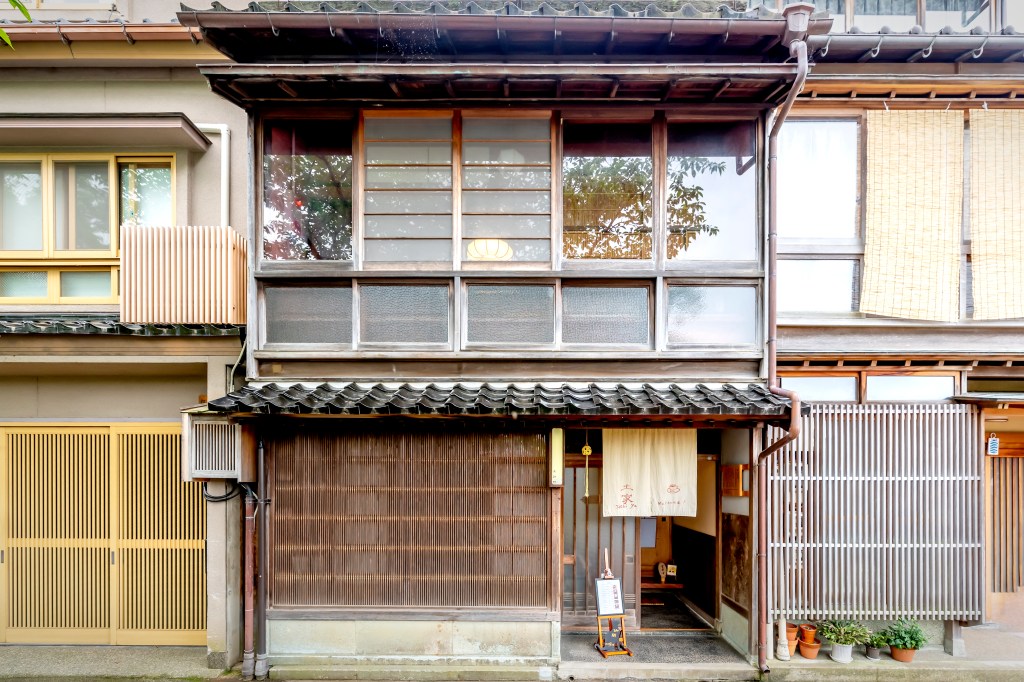
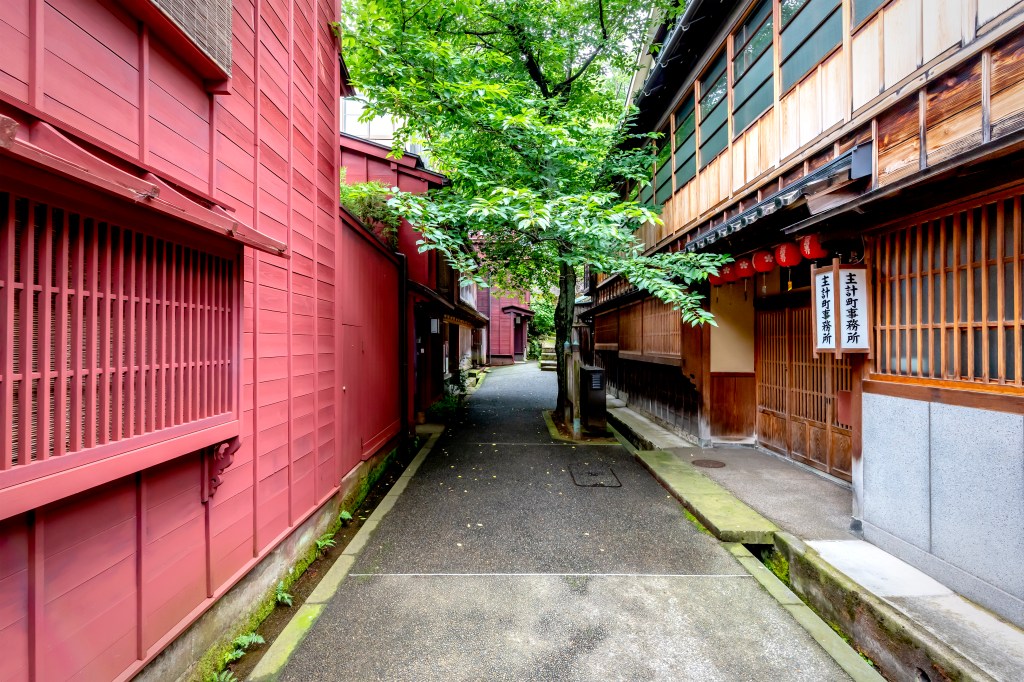
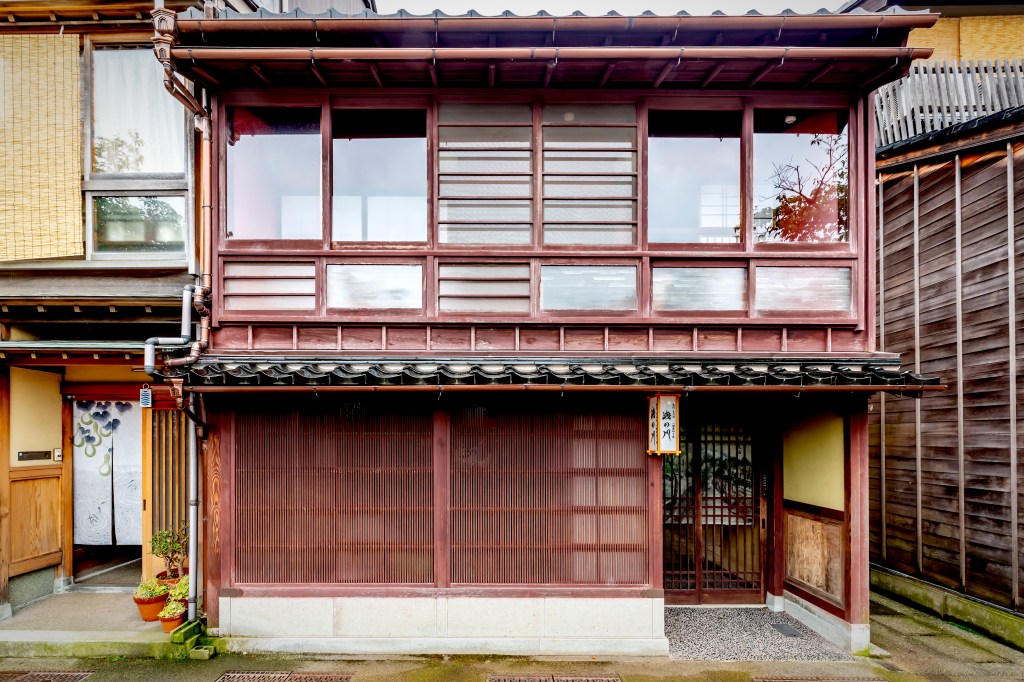
If I often wander off in the nights of Kanazawa, in fact it is the day that I want to show, the incredible light that reigns in these places. I think my favorite place, the one where I feel most emotional is Gyokuseninmaru, a small garden on the outskirts of the castle. The garden is named after the wife of the second feudal lord of Kanazawa, but it was created after her death in 1634 by the third feudal lord. It was a place of rest and relaxation compared to the Kenrokuen which was a place of celebrations and ceremonies and was built later.
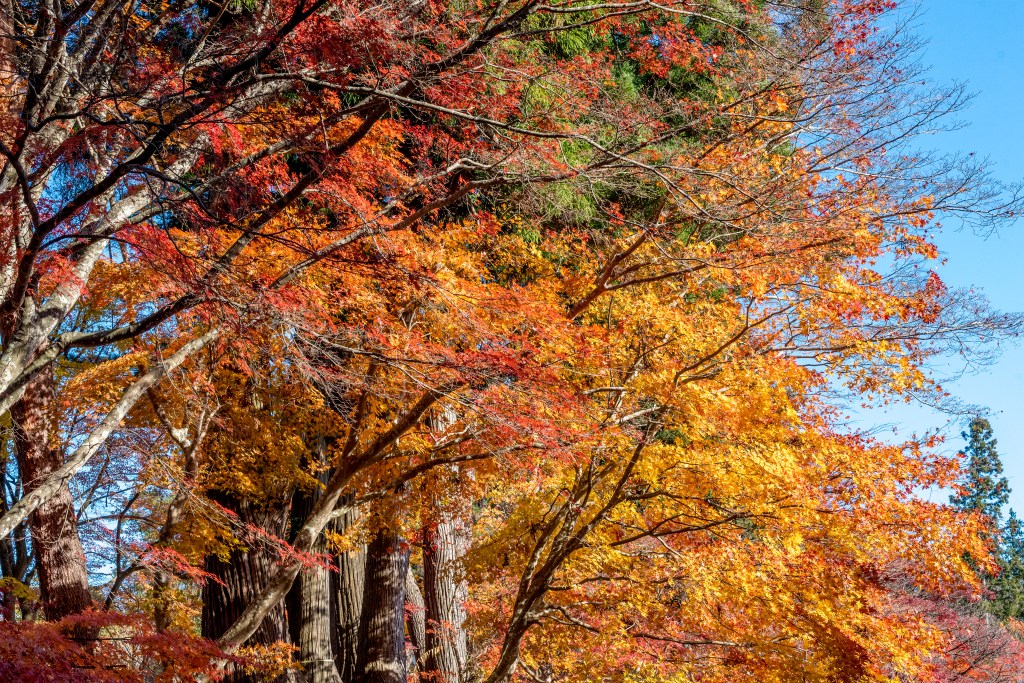
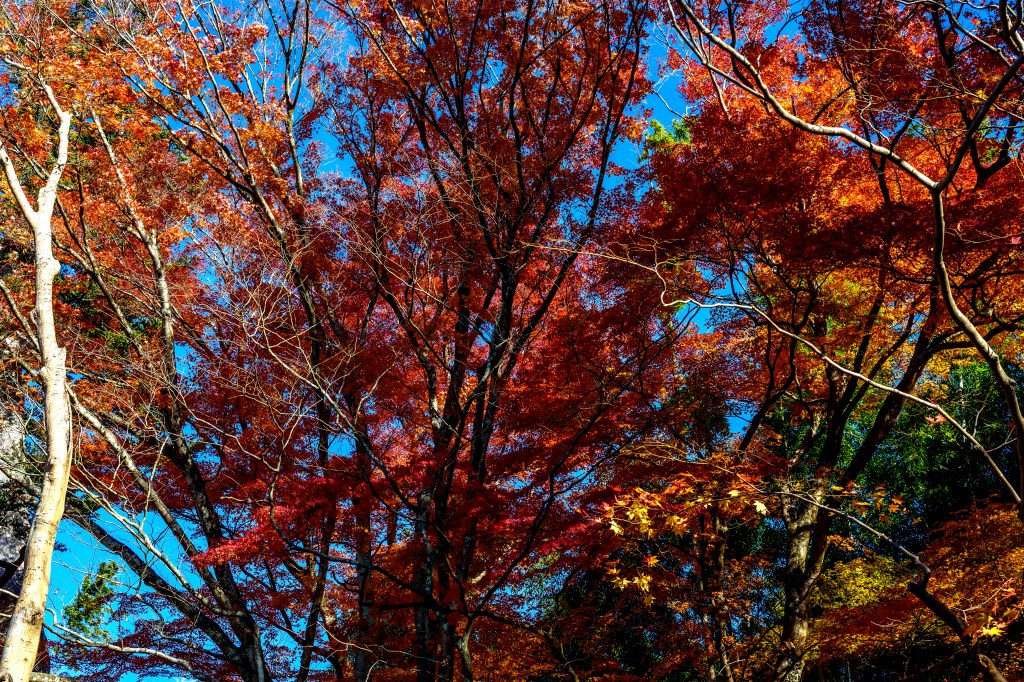
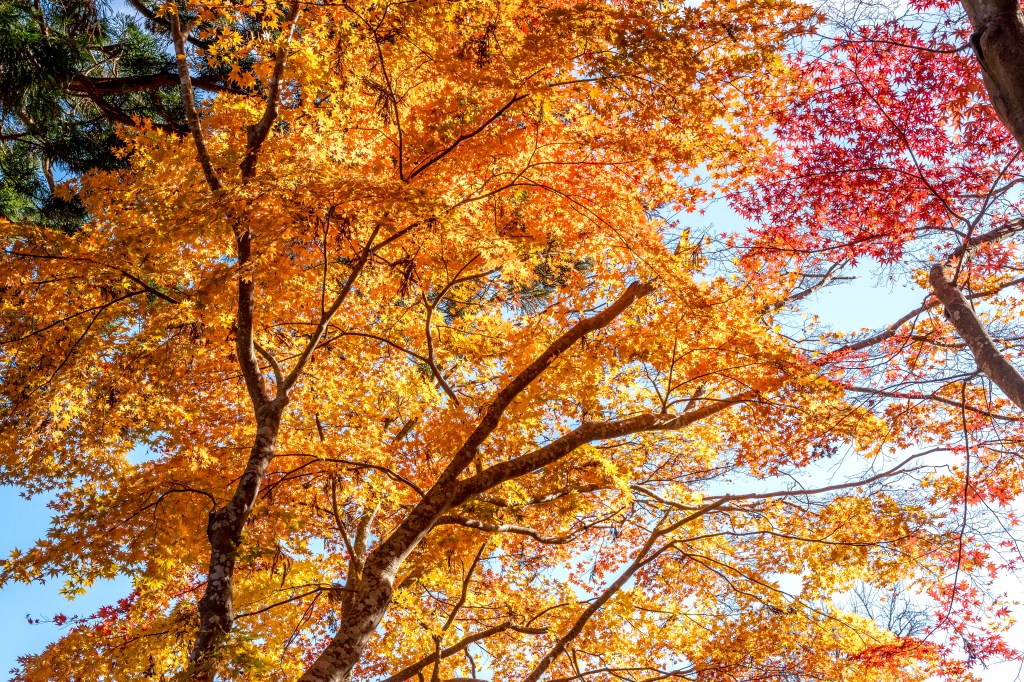
Every time I go there, I am conquered by the atmosphere of this garden, it is beautiful in any season, very quiet and not crowded because the place is outside the tourist circuits. The emotion rose to tears after three years without seeing him. I’m a little late for the 紅 葉, that magical moment when the leaves change color in Japan, but the Gyokuseninmaru remains beautiful. The custom in Japan, like the cherry blossoms in spring, is to appreciate red leaves in autumn. It’s called 紅 葉 狩 り. In Japan, every season, every month, at its customs, festivals, cuisine and sake, is a ritual that touches on the impermanence of things, life, nature, beauty.
紅葉
Kōyō – feuilles d’automne.紅葉狩り
Momijigari – go see the autumn leaves.
Kanazawa Castle was first built in 1580, but it was completely rebuilt twelve years later by Maeda Toshiie who had conquered the region in 1583 on behalf of Toyotomi Hideyoshi, one of the three unifiers of Japan. We are in the Sengoku era, an era of particularly deadly feudal wars but which will lead to the establishment of the central power of the Tokugawa clan over all of Japan and the end of the feudal wars in 1603. 1603. It is the beginning of the Edo era, the former name of Tōkyō, a small fishing village that became the capital of the Tokugawa clan that ruled Japan for 265 years. Tōkyō 東 京 kanjis means “capital of the East”, as opposed to Kyoto, the former capital where a disempowered emperor resides, which lies to the west.
Japan’s history at this time is complex, alliances are made and broken, betrayals and assassinations are common, all in an atmosphere of ambition and selfishness that is far from the idea of the samurai we make in the West. It is not very different from our own history, in the lowness of means and intentions anyway. The myth of the Bushidō, the fearless and blameless samurai, is still to be invented; this will not be the case until the end of the nineteenth century.
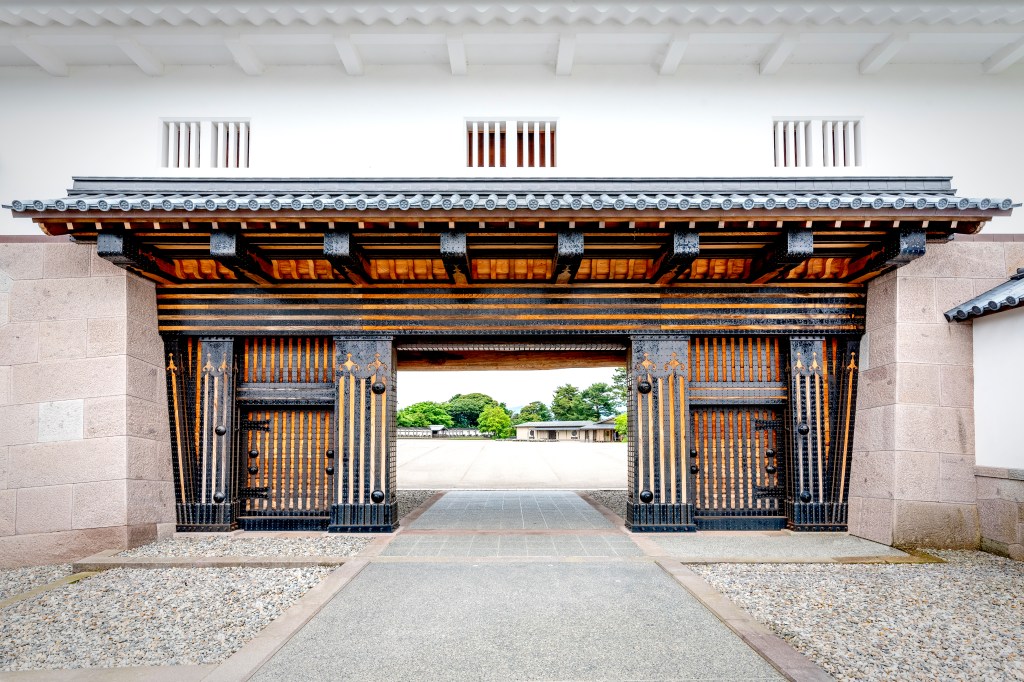
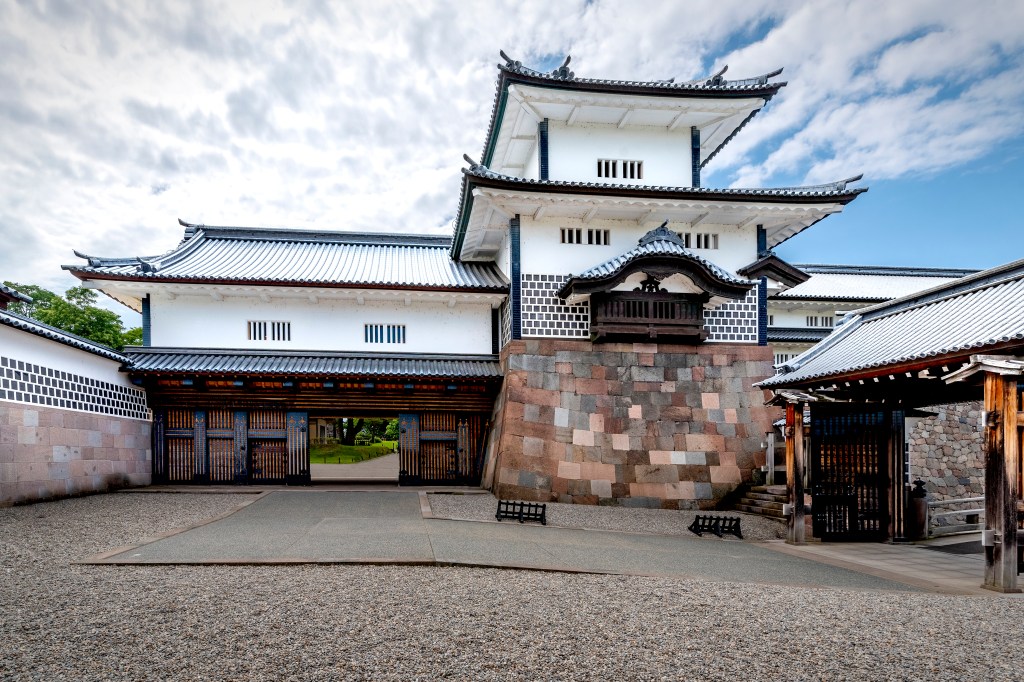
The Maeda clan has thus taken power in Kanazawa on behalf of Toyotomi Hideoshi. When the Tokugawa clan won in 1600 the decisive battle of Sekigahara, the last great feudal battle, the Maeda clan pledged allegiance to the Tokugawa, which will allow him to rule over Kanazawa until 1873, date of the suppression of the status of samurai. The magnificent castle that shines in the heart of Kanazawa, has been the symbol of the Maeda clan’s power over the region for nearly 300 years. The Maeda clan has not existed for more than a century, the castle is a partial reconstruction of what it was in 1850 and which was initiated from the 2000s. Part of the castle site was home to Kanazawa University between 1949 and 1989.
In 1871, during the Meiji Restoration, that is to say the return of the Emperor to power, Kanazawa Castle became the headquarters of the 9th Division of the imperial army. In 1881, it was again destroyed by fire. So there’s not much authentic left in Kanazawa Castle, but it’s majestic, really impressive and I never tire of walking through its park before going for a walk to Kenrokuen, which was once the private garden of the castle.
The exterior is made of stone, but the entire interior structure is made of wood, cypress from Japan and American cypress. The most amazing thing is that in this huge construction of wood there is not a single screw, not a single nail! Everything is embossed, taped to ensure better resistance to earthquakes that are so frequent in Japan.

