

Ohayou
June 2024
After the moments of well-being of the mind spent in the house of D.T. Suzuki I can go calmly towards the night of Kanazawa to meet those I know and discover those I will meet. But before making these announced encounters and these fortuitous encounters I will visit the gecko as Takashi taught me.
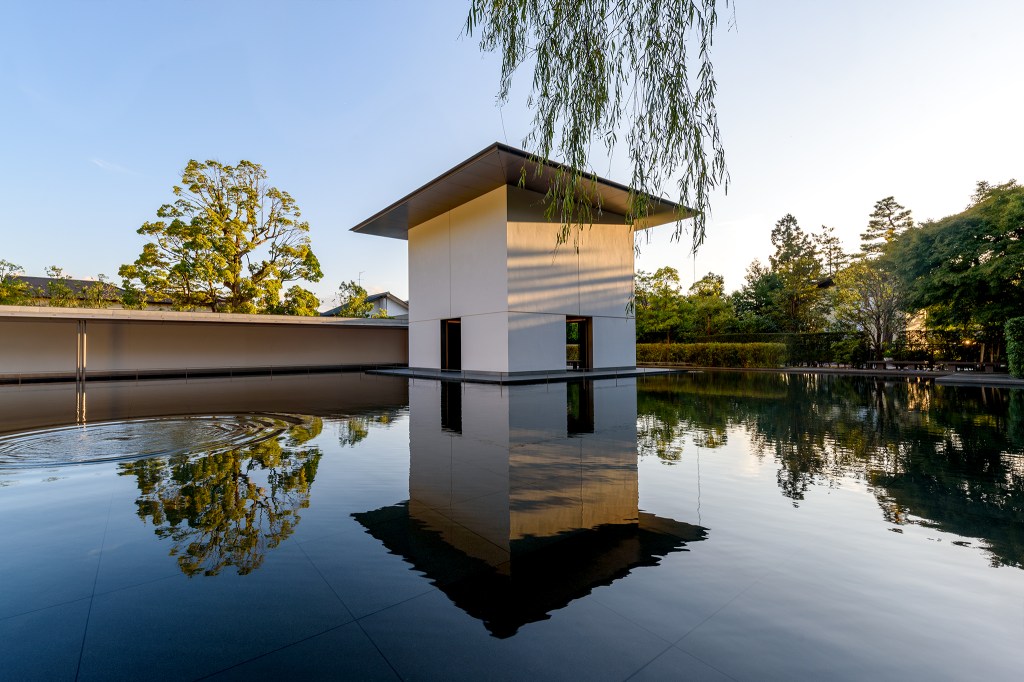
© Philippe Daman
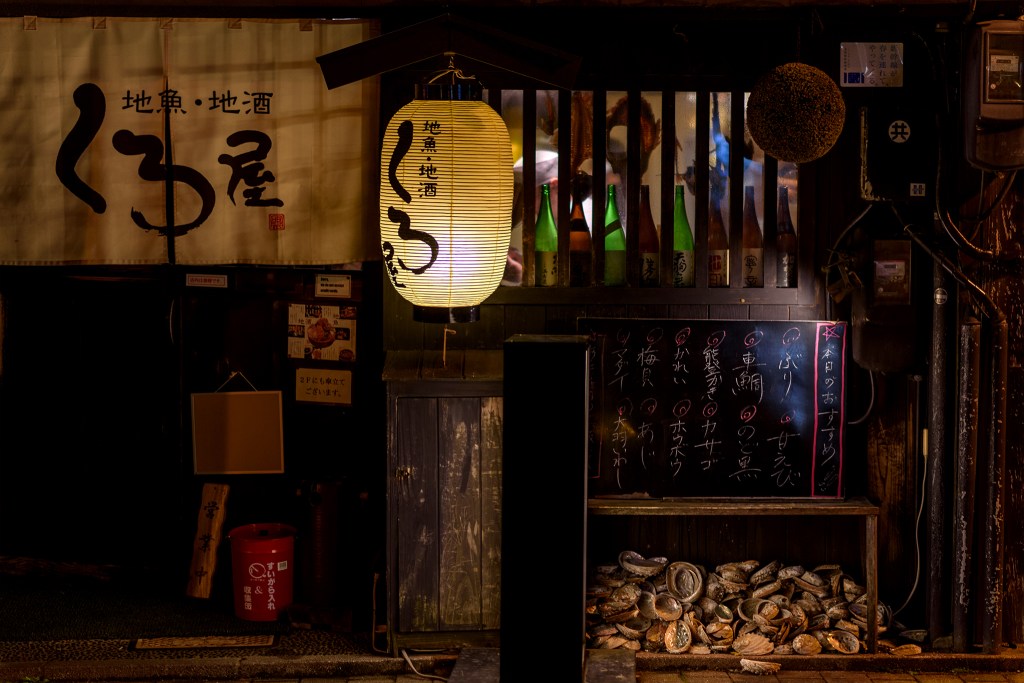
The gecko is there, clinging with his sucker fingers to the column of light where the careless insects come to be swallowed. In the street of restaurants of Kanazawa, there is also the restaurant of the gecko. As I pass my head between the column and the foliage, the gecko turns his head and sees me. I reassure him in French by telling him that I’m just coming to greet him on behalf of Takashi. It is a little known fact but as chameleons can take all colors the geckos can understand all languages.
Outside of the gecko I have people to see in Kanazawa at night, this is part of the announced meetings. Takashi is not here yet, he will come in two or three days, but I can manage on my own now.
I saw the two first nights of my arrival, we were happy to see each other again. She complimented me on my progress in Japanese; slowly we can start having a little conversation, with misunderstandings, translation moments, but also bursts of laughter. I offered her chocolates and biscuits from Europe and took the photo Mari eats a biscuit. She offered me time, she was available, I missed her.
真理
Mari – truth.
Mari is not here tonight, she’s busy with one of her three jobs, it doesn’t leave much time for friendship, but that’s normal in Japan, work is an extremely important value; far more than friendship or even love. So I will say hello to Amaneko in his beautiful bar in Saké. Quiet atmosphere, soft music, beautiful Saké which she presents to me in Japanese, slowly.
She greeted me with a cheerful smile saying お 帰 り. Amaneko is a friend of Takashi’s, I announce that he will be there soon and the news is visibly pleasing him; Takashi has not returned to Kanazawa since my last visit in the summer of 2023. I offer sake to Amaneko, it’s the custom in Japan. There is no tip but we offer at least a drink to the boss or when we know them or if we want to get acquainted and be polite.
お帰り
Okaeri – welcome home.
The bar has a very important social role in Japan, like the Izakaya, but in a slightly different way, the bar is more intimate. The role of the recipient is to talk with clients who choose the topics to be discussed. The patrons and the bar and Izakaya bosses are the psychologists of Japan, they do much more than serve customers, they have a mission to make them happier when they leave than when they arrived. I have this experience constantly and it is always a success.
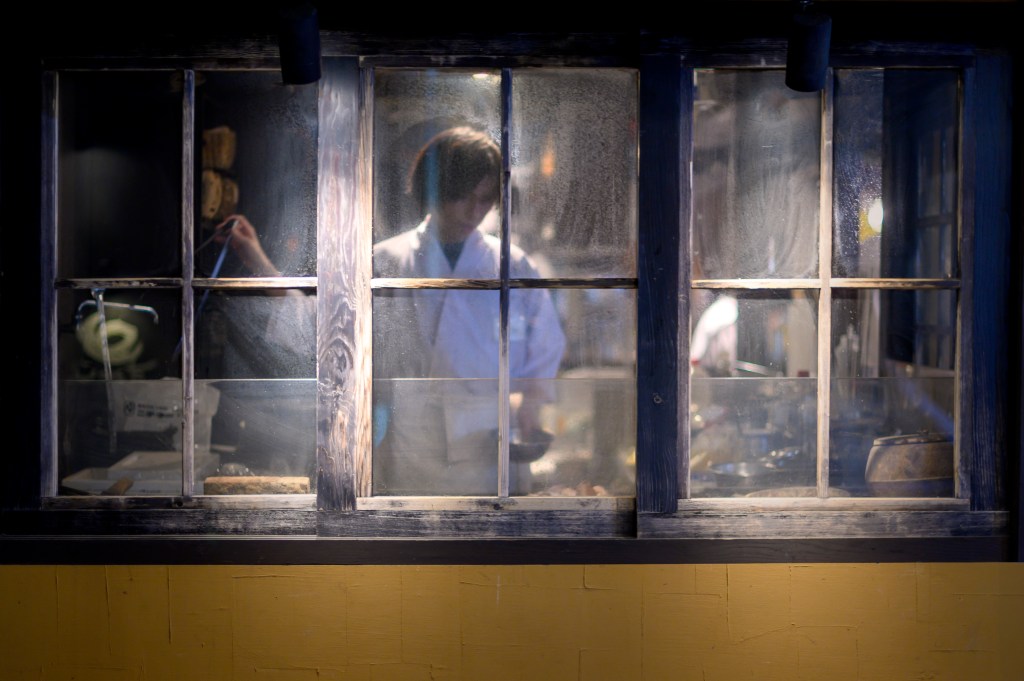
There is a magnificent film then declined in a rich series of five seasons that illustrates this essential role in the Japanese society. 深 夜 食 堂 by Joji Matsuoka tells the story of マ ス タ ー, the owner of an Izakaya which opens between midnight and seven in the morning in Tōkyō. Each episode evokes a personal story entrusted to the owner by a client. It is one of the most beautiful illustrations I know of bar art and psychology in Japan.
深夜食堂
Shinya shokudō – late-night canteen.マスター
Masutā – master.
I leave the stunning saké of Amaneko to go greet Kento at Queen Queen, his bar that opens from 22 hours and whose wall is decorated with a huge playing card, queen of hearts below, queen of spades above. Kento also has several jobs, he is a rickshaw driver, he shows tourists the traditional neighborhoods of Kanazawa. He is also a great friend of Takashi who loves to come and play the piano in his bar. There are people at the Queen Queen, it’s almost full, four boys, three girls, there is a place for me next to the piano, it’s Takashi’s place but he’s not there.
Kento kindly welcomes me, introduces me to the assembly which reacts with the usual onomatopoeias as if my country of origin, my only presence in Japan, were exceptional. I am not special in myself, but it is important for the Japanese to welcome someone with respect and show interest in the newcomer. Not too long to not bother him, a few moments of attention, some reasonably admiring comments are enough.
I buy Kento a beer as it should. The two Japanese sitting next to me start talking to me in a little school English, I try to answer in Japanese. I’m used to it, the first questions are always the same, why Japan, how many times have you come, are you married, how old are you?
It’s easy to feel young in Japan because age doesn’t really matter in this kind of situation, or rather in this kind of place. Of course age is essential for family, professional and social relations in Japanese society, it defines a very strict hierarchy even today. But in a bar it is different, the place is like outside the norms, coming there means to accept a neutrality of fact in social relations.
My two interlocutors are accompanied by a young woman whom I mistakenly take for the girlfriend of one of them and who tells me exactly that by joining the conversation. Age doesn’t matter, you’re young there, she says to me by tapping her head with her fingers. I have no reason to deny it.
The one I thought was her boyfriend suddenly gets up and leaves with a flurry of greetings. In Japan, you leave as you come, suddenly. She invites me to sit next to her. Her name is Azusa, she works in a call center and she hates Kanazawa. I tell him that I love his city, complicity settles in a laugh burst. She is my unexpected meeting of the day and I hope that we will become friends.
Time flies, it’s two o’clock in the morning, Kento tells me he closes. I say good night to Azusa and we promise to drink together again. It is an informal meeting, it will probably not materialize, or by chance.

