

Ohayou
July 2024
Before heading north, I joined Takashi in Tokyo for a day dedicated to the reunion with Wim Wenders’ film Perfect days. There are of course the public toilets of the city that are at the center of the film but there are other emblematic places of the film that are listed on the site Voyapon and that are not necessarily easy to find. It’s an interesting journey that allows me to discover places I didn’t know.
While the public restrooms that are cleaned daily by Hirayama, the hero of the film, are in the famous Shibuya district, most other places are far away, at the other end of the Ginza line. From Shibuya Station, one of the terminus, it takes 35 minutes to reach the other terminus, Asakusa Station. On foot, you can cover the 12 kilometres in just under three hours; it is a great opportunity to discover Tōkyō by crossing many neighborhoods.
The first objective is the second-hand bookstore where Hirayama buys his books for 100 yen. The bookstore 地 球 堂 書 店 seems very isolated in the film but it is actually located in a very popular area for tourists and Japanese alike.
地球堂書店
Chikyū-dō shoten – Chikyū-dō bookstore.
It is in a street that leads to one of the busiest places in Tōkyō, the 仲 見 世 商 店 街 which connects the 雷 門 to the famous Buddhist temple of the capital.
仲見世商店街
Nakamise shōten machi – Nakamise shopping street.雷門
Kaminari mon – thunder gate.浅草寺
Sensō-ji – famous Buddhist temple of Tōkyō.
It is a place to see but you must be psychologically ready to slip into a crowd of incredible density that circulates almost uninterrupted. The temple is also called Asakusa Kannon
because it is dedicated to this divinity, one of whose representations is the goddess with a thousand arms, goddess of compassion. It is estimated that 30 million visitors come here every year!
The houses on the street where the bookshop is located are in «Edo» style, the old name of Tōkyō which was renamed in the second half of the 19th century. This district does not date from that time, everything was razed by the American bombing of March 10, 1945, including the temple itself which was rebuilt in 1950. The Sensō-ji was the oldest temple in the Japanese capital, it was reportedly built in 645.
As usual Takashi pushes me to go alone in the bookstore and talk to his owner in Japanese; Takashi is my 先 生, so I gladly obey his always wise advice. Takashi joins me and starts showing me books while reading their title aloud. It is a bookstore that sells art books but there are also novels by Japanese authors.
先生
Sensei – teacher.
I would like to buy a book by Yukio Mishima, preferably one of the many that are not translated into French and preferably an old edition. Takashi can’t find any and tells me to go ask the bookseller. He looks at me, surprised, smiles and gets up to find one. Takashi translates the title into English but it doesn’t mean anything to me. It’s not a novel but an essay, 小 説 と は 何 か, chance does things well!
小説とは何か
Shōsetsu to wa nanika ? – What is literature?
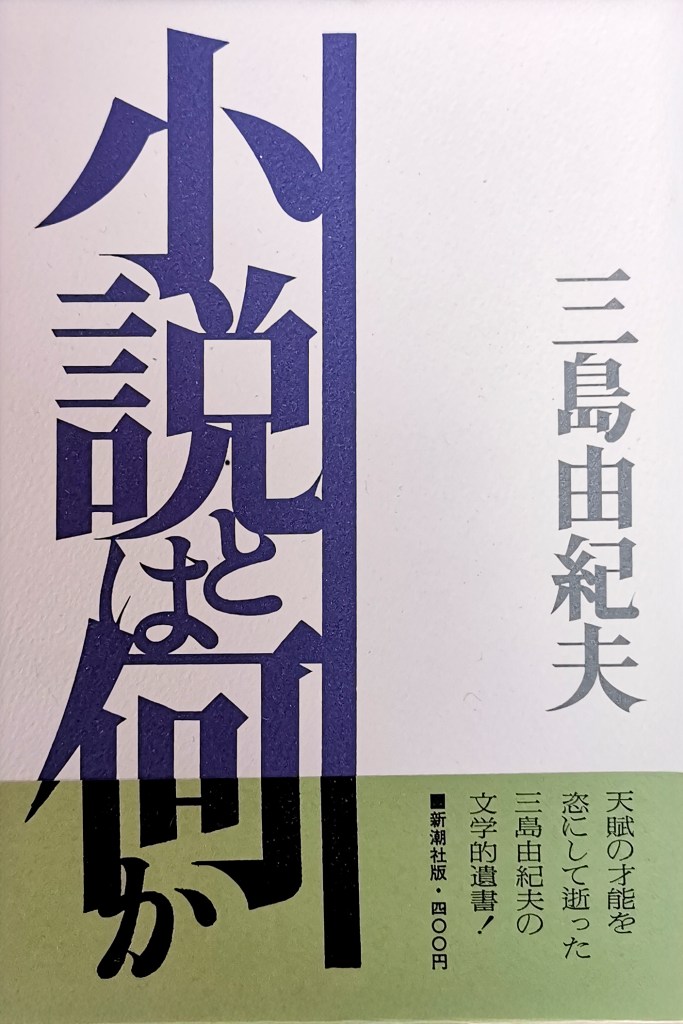
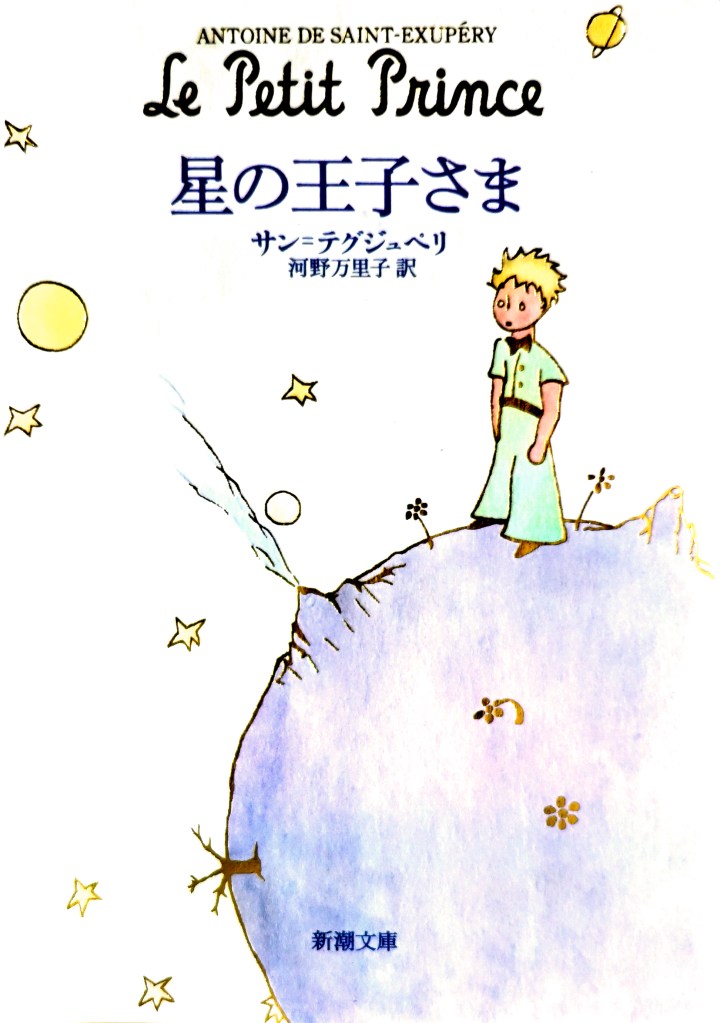
The books aren’t 100 yen like in the film, but it doesn’t matter, this is my first Mishima published in Japan and that’s precious to me. Buying it in this very bookshop is a second simple joy that makes me happy. The first book I bought in Japan, six years ago in Kanazawa, I found in the shop of the 21st century museum. It was a lovely Japanese edition of Saint-Exupéry’s The Little Prince, which I took as a further sign of Japan’s love for me.
Saint-Exupéry doesn’t know it, but perhaps he thought it when he wrote: he didn’t just pave the way for trans-continental air routes, he also paved the way for literature for an incredible number of children all over the world thanks to The Little Prince, myself included. The Little Prince from another planet, the disillusioned pilot lost in the desert, the disillusioned snake, the philosophical fox, the seductive rose and the resigned lamplighter are all part of me forever.
心で見なくちゃ、ものごとはよく見えないってことさ。かんじんなことは、目に見えないんだよ
Kokoro de minakucha, mono goto wa yoku mie naitte koto sa. Kanjin na koto wa, me ni mie nainda yo
– You can only see with your heart. The essential is invisible to your eyes.
When I held in my hands the book of Saint-Exupéry in Japanese, all the history was diffused in me emerging from my own past with the voices of Gérard Philippe and Georges Poujouly. These voices to me
whispered: “You are at home you see it well, the most important book of your life is waiting for you, translated into this language that you do not understand. But you know the story by heart for having listened to it a thousand times”.
A book with this power, it revives the memory and brings back the emotions that reading has provided. It is the beauty of writing and reading, they engrave things that are unalterable and can determine you forever.
In this small second-hand bookstore in Tokyo, I’m holding a book by Yukio Mishima and I’d like to be a little bit more influenced by the beauty of his writing. I feel his strength, the power of what he wrote, and it reminds me how much I was overwhelmed by the first novel I read, the one he wrote when I was twenty years old, 仮 面 の 告 白. I discovered it on a train in Japan and immediately understood that Mishima would invade me, Bewitching me, determining me forever.
仮面の告白
Kamen no kokuhaku – Confessions of a mask.
I almost hesitate to let go of the book, to let the bookseller take it and wrap it in recycled white paper. He performs this act, so important in Japan, with such precision, such meticulousness, such artistry that it feels as though he’s wrapping a unique object in a sheet of gold. “The packaging is more important than the gift,” I read somewhere about Japan, and it’s true for everything you buy in this country. The wrapping is a gift presented to the customer, giving the content a higher value, determining its worth in a very special way.
As I leave the bookstore, I know I will return every time I visit Tokyo, and each time, I’ll buy a Japanese book to thank the books, the writing, the beauty of a few words strung together to leave a trace we will never forget. And perhaps one day, I’ll achieve the enlightenment that will allow me to read even just one sentence written in Japanese by Yukio Mishima.
Takashi and I navigate through the crowd under a blazing sun. It is extremely hot in Tokyo during the summer, and the constant back-and-forth of a dense, eager crowd only intensifies the feeling of heat. We slip away toward the house where Hirayama lives in the film, on the east bank of the Sumida River, which runs alongside Tokyo’s famous Skytree, visible every time Hirayama goes to work.
I don’t have an address, only directions referencing the temple near Hirayama’s apartment, where he hears the sweeper cleaning the street along the wall every morning. Combining our efforts, we find the house after half an hour of wandering under the sun. The streets are deserted, the temple too, but here we are, as though in a film recounting the story of another film.
It’s time to eat something and, above all, to drink a beer after a long walk. Our destination is the small Izakaya where Hirayama eats after work. It’s quite far, so we take the bus; in the film, Hirayama rides his bicycle there from his apartment. The 浅草焼きそば福ちゃん is located in the basement of the Asakusa metro station on the Ginza Line. It’s actually an underground shopping street, known as 商店街, and it’s the oldest in Japan.
焼きそば福ちゃん
Asakusa Yakisoba Fukuchan商店街
Shotengai – covered shopping street.
It is an Izakaya of yakisoba which are actually a variant of ramen and are very popular in Japan. It is easy to make and it is eaten quickly for a price in general derisory which is according to the ingredients used. The place is tiny and we queue for a place while finding that the second-hand CD store facing the Izakaya is covered on all its shelves with a thick layer of dust that seems to date from the last war. Here no tourists but Japanese who come to lunch in fifteen minutes.
This is the last stop dedicated to Wenders of this day trip to Tokyo, at least for this time. It is time for me to go up north, to the island of Hokkaidō, where my friends are waiting for me in Otaru.

