

Ohayou
July 2023
In Kanazawa there are friends, late night outings, meetings but there is also the city. I never get tired of going back to the same places. The beautiful garden, the Kenrokuen, the castle, the two old districts of Geisha, the museum of the 21st century, the museum and the house of D.T. Suzuki and 長 町, the samurai district.
長町
Nagamachi
It is one of the discreet attractions in Kanazawa. In the historic centre, in an astonishing calm, one can walk with nostalgia and try for a few moments to imagine what life was like in the Edo period, when samurai were no longer warriors but administrators, literate people, sometimes poets, of philosophers or artists. The wars were over.

I go back every time. There is rarely a world, it is possible to enjoy, for a few moments, the serenity of a samurai educated in the principles of Zen Buddhism and Neo-Confucianism. We contemplate the garden while listening to the sound of water, nothing but water. We forget who we are, we imagine who could be this samurai who lived there. As in a dream we hear the rustle of a kimono that passes slightly on a tatami. A woman, a friend, a girl, a servant? Whatever, the magic works, we are in the time of the samurai.
Most of the homes of samurai families were destroyed in the late 19th century after the Meiji Restoration. It is the time of the return to power of the emperor after ten centuries of symbolic power. It is also the end of the shōgun and therefore of the samurai clans. They have to cut off their distinctive chignon, wearing the katana is forbidden and many houses will be destroyed to be replaced by western-style houses, mainly American.
It is the will of the emperor, to draw a line on this past and bring Japan into modernity. Everything that comes from the West is beautiful and interesting, everything that belongs to the samurai era must disappear. Not everyone likes it and this westernization of Japan will lead to a civil war, the Boshin War (1868-1869) which ends with the defeat of the Shōgun clan at the Battle of Hakodate on May 17, 1869.

Some samurai houses have nevertheless been preserved, restored and rebuilt in Kanazawa. Like the one of the family (clan) Nomura which was built at the end of the 16th century. The Nomura family was one of the richest and served the lords of the Maeda family who dominated the area.
The large central room, the Jodan-no-ma, is built on a raised floor covered with tatami. Here the lord received his guests or gave audience to his subjects. The frames are made of cypress wood. Some of the decorations on the sliding panels are the work of a well-known artist from the late 18th century, Sasaki Senkei, official painter of the Kaga estate.
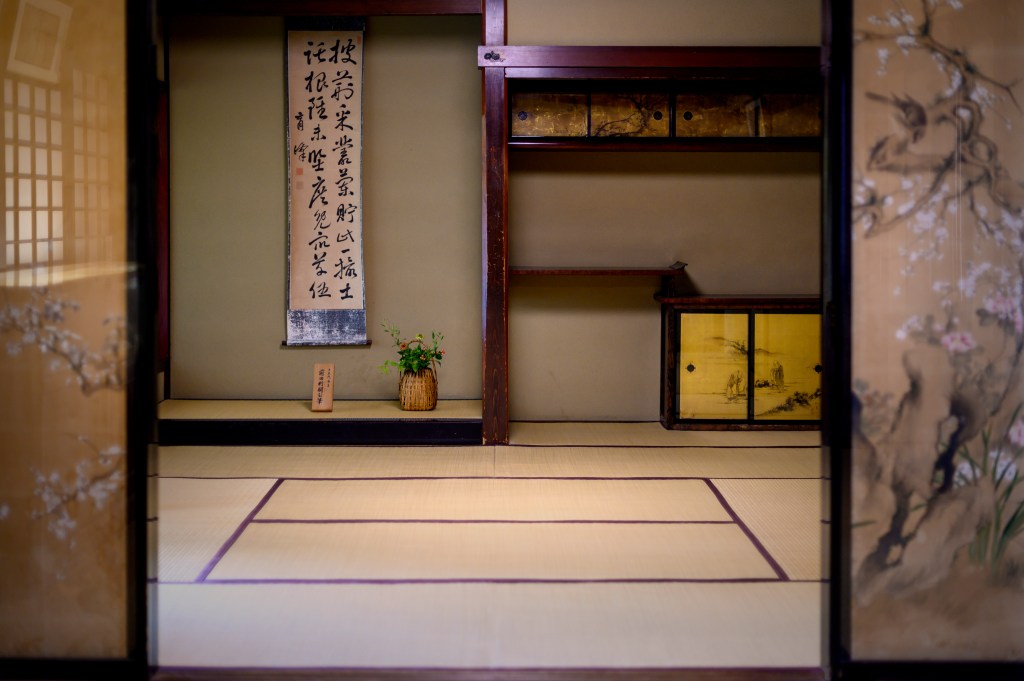
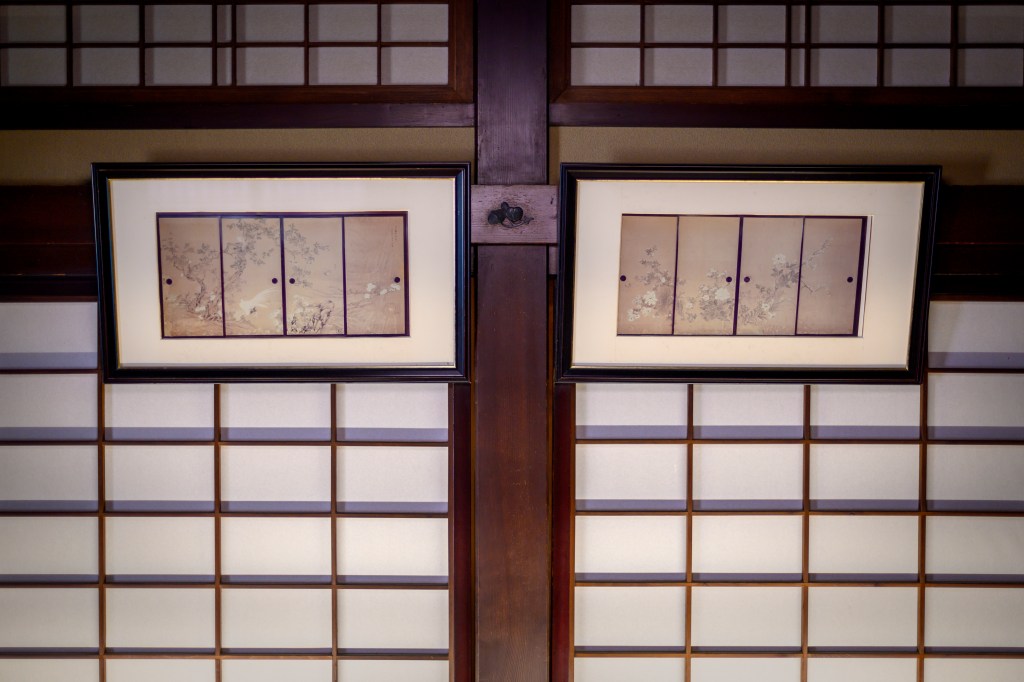
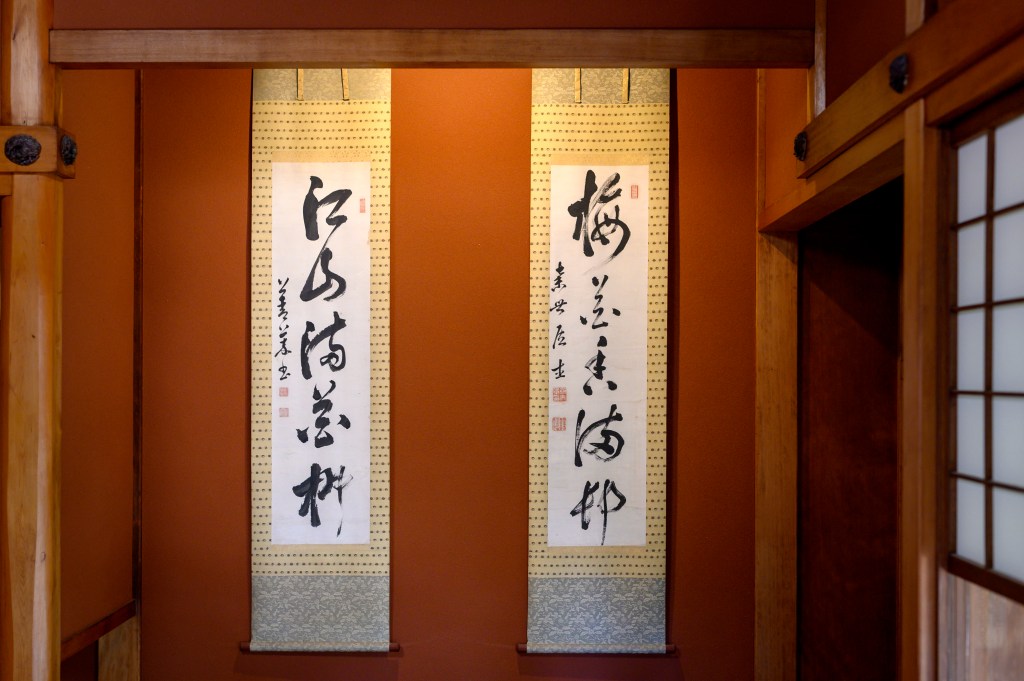
The garden that brings together water, stone and human hands is a place of serenity and reflection. In the basin live colorful kois that will one day become dragons. It is a place conducive to mediation and calm that visitors respect, most of the time, but not always unfortunately.


Upstairs there’s a tea room, where you can sample the products in a simplified ceremony. I could spend hours in this place, just wishing I were there alone, but you have to know how to share. My Japanese friends tell me that this place is wabi-sabi, a purely Japanese concept, untranslatable, that sees beauty in wear and tear, in what is damaged, broken or even dead. It’s a Zen Buddhist philosophical concept.
Not surprisingly, most samurai were gradually converted to Zen Buddhism when it was introduced into Japan between the 6th and 13th centuries. Zen emphasises meditation, and this samurai residence is a very accurate reflection of this.

Bibliography
- Souyri, Pierre-François. Nouvelle histoire du Japon. Paris : Perrin, 2010.
- Souyri, Pierre-François. Les guerriers dans la rizière. La grande épopée des Samouraïs. Paris : Flammarion, 2017


